Stan książek
Nasze książki są dokładnie sprawdzone i jasno określamy stan każdej z nich.

Nowa
Książka nowa.
Używany - jak nowa
Niezauważalne lub prawie niezauważalne ślady używania. Książkę ciężko odróżnić od nowej pozycji.
Używany - dobry
Normalne ślady używania wynikające z kartkowania podczas czytania, brak większych uszkodzeń lub zagięć.
Używany - widoczne ślady użytkowania
zagięte rogi, przyniszczona okładka, książka posiada wszystkie strony.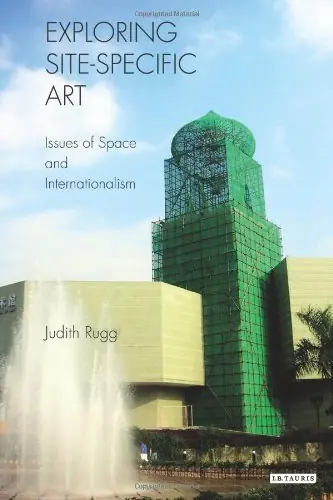
Exploring Site-Specific Art
Masz tę lub inne książki?
Sprzedaj je u nas

In recent years, the art world has witnessed the emergence of a wider variety of spaces for creating and exhibiting art outside traditional galleries. This shift has led to a growing awareness of the importance of space, highlighting the impact of the spatial dimension. Judith Rugg delves into this phenomenon by examining site-specific artworks situated in various countries such as China, France, Italy, the UK, Argentina, Canada, Australia, Poland, and the Netherlands. Her exploration delves into how these artworks interact with their environments within a global context.Rugg's analysis encompasses the works of artists like Doris Salcedo, Langlands and Bell, Phyllida Barlow, and Vong Phaophanit, offering a thorough investigation of how interdisciplinary spatial theories can inform contemporary art. Through clearly illustrated chapters, she addresses current spatial challenges, including environmental issues, cultural identity, belonging, and the psychological effects of displacement, migration, marginalization, urbanization, and tourism.This insightful and thought-provoking work is tailored for students and practitioners of fine arts, art theory and history, and anyone with an interest in site-specific art. Rugg provides an original perspective that is both engaging and intellectually stimulating, offering deep insights into the dynamic relationship between art and space.
Wybierz stan zużycia:
WIĘCEJ O SKALI
In recent years, the art world has witnessed the emergence of a wider variety of spaces for creating and exhibiting art outside traditional galleries. This shift has led to a growing awareness of the importance of space, highlighting the impact of the spatial dimension. Judith Rugg delves into this phenomenon by examining site-specific artworks situated in various countries such as China, France, Italy, the UK, Argentina, Canada, Australia, Poland, and the Netherlands. Her exploration delves into how these artworks interact with their environments within a global context.Rugg's analysis encompasses the works of artists like Doris Salcedo, Langlands and Bell, Phyllida Barlow, and Vong Phaophanit, offering a thorough investigation of how interdisciplinary spatial theories can inform contemporary art. Through clearly illustrated chapters, she addresses current spatial challenges, including environmental issues, cultural identity, belonging, and the psychological effects of displacement, migration, marginalization, urbanization, and tourism.This insightful and thought-provoking work is tailored for students and practitioners of fine arts, art theory and history, and anyone with an interest in site-specific art. Rugg provides an original perspective that is both engaging and intellectually stimulating, offering deep insights into the dynamic relationship between art and space.
Szczegóły
Inne książki: Judith Rugg

Podobne produkty
Może Ci się spodobać
Inne książki z tej samej kategorii

Napisz opinię o książce i wygraj nagrodę!
W każdym miesiącu wybieramy najlepsze opinie i nagradzamy recenzentów.
Dowiedz się więcejWartość nagród w tym miesiącu
880 zł
Dodaj swoją opinię
Zaloguj się na swoje konto, aby mieć możliwość dodawania opinii.
Czy chcesz zostawić tylko ocenę?
Dodanie samej oceny o książce nie jest brane pod uwagę podczas losowania nagród. By mieć szansę na otrzymanie nagrody musisz napisać opinię o książce.
Już oceniłeś/zrecenzowałeś te książkę w przeszłości.
Możliwe jest dodanie tylko jednej recenzji do każdej z książek.
Sposoby dostawy
Odbiór w punkcie (6)
InPost Paczkomat 24/7

14,99 zł
DPD Pickup Automaty i Punkty Odbioru

10,49 zł




Dostawa na adres (7)
GLS U Ciebie - Kurier

14,99 zł
Kurier DPD

14,99 zł





Sposoby płatności
Płatność z góry
Przedpłata

Zwykły przelew
