Stan książek
Nasze książki są dokładnie sprawdzone i jasno określamy stan każdej z nich.

Nowa
Książka nowa.
Używany - jak nowa
Niezauważalne lub prawie niezauważalne ślady używania. Książkę ciężko odróżnić od nowej pozycji.
Używany - dobry
Normalne ślady używania wynikające z kartkowania podczas czytania, brak większych uszkodzeń lub zagięć.
Używany - widoczne ślady użytkowania
zagięte rogi, przyniszczona okładka, książka posiada wszystkie strony.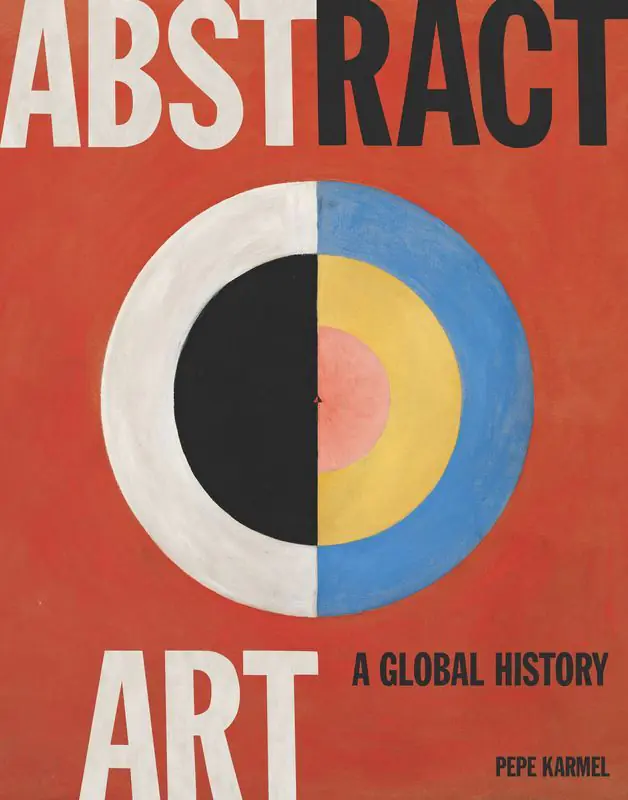
Abstract Art. A Global History
Masz tę lub inne książki?
Sprzedaj je u nas

Using content as a guide to shape, this comprehensive study sheds light on abstract art, expanding the traditional canon to include a diverse array of global artists. Pepe Karmel, an esteemed art historian, opens his exploration of abstract art's roots and progression with the assertion, "Abstract art is always rooted in experience of the real world." Historically, discussions of abstraction have focused primarily on formal innovations, categorizing them into a series of 'isms' without much consideration for their relationship with the external world. These narratives often centered on a select group of European and North American artists. In contrast, Karmel's work moves beyond these conventional boundaries, emphasizing content and subject matter rather than mere color and form. He reinterprets abstraction's history from a worldwide viewpoint, illustrating how artists globally have harnessed abstract imagery to express personal, social, and political experiences. After an introductory examination of abstraction's pioneers like Piet Mondrian, Kazimir Malevich, and Jackson Pollock, Karmel deviates from a simple chronological framework. Instead, he opts for an exploration organized into five thematic chapters: 'Bodies', 'Landscapes', 'Cosmologies', 'Architectures', and 'Signs and Patterns'. Each chapter begins with a figurative piece, diving into myriad topics such as embryos, star charts, and calligraphy, while clearly showcasing the connection between abstract and real-world elements. The book is further enriched with curated artworks juxtaposed to highlight unexpected connections and crucial differences. Central to the text is an effort to offer fresh perspectives on abstract art through a more inclusive lens, featuring notable artists like Vasily Kandinsky, Ibrahim El-Salahi, Carlos Cruz-Diez, Bridget Riley, Anni Albers, Sean Scully, Julie Mehretu, and Wu Guanzhong.
Wybierz stan zużycia:
WIĘCEJ O SKALI
Using content as a guide to shape, this comprehensive study sheds light on abstract art, expanding the traditional canon to include a diverse array of global artists. Pepe Karmel, an esteemed art historian, opens his exploration of abstract art's roots and progression with the assertion, "Abstract art is always rooted in experience of the real world." Historically, discussions of abstraction have focused primarily on formal innovations, categorizing them into a series of 'isms' without much consideration for their relationship with the external world. These narratives often centered on a select group of European and North American artists. In contrast, Karmel's work moves beyond these conventional boundaries, emphasizing content and subject matter rather than mere color and form. He reinterprets abstraction's history from a worldwide viewpoint, illustrating how artists globally have harnessed abstract imagery to express personal, social, and political experiences. After an introductory examination of abstraction's pioneers like Piet Mondrian, Kazimir Malevich, and Jackson Pollock, Karmel deviates from a simple chronological framework. Instead, he opts for an exploration organized into five thematic chapters: 'Bodies', 'Landscapes', 'Cosmologies', 'Architectures', and 'Signs and Patterns'. Each chapter begins with a figurative piece, diving into myriad topics such as embryos, star charts, and calligraphy, while clearly showcasing the connection between abstract and real-world elements. The book is further enriched with curated artworks juxtaposed to highlight unexpected connections and crucial differences. Central to the text is an effort to offer fresh perspectives on abstract art through a more inclusive lens, featuring notable artists like Vasily Kandinsky, Ibrahim El-Salahi, Carlos Cruz-Diez, Bridget Riley, Anni Albers, Sean Scully, Julie Mehretu, and Wu Guanzhong.
Szczegóły
Inne książki: Pepe Karmel

Podobne produkty
Może Ci się spodobać
Inne książki z tej samej kategorii

Napisz opinię o książce i wygraj nagrodę!
W każdym miesiącu wybieramy najlepsze opinie i nagradzamy recenzentów.
Dowiedz się więcejWartość nagród w tym miesiącu
880 zł
Dodaj swoją opinię
Zaloguj się na swoje konto, aby mieć możliwość dodawania opinii.
Czy chcesz zostawić tylko ocenę?
Dodanie samej oceny o książce nie jest brane pod uwagę podczas losowania nagród. By mieć szansę na otrzymanie nagrody musisz napisać opinię o książce.
Już oceniłeś/zrecenzowałeś te książkę w przeszłości.
Możliwe jest dodanie tylko jednej recenzji do każdej z książek.
Sposoby dostawy
Płatne z góry

InPost Paczkomaty 24/7
13.99 zł
Darmowa od 190 zł

ORLEN Paczka
12.99 zł
Darmowa od 190 zł

Automaty DHL BOX 24/7 i punkty POP
12.99 zł
Darmowa od 190 zł

DPD Pickup Automaty i Punkty Odbioru
8.99 zł
Darmowa od 190 zł

Automaty Orlen Paczka, sklepy Żabka i inne
12.99 zł
Darmowa od 190 zł

GLS U Ciebie - Kurier
14.99 zł
Darmowa od 190 zł

Kurier DPD
14.99 zł
Darmowa od 190 zł

Kurier InPost
14.99 zł
Darmowa od 190 zł

Pocztex Kurier
13.99 zł
Darmowa od 190 zł

Kurier DHL
14.99 zł
Darmowa od 190 zł

Kurier GLS - kraje UE
69.00 zł

Punkt odbioru (Dębica)
2.99 zł
Darmowa od 190 zł
Płatne przy odbiorze

Kurier GLS pobranie
23.99 zł
Sposoby płatności
Płatność z góry
Przedpłata

Zwykły przelew
