Stan książek
Nasze książki są dokładnie sprawdzone i jasno określamy stan każdej z nich.

Nowa
Książka nowa.
Używany - jak nowa
Niezauważalne lub prawie niezauważalne ślady używania. Książkę ciężko odróżnić od nowej pozycji.
Używany - dobry
Normalne ślady używania wynikające z kartkowania podczas czytania, brak większych uszkodzeń lub zagięć.
Używany - widoczne ślady użytkowania
zagięte rogi, przyniszczona okładka, książka posiada wszystkie strony.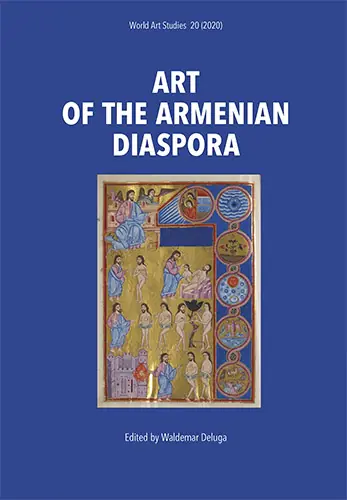
Art of the Armenian Diaspora
Masz tę lub inne książki?
Sprzedaj je u nas

A new compilation titled "Art of the Armenian Diaspora" offers a collection of ten scholarly studies focusing on the art and historical journey of the Armenian Diaspora, spanning from the Byzantine era to contemporary times. The contributors to this volume hail from leading research institutions that specialize in Armenian art history. Some of the noteworthy articles introduce previously unrecognized artifacts, such as a manuscript from 1352 housed in the collection of French collector Guillaume Aral and the 17th-century Armenian Bible located in the Gulbenkian Museum in Lisbon. Furthermore, the book delves into the historical narratives concerning the Armenian Diaspora in Central Europe and brings the discussion up to present-day contexts.The book's table of contents reveals a diverse range of topics. Waldemar Deluga provides an introduction to the volume. Emma Chookaszian explores specific manuscript pages from the Crimean school. Beatrice Tolidjan examines Ottoman Macedonia’s church architecture and its influences from medieval Armenia. Petra Košťalova looks into the Armenian traveler Simeon Lehatsi's cultural heritage and his connections to the Polish-Lithuanian Commonwealth. Claude Mutafian discusses the Armenians of the Carpathians in relation to Roman-Greek proselytism. An interdisciplinary study of the Gulbenkian Bible by Hermine Grigoryan and her team highlights its significance. Vasso Rokou analyzes the paradoxical imagery of Alexander’s marriage in Sogdiana, as depicted in Armenian tradition.Further contributions include Magdalena Tarnowska's exploration of Rafał Hadziewicz's paintings found in Warsaw churches, and Iryna Hayuk's look into collecting practices within the Eastern European Armenian Diaspora. Dominika Maria Macios brings attention to Leopold Gaszczyk, an overlooked photographer of the Armenian Diaspora in Syria, and examines the Armenian cultural heritage in Nagorno-Karabakh, with an appendix by Patrick Donabedian offering additional insights.
Wybierz stan zużycia:
WIĘCEJ O SKALI
A new compilation titled "Art of the Armenian Diaspora" offers a collection of ten scholarly studies focusing on the art and historical journey of the Armenian Diaspora, spanning from the Byzantine era to contemporary times. The contributors to this volume hail from leading research institutions that specialize in Armenian art history. Some of the noteworthy articles introduce previously unrecognized artifacts, such as a manuscript from 1352 housed in the collection of French collector Guillaume Aral and the 17th-century Armenian Bible located in the Gulbenkian Museum in Lisbon. Furthermore, the book delves into the historical narratives concerning the Armenian Diaspora in Central Europe and brings the discussion up to present-day contexts.The book's table of contents reveals a diverse range of topics. Waldemar Deluga provides an introduction to the volume. Emma Chookaszian explores specific manuscript pages from the Crimean school. Beatrice Tolidjan examines Ottoman Macedonia’s church architecture and its influences from medieval Armenia. Petra Košťalova looks into the Armenian traveler Simeon Lehatsi's cultural heritage and his connections to the Polish-Lithuanian Commonwealth. Claude Mutafian discusses the Armenians of the Carpathians in relation to Roman-Greek proselytism. An interdisciplinary study of the Gulbenkian Bible by Hermine Grigoryan and her team highlights its significance. Vasso Rokou analyzes the paradoxical imagery of Alexander’s marriage in Sogdiana, as depicted in Armenian tradition.Further contributions include Magdalena Tarnowska's exploration of Rafał Hadziewicz's paintings found in Warsaw churches, and Iryna Hayuk's look into collecting practices within the Eastern European Armenian Diaspora. Dominika Maria Macios brings attention to Leopold Gaszczyk, an overlooked photographer of the Armenian Diaspora in Syria, and examines the Armenian cultural heritage in Nagorno-Karabakh, with an appendix by Patrick Donabedian offering additional insights.
Szczegóły
Inne książki: Waldemar Deluga

Podobne produkty
Może Ci się spodobać
Inne książki z tej samej kategorii

Napisz opinię o książce i wygraj nagrodę!
W każdym miesiącu wybieramy najlepsze opinie i nagradzamy recenzentów.
Dowiedz się więcejWartość nagród w tym miesiącu
880 zł
Dodaj swoją opinię
Zaloguj się na swoje konto, aby mieć możliwość dodawania opinii.
Czy chcesz zostawić tylko ocenę?
Dodanie samej oceny o książce nie jest brane pod uwagę podczas losowania nagród. By mieć szansę na otrzymanie nagrody musisz napisać opinię o książce.
Już oceniłeś/zrecenzowałeś te książkę w przeszłości.
Możliwe jest dodanie tylko jednej recenzji do każdej z książek.
Sposoby dostawy
Odbiór w punkcie (7)
InPost Paczkomat 24/7

14,99 zł
DPD Pickup Automaty i Punkty Odbioru

11,99 zł





Dostawa na adres (7)
GLS U Ciebie - Kurier

14,99 zł
Kurier DPD

14,99 zł





Sposoby płatności
Płatność z góry
Przedpłata

Zwykły przelew
