Stan książek
Nasze książki są dokładnie sprawdzone i jasno określamy stan każdej z nich.


Nowa
Książka nowa.
Używany - jak nowa
Niezauważalne lub prawie niezauważalne ślady używania. Książkę ciężko odróżnić od nowej pozycji.
Używany - dobry
Normalne ślady używania wynikające z kartkowania podczas czytania, brak większych uszkodzeń lub zagięć.
Używany - widoczne ślady użytkowania
zagięte rogi, przyniszczona okładka, książka posiada wszystkie strony.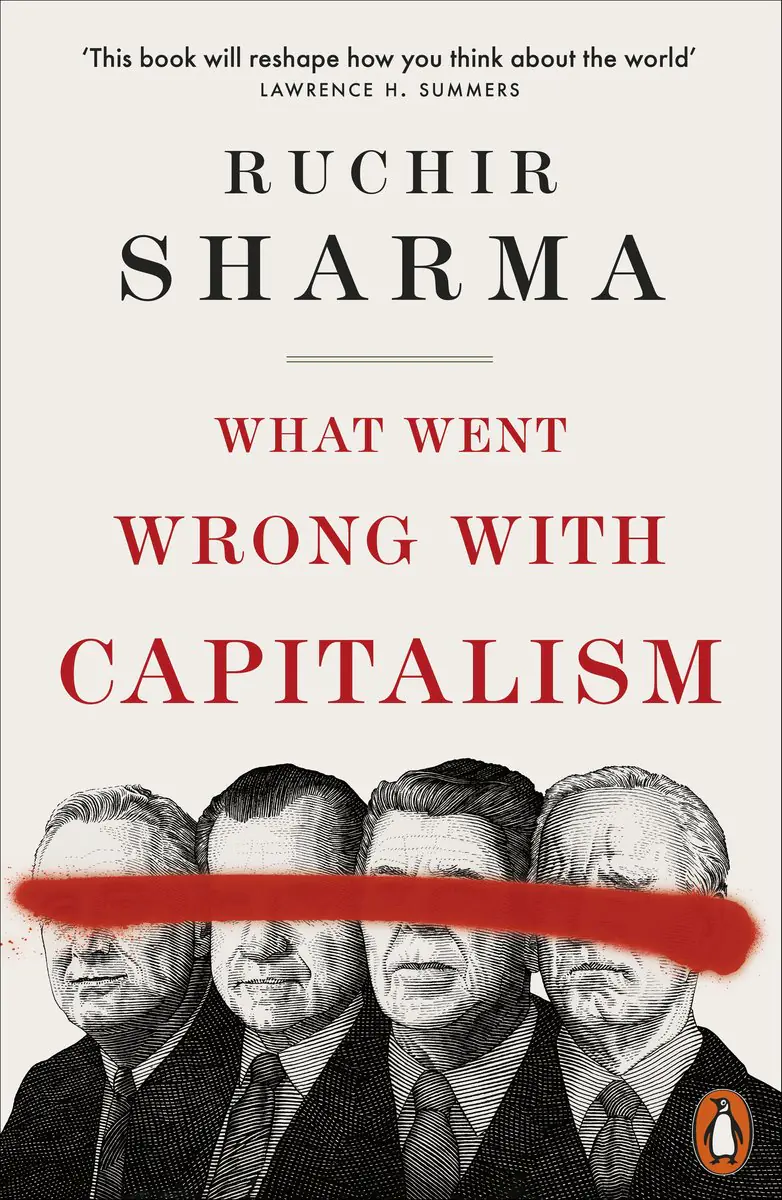
What Went Wrong With Capitalism
Masz tę lub inne książki?
Sprzedaj je u nas

What went wrong with capitalism is a question that economist Ruchir Sharma approaches with a fresh perspective. While progressives often criticize today’s capitalism as “socialism for the rich,” Sharma argues that the real issue is the significant growth of government influence across developed nations. This influence ranges from increased spending and regulation to large-scale economic interventions whenever markets show instability. Consequently, Sharma describes the situation as “socialized risk,” where government guarantees create a safety net for all societal strata—welfare for the poor, entitlements for the middle class, and financial bailouts for the wealthy. This distorted version of capitalism, heavily influenced by government involvement, has left voters feeling disenchanted, as it fails to reflect true free-market principles. This has led to a decline in productivity and economic growth, reducing overall wealth and causing widespread frustration. As these problems arose alongside the expansion of government, increasing the government's role further is unlikely to resolve these issues. Sharma proposes a set of seven solutions aimed at rebalancing the relationship between governmental support and free markets to secure a future of enhanced prosperity and wellbeing.
Wybierz stan zużycia:
WIĘCEJ O SKALI
What went wrong with capitalism is a question that economist Ruchir Sharma approaches with a fresh perspective. While progressives often criticize today’s capitalism as “socialism for the rich,” Sharma argues that the real issue is the significant growth of government influence across developed nations. This influence ranges from increased spending and regulation to large-scale economic interventions whenever markets show instability. Consequently, Sharma describes the situation as “socialized risk,” where government guarantees create a safety net for all societal strata—welfare for the poor, entitlements for the middle class, and financial bailouts for the wealthy. This distorted version of capitalism, heavily influenced by government involvement, has left voters feeling disenchanted, as it fails to reflect true free-market principles. This has led to a decline in productivity and economic growth, reducing overall wealth and causing widespread frustration. As these problems arose alongside the expansion of government, increasing the government's role further is unlikely to resolve these issues. Sharma proposes a set of seven solutions aimed at rebalancing the relationship between governmental support and free markets to secure a future of enhanced prosperity and wellbeing.
Szczegóły
Inne książki: Sharma Ruchir

Podobne produkty
Może Ci się spodobać
Inne książki z tej samej kategorii

Napisz opinię o książce i wygraj nagrodę!
W każdym miesiącu wybieramy najlepsze opinie i nagradzamy recenzentów.
Dowiedz się więcejWartość nagród w tym miesiącu
880 zł
Dodaj swoją opinię
Zaloguj się na swoje konto, aby mieć możliwość dodawania opinii.
Czy chcesz zostawić tylko ocenę?
Dodanie samej oceny o książce nie jest brane pod uwagę podczas losowania nagród. By mieć szansę na otrzymanie nagrody musisz napisać opinię o książce.
Już oceniłeś/zrecenzowałeś te książkę w przeszłości.
Możliwe jest dodanie tylko jednej recenzji do każdej z książek.
Sposoby dostawy
Odbiór w punkcie (6)
InPost Paczkomat 24/7

13,99 zł
ORLEN Paczka

12,99 zł




Dostawa na adres (7)
GLS U Ciebie - Kurier

14,99 zł
Kurier DPD

14,99 zł





Sposoby płatności
Płatność z góry
Przedpłata

Zwykły przelew
