Stan książek
Nasze książki są dokładnie sprawdzone i jasno określamy stan każdej z nich.

Nowa
Książka nowa.
Używany - jak nowa
Niezauważalne lub prawie niezauważalne ślady używania. Książkę ciężko odróżnić od nowej pozycji.
Używany - dobry
Normalne ślady używania wynikające z kartkowania podczas czytania, brak większych uszkodzeń lub zagięć.
Używany - widoczne ślady użytkowania
zagięte rogi, przyniszczona okładka, książka posiada wszystkie strony.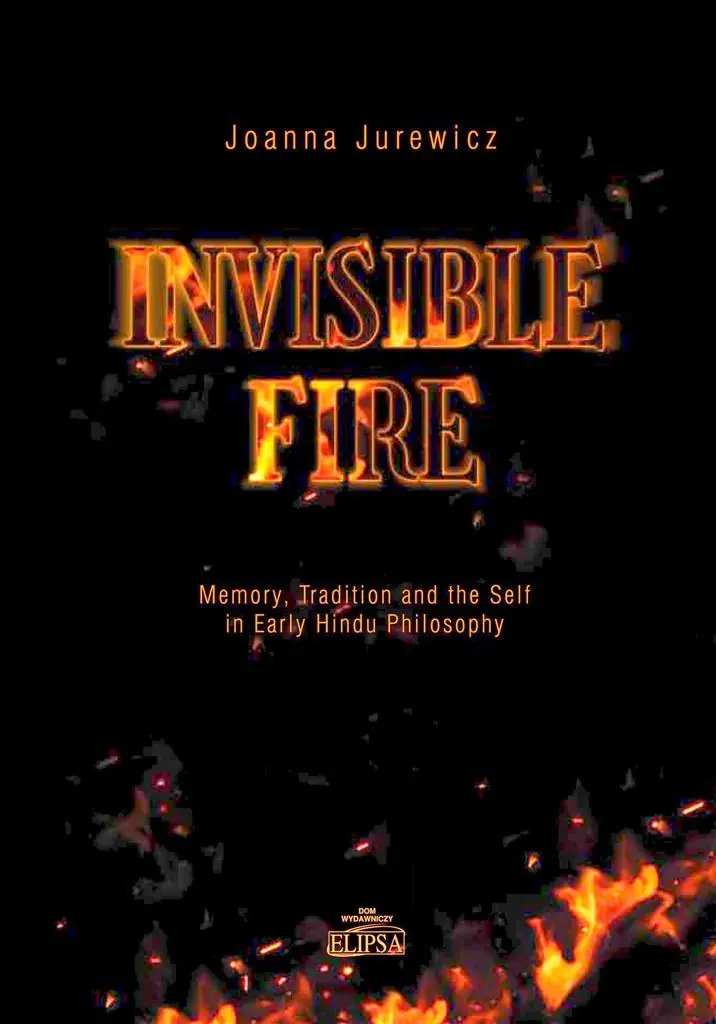
Invisible Fire. Memory, Tradition and the Self
Masz tę lub inne książki?
Sprzedaj je u nas

This book is divided into five chapters, each exploring different facets of early Smti cosmogonies and their implications. The opening chapter examines the cosmogonies found in MS 1 and MDhP 175-176, 240, suggesting that the world's creation is a cognitive act where a singular reality expresses its aspect through self-cognition in a subject-object framework. Ontological changes are linked to shifts in understanding. The MS Composer offers a structured model corresponding to the stages of self-creation, starting from mental faculties, progressing to sensory cognition capabilities, and culminating in a body with mobility. These manifestations within reality are viewed through the lens of human experience, encompassing the cosmos, rituals, society, humanity, and the unmanifested reality within them. The second chapter delves into the implications of this cognitive-centered creation narrative, highlighting how this perspective reshapes the ontological view presented in early Smti. This leads to two primary descriptive perspectives, which Yjavalkya had already addressed in BU 34. The third chapter addresses erroneous cognition, suggesting that philosophical anthropology can be understood through the subject-object cognition scenario that also underpins cosmic functioning. This misunderstanding causes individuals to perceive epistemic divisions as ontic, seeing themselves as separate, thus affecting their ontic reality because cognition precedes existence.In the fourth chapter, the focus is on liberating cognition, countering wrong cognition by dissolving the amalgamate agent, transforming consciousness, and altering cognitive perspectives from individual subjects to universal reality. This is described as 'subjectivisation', beginning with the authentic desire for self-cognition, i.e., understanding one's unmanifested self. The final chapter analyzes early Smti thought through various theoretical lenses from the humanities. Cognitive linguistics provides the foundation for the first two theories examined, while the third section focuses on the theories of play (initiated by Johan Huizinga), philosophy (examined through Eugen Fink and Hans-Georg Gadamer), and psychoanalysis (explored via Donald Winnicott). These theories offer tools for analyzing early Smti thought. In concluding, the concept of karma is explored through Roman Ingarden's theory of responsibility, shedding light on the moral aspects of early Hindu action theories.
Wybierz stan zużycia:
WIĘCEJ O SKALI
This book is divided into five chapters, each exploring different facets of early Smti cosmogonies and their implications. The opening chapter examines the cosmogonies found in MS 1 and MDhP 175-176, 240, suggesting that the world's creation is a cognitive act where a singular reality expresses its aspect through self-cognition in a subject-object framework. Ontological changes are linked to shifts in understanding. The MS Composer offers a structured model corresponding to the stages of self-creation, starting from mental faculties, progressing to sensory cognition capabilities, and culminating in a body with mobility. These manifestations within reality are viewed through the lens of human experience, encompassing the cosmos, rituals, society, humanity, and the unmanifested reality within them. The second chapter delves into the implications of this cognitive-centered creation narrative, highlighting how this perspective reshapes the ontological view presented in early Smti. This leads to two primary descriptive perspectives, which Yjavalkya had already addressed in BU 34. The third chapter addresses erroneous cognition, suggesting that philosophical anthropology can be understood through the subject-object cognition scenario that also underpins cosmic functioning. This misunderstanding causes individuals to perceive epistemic divisions as ontic, seeing themselves as separate, thus affecting their ontic reality because cognition precedes existence.In the fourth chapter, the focus is on liberating cognition, countering wrong cognition by dissolving the amalgamate agent, transforming consciousness, and altering cognitive perspectives from individual subjects to universal reality. This is described as 'subjectivisation', beginning with the authentic desire for self-cognition, i.e., understanding one's unmanifested self. The final chapter analyzes early Smti thought through various theoretical lenses from the humanities. Cognitive linguistics provides the foundation for the first two theories examined, while the third section focuses on the theories of play (initiated by Johan Huizinga), philosophy (examined through Eugen Fink and Hans-Georg Gadamer), and psychoanalysis (explored via Donald Winnicott). These theories offer tools for analyzing early Smti thought. In concluding, the concept of karma is explored through Roman Ingarden's theory of responsibility, shedding light on the moral aspects of early Hindu action theories.
Szczegóły
Dane producenta:
Inne książki tych autorów

Podobne produkty
Może Ci się spodobać
Inne książki z tej samej kategorii

Napisz opinię o książce i wygraj nagrodę!
W każdym miesiącu wybieramy najlepsze opinie i nagradzamy recenzentów.
Dowiedz się więcejWartość nagród w tym miesiącu
880 zł
Dodaj swoją opinię
Zaloguj się na swoje konto, aby mieć możliwość dodawania opinii.
Czy chcesz zostawić tylko ocenę?
Dodanie samej oceny o książce nie jest brane pod uwagę podczas losowania nagród. By mieć szansę na otrzymanie nagrody musisz napisać opinię o książce.
Już oceniłeś/zrecenzowałeś te książkę w przeszłości.
Możliwe jest dodanie tylko jednej recenzji do każdej z książek.
Sposoby dostawy
Odbiór w punkcie (6)
InPost Paczkomat 24/7

14,99 zł
DPD Pickup Automaty i Punkty Odbioru

10,49 zł




Dostawa na adres (7)
GLS U Ciebie - Kurier

14,99 zł
Kurier DPD

14,99 zł





Sposoby płatności
Płatność z góry
Przedpłata

Zwykły przelew
