Stan książek
Nasze książki są dokładnie sprawdzone i jasno określamy stan każdej z nich.

Nowa
Książka nowa.
Używany - jak nowa
Niezauważalne lub prawie niezauważalne ślady używania. Książkę ciężko odróżnić od nowej pozycji.
Używany - dobry
Normalne ślady używania wynikające z kartkowania podczas czytania, brak większych uszkodzeń lub zagięć.
Używany - widoczne ślady użytkowania
zagięte rogi, przyniszczona okładka, książka posiada wszystkie strony.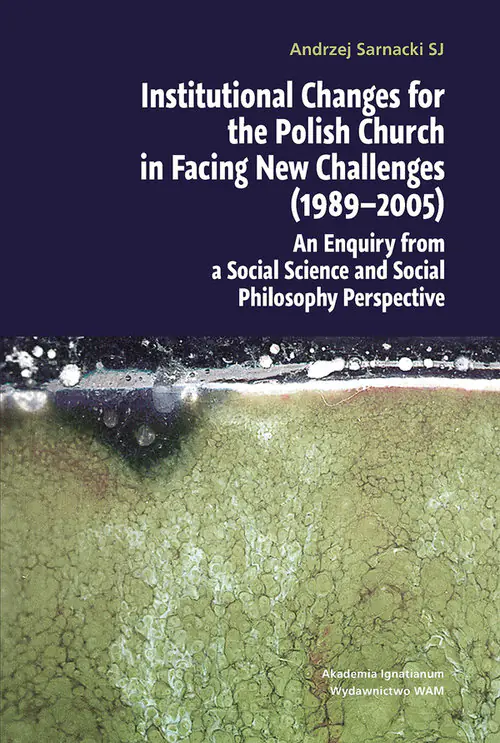
Institutional Changes for the Polish Church in Facing New Challenges (1989-2005)
Masz tę lub inne książki?
Sprzedaj je u nas

This dissertation explores the complex and often contentious intersections of the Church, politics, and culture, focusing specifically on the Catholic Church in Poland and the challenges it has faced since 1989. The aim is to delineate the patterns and strategies of the Church’s responses to these challenges. The research is anchored in the social sciences, drawing upon insights from organizational theories, and it is further informed by socio-philosophical and theological principles. This interdisciplinary approach ensures a practical orientation, blending diverse perspectives to contribute to the discussion.The dissertation introduces the concept of "Polish exceptionalism," presenting a Church navigating numerous unknowns and growing antagonisms amidst a landscape defined by plurality and choice in a global information society. It reflects on how the once steadfast Polish society has transitioned from communism to a liberal market economy, facing new dichotomies such as liberal versus conservative, non-compliant versus hierarchical, and respectable versus scandalous, all of which demand precise responses. The work suggests formulations of seemingly intricate strategies from a global viewpoint, necessary for understanding secularization, democracy, and participation in modernization within an evolving economic context.As noted by Prof. Johannes Müller from the Hochschule für Philosophie in Munich, the dissertation’s author demonstrates a profound engagement with the topics, supported by a knowledge of varied literatures and critical perspectives. This study provides ample food for thought, encouraging reflection and discussion. Furthermore, Prof. Norbert Brieskorn, also from the Hochschule für Philosophie, highlights the challenges faced by new generations in reconciling their traditions, which have played a dual role throughout history, with contemporary demands.
Wybierz stan zużycia:
WIĘCEJ O SKALI
This dissertation explores the complex and often contentious intersections of the Church, politics, and culture, focusing specifically on the Catholic Church in Poland and the challenges it has faced since 1989. The aim is to delineate the patterns and strategies of the Church’s responses to these challenges. The research is anchored in the social sciences, drawing upon insights from organizational theories, and it is further informed by socio-philosophical and theological principles. This interdisciplinary approach ensures a practical orientation, blending diverse perspectives to contribute to the discussion.The dissertation introduces the concept of "Polish exceptionalism," presenting a Church navigating numerous unknowns and growing antagonisms amidst a landscape defined by plurality and choice in a global information society. It reflects on how the once steadfast Polish society has transitioned from communism to a liberal market economy, facing new dichotomies such as liberal versus conservative, non-compliant versus hierarchical, and respectable versus scandalous, all of which demand precise responses. The work suggests formulations of seemingly intricate strategies from a global viewpoint, necessary for understanding secularization, democracy, and participation in modernization within an evolving economic context.As noted by Prof. Johannes Müller from the Hochschule für Philosophie in Munich, the dissertation’s author demonstrates a profound engagement with the topics, supported by a knowledge of varied literatures and critical perspectives. This study provides ample food for thought, encouraging reflection and discussion. Furthermore, Prof. Norbert Brieskorn, also from the Hochschule für Philosophie, highlights the challenges faced by new generations in reconciling their traditions, which have played a dual role throughout history, with contemporary demands.
Szczegóły
Dane producenta:
Inne książki tych autorów

Podobne produkty
Może Ci się spodobać
Inne książki z tej samej kategorii

Napisz opinię o książce i wygraj nagrodę!
W każdym miesiącu wybieramy najlepsze opinie i nagradzamy recenzentów.
Dowiedz się więcejWartość nagród w tym miesiącu
880 zł
Dodaj swoją opinię
Zaloguj się na swoje konto, aby mieć możliwość dodawania opinii.
Czy chcesz zostawić tylko ocenę?
Dodanie samej oceny o książce nie jest brane pod uwagę podczas losowania nagród. By mieć szansę na otrzymanie nagrody musisz napisać opinię o książce.
Już oceniłeś/zrecenzowałeś te książkę w przeszłości.
Możliwe jest dodanie tylko jednej recenzji do każdej z książek.
Sposoby dostawy
Odbiór w punkcie (7)
InPost Paczkomat 24/7

14,99 zł
DPD Pickup Automaty i Punkty Odbioru

11,99 zł





Dostawa na adres (7)
GLS U Ciebie - Kurier

14,99 zł
Kurier DPD

14,99 zł





Sposoby płatności
Płatność z góry
Przedpłata

Zwykły przelew
