Stan książek
Nasze książki są dokładnie sprawdzone i jasno określamy stan każdej z nich.


Nowa
Książka nowa.
Używany - jak nowa
Niezauważalne lub prawie niezauważalne ślady używania. Książkę ciężko odróżnić od nowej pozycji.
Używany - dobry
Normalne ślady używania wynikające z kartkowania podczas czytania, brak większych uszkodzeń lub zagięć.
Używany - widoczne ślady użytkowania
zagięte rogi, przyniszczona okładka, książka posiada wszystkie strony.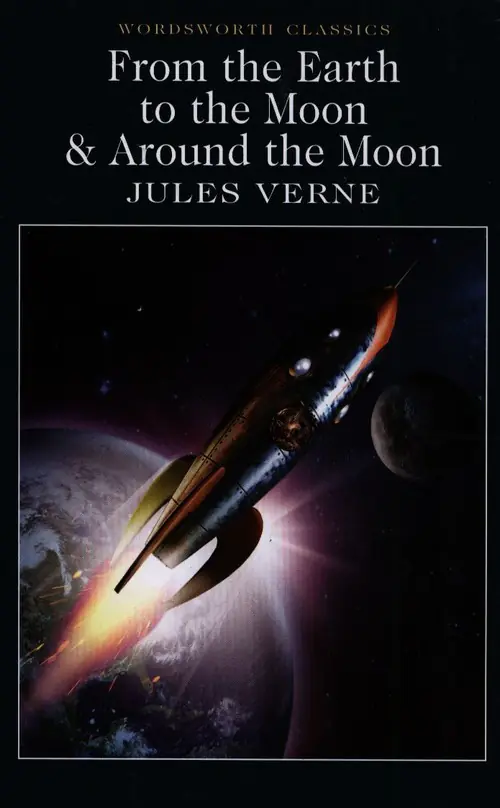
From the Earth to the Moon & Around the Moon
Masz tę lub inne książki?
Sprzedaj je u nas

Jules Verne, born in 1828 and passing in 1905, gained worldwide recognition as an author famed for his 'extraordinary voyages' novels. His innovative portrayal of emerging travel technologies fueled the imagination of his audience, encouraging them to envision an adventurous future shaped by industrial advancements rather than the distant past. This foresight significantly contributed to the formation of modern science fiction.In works like "From the Earth to the Moon" and its sequel "Around the Moon," Verne transformed the age-old dream of space travel into a compelling techno-fantasy, aligning with the aspirations of the industrial era. Motivated by Verne’s narratives, space enthusiasts pursued and eventually conquered the obstacles of space exploration, leading to real human moon landings within a century. Surprisingly, Verne himself probably did not believe it feasible for a manned projectile to be launched from a cannon, travel beyond and around the moon, and return safely to Earth. His stories were ingeniously crafted literary illusions, exploiting the science of his era to create convincing but ultimately deceptive scenarios. Readers, captivated by his artistry, are still led to believe in the viability of such lunar voyages during his time.
Wybierz stan zużycia:
WIĘCEJ O SKALI
Jules Verne, born in 1828 and passing in 1905, gained worldwide recognition as an author famed for his 'extraordinary voyages' novels. His innovative portrayal of emerging travel technologies fueled the imagination of his audience, encouraging them to envision an adventurous future shaped by industrial advancements rather than the distant past. This foresight significantly contributed to the formation of modern science fiction.In works like "From the Earth to the Moon" and its sequel "Around the Moon," Verne transformed the age-old dream of space travel into a compelling techno-fantasy, aligning with the aspirations of the industrial era. Motivated by Verne’s narratives, space enthusiasts pursued and eventually conquered the obstacles of space exploration, leading to real human moon landings within a century. Surprisingly, Verne himself probably did not believe it feasible for a manned projectile to be launched from a cannon, travel beyond and around the moon, and return safely to Earth. His stories were ingeniously crafted literary illusions, exploiting the science of his era to create convincing but ultimately deceptive scenarios. Readers, captivated by his artistry, are still led to believe in the viability of such lunar voyages during his time.
Szczegóły
24.89 zł
nowa
-
24.89 zł
nowa

Inne książki: Juliusz Verne

Podobne produkty
Może Ci się spodobać
Inne książki z tej samej kategorii

Napisz opinię o książce i wygraj nagrodę!
W każdym miesiącu wybieramy najlepsze opinie i nagradzamy recenzentów.
Dowiedz się więcejWartość nagród w tym miesiącu
880 zł
Dodaj swoją opinię
Zaloguj się na swoje konto, aby mieć możliwość dodawania opinii.
Czy chcesz zostawić tylko ocenę?
Dodanie samej oceny o książce nie jest brane pod uwagę podczas losowania nagród. By mieć szansę na otrzymanie nagrody musisz napisać opinię o książce.
Już oceniłeś/zrecenzowałeś te książkę w przeszłości.
Możliwe jest dodanie tylko jednej recenzji do każdej z książek.
Sposoby dostawy
Odbiór w punkcie (6)
InPost Paczkomat 24/7

14,99 zł
DPD Pickup Automaty i Punkty Odbioru

10,49 zł




Dostawa na adres (7)
GLS U Ciebie - Kurier

14,99 zł
Kurier DPD

14,99 zł





Sposoby płatności
Płatność z góry
Przedpłata

Zwykły przelew
