Stan książek
Nasze książki są dokładnie sprawdzone i jasno określamy stan każdej z nich.


Nowa
Książka nowa.
Używany - jak nowa
Niezauważalne lub prawie niezauważalne ślady używania. Książkę ciężko odróżnić od nowej pozycji.
Używany - dobry
Normalne ślady używania wynikające z kartkowania podczas czytania, brak większych uszkodzeń lub zagięć.
Używany - widoczne ślady użytkowania
zagięte rogi, przyniszczona okładka, książka posiada wszystkie strony.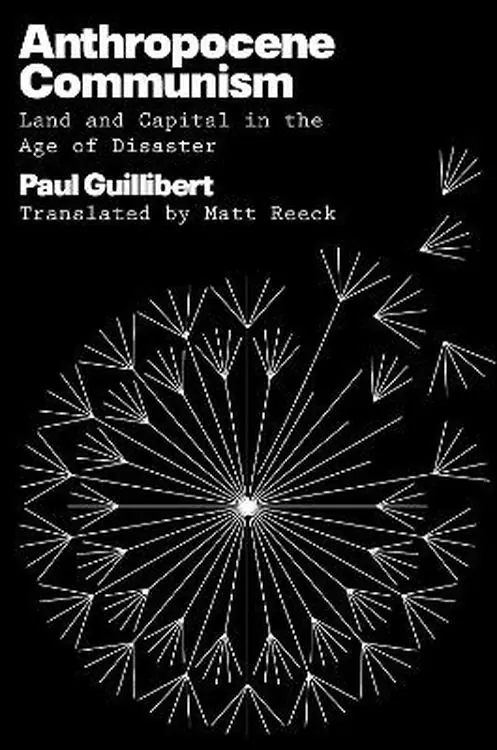
Anthropocene Communism: Land and Capital in the Age of Disaster
Masz tę lub inne książki?
Sprzedaj je u nas

In his work *Anthropocene Communism*, philosopher and activist Paul Guillibert introduces a novel concept of communism geared towards the sustainability of life, which he terms biocommunism. This approach aims to transcend the ecological dilemmas created by the advanced stages of capitalism. By presenting a fresh interpretation of Karl Marx's interactions with Russian populist 'terrorists', and drawing from the cultural insights of Raymond Williams, the Marxist perspectives of José Carlos Mariátegui, and Ernst Bloch's focus on the connection to land, Guillibert constructs a philosophical framework of naturalism that reimagines how humans engage with the environment. This relationship is not static; it is shaped by a tapestry of cultural, social, and historical contexts. Guillibert argues that to navigate beyond the Anthropocene era, innovative strategies are crucial. He suggests that communism must evolve into a form of environmentalism, proposing that only when political ecology aligns with communist principles can it achieve true revolutionary change.
Wybierz stan zużycia:
WIĘCEJ O SKALI
In his work *Anthropocene Communism*, philosopher and activist Paul Guillibert introduces a novel concept of communism geared towards the sustainability of life, which he terms biocommunism. This approach aims to transcend the ecological dilemmas created by the advanced stages of capitalism. By presenting a fresh interpretation of Karl Marx's interactions with Russian populist 'terrorists', and drawing from the cultural insights of Raymond Williams, the Marxist perspectives of José Carlos Mariátegui, and Ernst Bloch's focus on the connection to land, Guillibert constructs a philosophical framework of naturalism that reimagines how humans engage with the environment. This relationship is not static; it is shaped by a tapestry of cultural, social, and historical contexts. Guillibert argues that to navigate beyond the Anthropocene era, innovative strategies are crucial. He suggests that communism must evolve into a form of environmentalism, proposing that only when political ecology aligns with communist principles can it achieve true revolutionary change.
Szczegóły
Inne książki: Paul Guillibert

Podobne produkty
Może Ci się spodobać
Inne książki z tej samej kategorii

Napisz opinię o książce i wygraj nagrodę!
W każdym miesiącu wybieramy najlepsze opinie i nagradzamy recenzentów.
Dowiedz się więcejWartość nagród w tym miesiącu
880 zł
Dodaj swoją opinię
Zaloguj się na swoje konto, aby mieć możliwość dodawania opinii.
Czy chcesz zostawić tylko ocenę?
Dodanie samej oceny o książce nie jest brane pod uwagę podczas losowania nagród. By mieć szansę na otrzymanie nagrody musisz napisać opinię o książce.
Już oceniłeś/zrecenzowałeś te książkę w przeszłości.
Możliwe jest dodanie tylko jednej recenzji do każdej z książek.
Sposoby dostawy
Odbiór w punkcie (6)
InPost Paczkomaty 24/7

13,99 zł
ORLEN Paczka

12,99 zł




Dostawa na adres (7)
GLS U Ciebie - Kurier

14,99 zł
Kurier DPD

14,99 zł





Sposoby płatności
Płatność z góry
Przedpłata

Zwykły przelew
