Stan książek
Nasze książki są dokładnie sprawdzone i jasno określamy stan każdej z nich.


Nowa
Książka nowa.
Używany - jak nowa
Niezauważalne lub prawie niezauważalne ślady używania. Książkę ciężko odróżnić od nowej pozycji.
Używany - dobry
Normalne ślady używania wynikające z kartkowania podczas czytania, brak większych uszkodzeń lub zagięć.
Używany - widoczne ślady użytkowania
zagięte rogi, przyniszczona okładka, książka posiada wszystkie strony.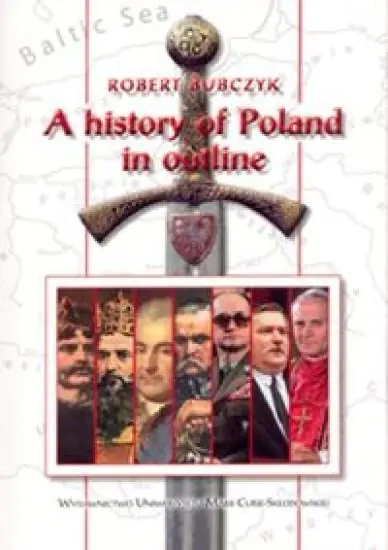
A History of Poland in Outline
DODAJ DO LISTY ŻYCZEŃ
Masz tę lub inne książki?
Sprzedaj je u nas

This book serves as a valuable companion for English-speaking students attending history lectures on Poland, particularly those arriving through various foreign exchange programs or independently. Furthermore, it acts as a comprehensive introduction to Poland's complex history for foreigners interested in understanding this dynamically changing nation situated in the center of Europe. The hope is that this overview will encourage keen history students to delve deeper into the captivating past of one of Europe’s most intriguing countries. For many, it may also clarify why the notion of freedom resonates so strongly with Poles, how Europe’s first democratic constitution came to be, and the significance of Lublin and Gdańsk in the fall of the communist regime. Moreover, the book provides insight into the nature of contemporary Polish society, highlighting their deep-rooted ties to tradition, freedom, and democratic ideals.
Wybierz stan zużycia:
WIĘCEJ O SKALI
33.59 zł
nowa
Pakujemy 30.09

- nowa książka
jak nowa
dobry
widoczne ślady używania
Dostępna ilość 6
Uwaga została 1 szt.
Posiadamy 6 szt.
This book serves as a valuable companion for English-speaking students attending history lectures on Poland, particularly those arriving through various foreign exchange programs or independently. Furthermore, it acts as a comprehensive introduction to Poland's complex history for foreigners interested in understanding this dynamically changing nation situated in the center of Europe. The hope is that this overview will encourage keen history students to delve deeper into the captivating past of one of Europe’s most intriguing countries. For many, it may also clarify why the notion of freedom resonates so strongly with Poles, how Europe’s first democratic constitution came to be, and the significance of Lublin and Gdańsk in the fall of the communist regime. Moreover, the book provides insight into the nature of contemporary Polish society, highlighting their deep-rooted ties to tradition, freedom, and democratic ideals.
Szczegóły
Inne książki: Robert Bubczyk

Podobne produkty
Może Ci się spodobać
Inne książki z tej samej kategorii

Napisz opinię o książce i wygraj nagrodę!
W każdym miesiącu wybieramy najlepsze opinie i nagradzamy recenzentów.
Dowiedz się więcejWartość nagród w tym miesiącu
880 zł
Dodaj swoją opinię
Zaloguj się na swoje konto, aby mieć możliwość dodawania opinii.
Czy chcesz zostawić tylko ocenę?
Dodanie samej oceny o książce nie jest brane pod uwagę podczas losowania nagród. By mieć szansę na otrzymanie nagrody musisz napisać opinię o książce.
Już oceniłeś/zrecenzowałeś te książkę w przeszłości.
Możliwe jest dodanie tylko jednej recenzji do każdej z książek.
Sposoby dostawy
Odbiór w punkcie (7)
InPost Paczkomat 24/7

14,99 zł
DPD Pickup Automaty i Punkty Odbioru

11,99 zł





Dostawa na adres (7)
GLS U Ciebie - Kurier

14,99 zł
Kurier DPD

14,99 zł





Sposoby płatności
Płatność z góry
Przedpłata

Zwykły przelew
