Stan książek
Nasze książki są dokładnie sprawdzone i jasno określamy stan każdej z nich.

Nowa
Książka nowa.
Używany - jak nowa
Niezauważalne lub prawie niezauważalne ślady używania. Książkę ciężko odróżnić od nowej pozycji.
Używany - dobry
Normalne ślady używania wynikające z kartkowania podczas czytania, brak większych uszkodzeń lub zagięć.
Używany - widoczne ślady użytkowania
zagięte rogi, przyniszczona okładka, książka posiada wszystkie strony.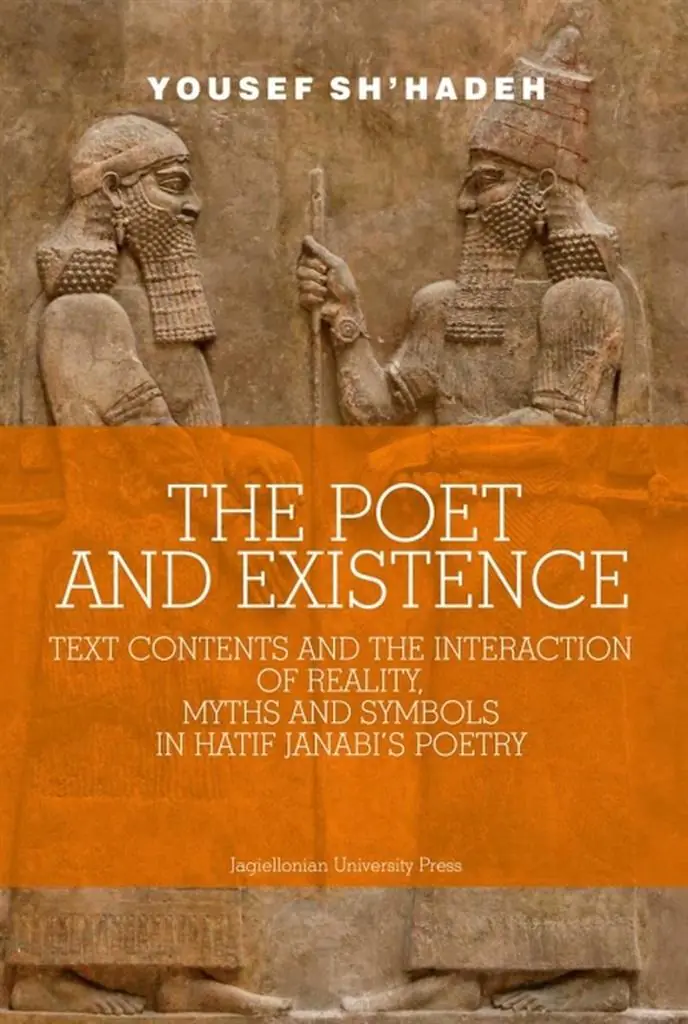
The Poet and Existence
DODAJ DO LISTY ŻYCZEŃ
Masz tę lub inne książki?
Sprzedaj je u nas

This study delves into the significant facets of Hatif Janabi's poetic oeuvre, shaped by his roots in the Arab world rich with its ancient traditions, while simultaneously engaging with Polish culture, noted for its distinct Slavic qualities within Europe. In Janabi's work, there is a profound sensitivity to life's tribulations within a realm marked by harsh alienation, bringing forth the unease of living abroad alongside an existential philosophical outlook. This dimension renders his poetry a conduit for universal human plight and an intimate spiritual reflection, further enhanced by its intellectual depth, bridging the venerable cultures of the East and Europe.Janabi's poetry traverses an array of themes, reflecting on the human condition, encompassing personal existence, life's setbacks, aspirations, and reflections on disillusionment. It underscores the often brutal nature of humanity while suggesting a re-humanization of animals and objects, a quest for attributes humans have lost. The poetic compositions, replete with rich semantic and rhetorical layers, captivate both readers and critics, inviting interpretations that unearth the aesthetic, symbolic, and intellectual richness inherent within their titles and contexts.In Janabi's universe, poetry becomes entwined with the vastness and hollowness of the desert—both serve as loci of existential dread. Despite the stark juxtaposition of somber poetry with illuminated space, Janabi adeptly blends these dichotomies into a unified vision, accessible predominantly to poets who can envisage a complete existence amid the enigmatic wilderness of sand. Herein lies the desert's symbolic essence, a surreal expanse laden with myriad images and contradictions, perceptible only to the mindful observer. The poet, amidst this turbid darkness, is left with no choice but to confront and sidestep the inherent fears of being engulfed in this shadowy domain.
Wybierz stan zużycia:
WIĘCEJ O SKALI
38.13 zł
nowa
Pakujemy 28.09

- nowa książka
jak nowa
dobry
widoczne ślady używania
Dostępna ilość 5
Uwaga została 1 szt.
Posiadamy 5 szt.
This study delves into the significant facets of Hatif Janabi's poetic oeuvre, shaped by his roots in the Arab world rich with its ancient traditions, while simultaneously engaging with Polish culture, noted for its distinct Slavic qualities within Europe. In Janabi's work, there is a profound sensitivity to life's tribulations within a realm marked by harsh alienation, bringing forth the unease of living abroad alongside an existential philosophical outlook. This dimension renders his poetry a conduit for universal human plight and an intimate spiritual reflection, further enhanced by its intellectual depth, bridging the venerable cultures of the East and Europe.Janabi's poetry traverses an array of themes, reflecting on the human condition, encompassing personal existence, life's setbacks, aspirations, and reflections on disillusionment. It underscores the often brutal nature of humanity while suggesting a re-humanization of animals and objects, a quest for attributes humans have lost. The poetic compositions, replete with rich semantic and rhetorical layers, captivate both readers and critics, inviting interpretations that unearth the aesthetic, symbolic, and intellectual richness inherent within their titles and contexts.In Janabi's universe, poetry becomes entwined with the vastness and hollowness of the desert—both serve as loci of existential dread. Despite the stark juxtaposition of somber poetry with illuminated space, Janabi adeptly blends these dichotomies into a unified vision, accessible predominantly to poets who can envisage a complete existence amid the enigmatic wilderness of sand. Herein lies the desert's symbolic essence, a surreal expanse laden with myriad images and contradictions, perceptible only to the mindful observer. The poet, amidst this turbid darkness, is left with no choice but to confront and sidestep the inherent fears of being engulfed in this shadowy domain.
Szczegóły
Dane producenta:
Inne książki: Yousef Sh'hadeh

Podobne produkty
Może Ci się spodobać
Inne książki z tej samej kategorii

Napisz opinię o książce i wygraj nagrodę!
W każdym miesiącu wybieramy najlepsze opinie i nagradzamy recenzentów.
Dowiedz się więcejWartość nagród w tym miesiącu
880 zł
Dodaj swoją opinię
Zaloguj się na swoje konto, aby mieć możliwość dodawania opinii.
Czy chcesz zostawić tylko ocenę?
Dodanie samej oceny o książce nie jest brane pod uwagę podczas losowania nagród. By mieć szansę na otrzymanie nagrody musisz napisać opinię o książce.
Już oceniłeś/zrecenzowałeś te książkę w przeszłości.
Możliwe jest dodanie tylko jednej recenzji do każdej z książek.
Sposoby dostawy
Odbiór w punkcie (7)
InPost Paczkomat 24/7

14,99 zł
DPD Pickup Automaty i Punkty Odbioru

11,99 zł





Dostawa na adres (7)
GLS U Ciebie - Kurier

14,99 zł
Kurier DPD

14,99 zł





Sposoby płatności
Płatność z góry
Przedpłata

Zwykły przelew
