Stan książek
Nasze książki są dokładnie sprawdzone i jasno określamy stan każdej z nich.

Nowa
Książka nowa.
Używany - jak nowa
Niezauważalne lub prawie niezauważalne ślady używania. Książkę ciężko odróżnić od nowej pozycji.
Używany - dobry
Normalne ślady używania wynikające z kartkowania podczas czytania, brak większych uszkodzeń lub zagięć.
Używany - widoczne ślady użytkowania
zagięte rogi, przyniszczona okładka, książka posiada wszystkie strony.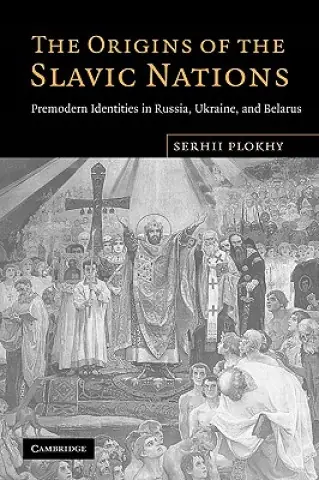
The Origins of the Slavic Nations: Premodern Identities in Russia, Ukraine, and Belarus
Masz tę lub inne książki?
Sprzedaj je u nas

Plokhy's work offers fresh and persuasive perspectives on significant debates concerning the development of East Slavic identities. He provides a substantial contribution to the historical understanding of East Slavic nations, effectively meeting his goal to rethink the field. His book is essential for any historian interested in the East Slavs during the pre-modern era, according to David G. Rowley from the University of Wisconsin--Platteville.Described as an ambitious and impressive revisionist study, Plokhy's interpretation reveals new insights into the gradual separation of the East Slavic peoples as their historical paths diverged, particularly highlighted by the mutual misunderstandings of the 1654 Union of Pereiaslav. This work sets a high standard for future historians to explore East Slavic national identity, noted by Charles J. Halperin in the Canadian Journal of History.Daniel H. Kaiser, from the Slavic Review, highlights the book's strengths in summarizing key historical facts and discussing the major issues involved. Plokhy successfully differentiates the meanings of terms over time, providing valuable insights into East Slavic identities before modern times. His engaging style makes the book appealing beyond a specialist audience, as mentioned by Andrew M. Drozd from the Slavic and East European Journal.Serhy Yekelchyk in the Journal of Modern History remarks on Plokhy's ability to refute 'primordalist' views and reconstruct the communal identities that existed among Russians, Ukrainians, and Belarusians. According to Brian J. Boeck from The Journal of Interdisciplinary History, this book is crucial for understanding premodern divisions in Eastern Europe. Robert H. Greene in the Journal of World History appreciates Plokhy's synthesis of Russian, Ukrainian, and Belarusian historiography, offering an original take on national identity formation.
Wybierz stan zużycia:
WIĘCEJ O SKALI
Plokhy's work offers fresh and persuasive perspectives on significant debates concerning the development of East Slavic identities. He provides a substantial contribution to the historical understanding of East Slavic nations, effectively meeting his goal to rethink the field. His book is essential for any historian interested in the East Slavs during the pre-modern era, according to David G. Rowley from the University of Wisconsin--Platteville.Described as an ambitious and impressive revisionist study, Plokhy's interpretation reveals new insights into the gradual separation of the East Slavic peoples as their historical paths diverged, particularly highlighted by the mutual misunderstandings of the 1654 Union of Pereiaslav. This work sets a high standard for future historians to explore East Slavic national identity, noted by Charles J. Halperin in the Canadian Journal of History.Daniel H. Kaiser, from the Slavic Review, highlights the book's strengths in summarizing key historical facts and discussing the major issues involved. Plokhy successfully differentiates the meanings of terms over time, providing valuable insights into East Slavic identities before modern times. His engaging style makes the book appealing beyond a specialist audience, as mentioned by Andrew M. Drozd from the Slavic and East European Journal.Serhy Yekelchyk in the Journal of Modern History remarks on Plokhy's ability to refute 'primordalist' views and reconstruct the communal identities that existed among Russians, Ukrainians, and Belarusians. According to Brian J. Boeck from The Journal of Interdisciplinary History, this book is crucial for understanding premodern divisions in Eastern Europe. Robert H. Greene in the Journal of World History appreciates Plokhy's synthesis of Russian, Ukrainian, and Belarusian historiography, offering an original take on national identity formation.
Szczegóły
Dane producenta:
Inne książki: Serhii Plokhy

Podobne produkty
Może Ci się spodobać
Inne książki z tej samej kategorii

Napisz opinię o książce i wygraj nagrodę!
W każdym miesiącu wybieramy najlepsze opinie i nagradzamy recenzentów.
Dowiedz się więcejWartość nagród w tym miesiącu
880 zł
Dodaj swoją opinię
Zaloguj się na swoje konto, aby mieć możliwość dodawania opinii.
Czy chcesz zostawić tylko ocenę?
Dodanie samej oceny o książce nie jest brane pod uwagę podczas losowania nagród. By mieć szansę na otrzymanie nagrody musisz napisać opinię o książce.
Już oceniłeś/zrecenzowałeś te książkę w przeszłości.
Możliwe jest dodanie tylko jednej recenzji do każdej z książek.
Sposoby dostawy
Odbiór w punkcie (7)
InPost Paczkomat 24/7

14,99 zł
DPD Pickup Automaty i Punkty Odbioru

11,99 zł





Dostawa na adres (7)
GLS U Ciebie - Kurier

14,99 zł
Kurier DPD

14,99 zł





Sposoby płatności
Płatność z góry
Przedpłata

Zwykły przelew
