Stan książek
Nasze książki są dokładnie sprawdzone i jasno określamy stan każdej z nich.


Nowa
Książka nowa.
Używany - jak nowa
Niezauważalne lub prawie niezauważalne ślady używania. Książkę ciężko odróżnić od nowej pozycji.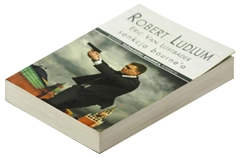
Używany - dobry
Normalne ślady używania wynikające z kartkowania podczas czytania, brak większych uszkodzeń lub zagięć.
Używany - widoczne ślady użytkowania
zagięte rogi, przyniszczona okładka, książka posiada wszystkie strony.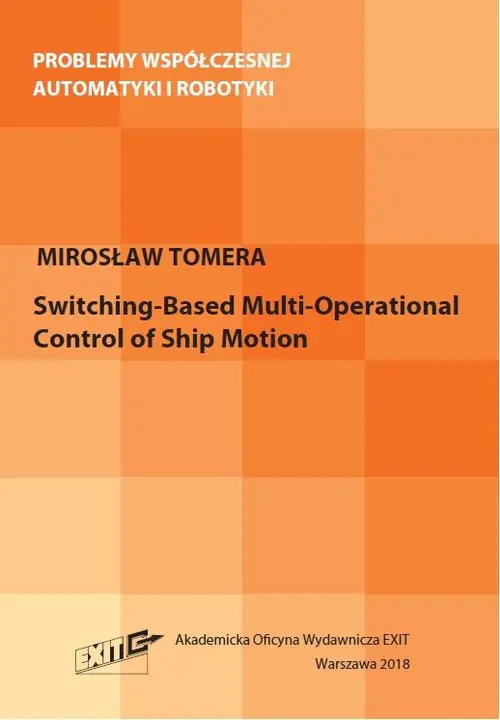
Switching-Based Multi-Operational Control of...
Masz tę lub inne książki?
Sprzedaj je u nas

This book offers an in-depth exploration of the mathematical modeling and automatic control of ship motion. It begins by discussing various models used to describe the kinematics and dynamics of ships, providing simplified versions for easier understanding. The focus then shifts to addressing challenges associated with automating ship movement, including path planning, navigation, and guidance systems, as well as control mechanisms.The text delves into the complexities of multi-operational control systems designed for marine surface vessels. It examines the intricacies of ship motion control, describing the benefits of using switching systems. The book explains how such systems can be structured to improve efficiency in ship movement. Additionally, it covers critical components such as path planning, speed estimation, and the role of a supervisory system, all while maintaining a bank of controllers to manage various aspects of control.A section of the book is dedicated to experiments conducted with these multi-operational control systems, detailing parameter settings, navigation scenarios, and providing case studies for practical insight. Concluding remarks summarize the findings and implications of the research presented.The appendices offer supplementary material, including a mathematical model of the training ship "Blue Lady," a description of the discrete-time Kalman filter, sample pathways, and real-time software and hardware equipment, enhancing the reader's comprehension of the text. The detailed references provide a strong foundation for further research and exploration.
Wybierz stan zużycia:
WIĘCEJ O SKALI
This book offers an in-depth exploration of the mathematical modeling and automatic control of ship motion. It begins by discussing various models used to describe the kinematics and dynamics of ships, providing simplified versions for easier understanding. The focus then shifts to addressing challenges associated with automating ship movement, including path planning, navigation, and guidance systems, as well as control mechanisms.The text delves into the complexities of multi-operational control systems designed for marine surface vessels. It examines the intricacies of ship motion control, describing the benefits of using switching systems. The book explains how such systems can be structured to improve efficiency in ship movement. Additionally, it covers critical components such as path planning, speed estimation, and the role of a supervisory system, all while maintaining a bank of controllers to manage various aspects of control.A section of the book is dedicated to experiments conducted with these multi-operational control systems, detailing parameter settings, navigation scenarios, and providing case studies for practical insight. Concluding remarks summarize the findings and implications of the research presented.The appendices offer supplementary material, including a mathematical model of the training ship "Blue Lady," a description of the discrete-time Kalman filter, sample pathways, and real-time software and hardware equipment, enhancing the reader's comprehension of the text. The detailed references provide a strong foundation for further research and exploration.
Szczegóły
Inne książki: Tomera Mirosław

Podobne produkty
Może Ci się spodobać
Inne książki z tej samej kategorii

Napisz opinię o książce i wygraj nagrodę!
W każdym miesiącu wybieramy najlepsze opinie i nagradzamy recenzentów.
Dowiedz się więcejWartość nagród w tym miesiącu
880 zł
Dodaj swoją opinię
Zaloguj się na swoje konto, aby mieć możliwość dodawania opinii.
Czy chcesz zostawić tylko ocenę?
Dodanie samej oceny o książce nie jest brane pod uwagę podczas losowania nagród. By mieć szansę na otrzymanie nagrody musisz napisać opinię o książce.
Już oceniłeś/zrecenzowałeś te książkę w przeszłości.
Możliwe jest dodanie tylko jednej recenzji do każdej z książek.
Sposoby dostawy
Odbiór w punkcie (6)
InPost Paczkomat 24/7

14,99 zł
DPD Pickup Automaty i Punkty Odbioru

10,49 zł




Dostawa na adres (7)
GLS U Ciebie - Kurier

14,99 zł
Kurier DPD

14,99 zł





Sposoby płatności
Płatność z góry
Przedpłata

Zwykły przelew
