Stan książek
Nasze książki są dokładnie sprawdzone i jasno określamy stan każdej z nich.


Nowa
Książka nowa.
Używany - jak nowa
Niezauważalne lub prawie niezauważalne ślady używania. Książkę ciężko odróżnić od nowej pozycji.
Używany - dobry
Normalne ślady używania wynikające z kartkowania podczas czytania, brak większych uszkodzeń lub zagięć.
Używany - widoczne ślady użytkowania
zagięte rogi, przyniszczona okładka, książka posiada wszystkie strony.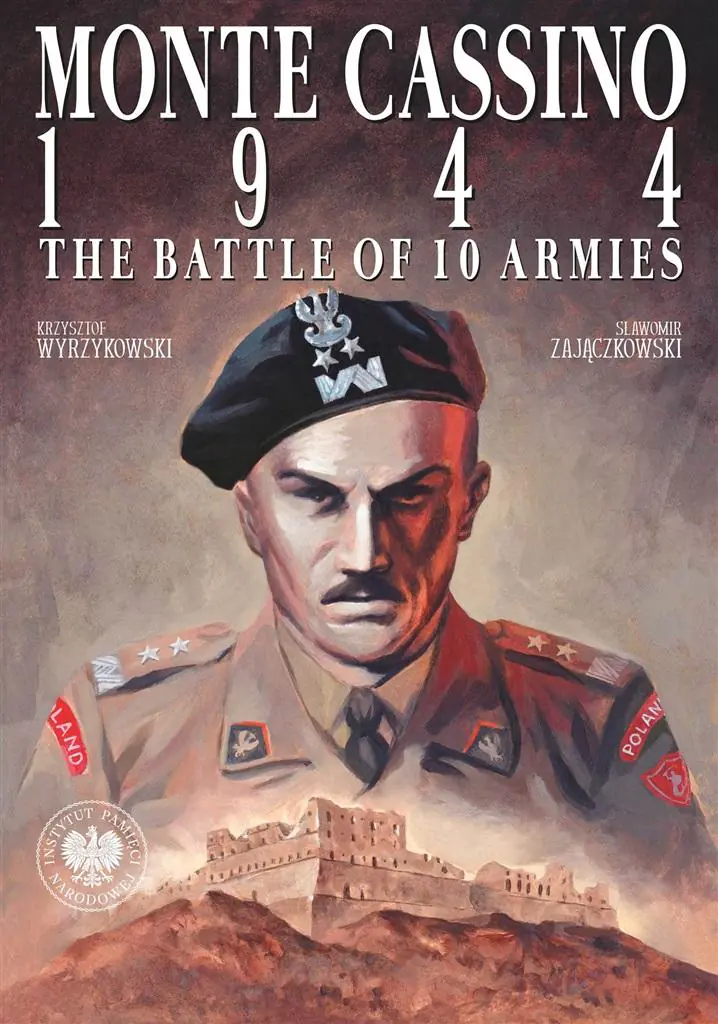
Monte Cassino 1944. The Battle of 10 Armies wer. angielska
Masz tę lub inne książki?
Sprzedaj je u nas

The monastery at Mons Casinus, known as Montecassino in Italian, stood for centuries as a pivotal religious, academic, and cultural hub in Europe, representative of the Christian heritage. Established by Saint Benedict of Nursia in the 620s, the site withstood invasions from the Lombards and Saracens, as well as a devastating earthquake. The monastery's most prosperous era began in the 14th century, highlighted by a remarkable library housing over one hundred thousand volumes, including numerous incunabula and manuscripts. This rich legacy faced potential destruction in 1944 when, following Italy's surrender in September 1943, Monte Cassino was absorbed into the German defensive line known as the Gustav Line. Capturing Monte Cassino was crucial for the Allies to advance toward Rome. From January 1944, troops from America, France, Britain, Morocco, Algeria, Nepal (Gurkhas), India, New Zealand, and the Maori struggled for months to overcome this stronghold. Ultimately, the task fell to the Poles. The subsequent Battle of Monte Cassino, which not only obliterated the monastery but also resulted in approximately 50,000 military casualties, is remembered as one of the Second World War's most ferocious engagements. The involvement of numerous nationalities earned it the title of the Battle of the Ten Armies.
Wybierz stan zużycia:
WIĘCEJ O SKALI
The monastery at Mons Casinus, known as Montecassino in Italian, stood for centuries as a pivotal religious, academic, and cultural hub in Europe, representative of the Christian heritage. Established by Saint Benedict of Nursia in the 620s, the site withstood invasions from the Lombards and Saracens, as well as a devastating earthquake. The monastery's most prosperous era began in the 14th century, highlighted by a remarkable library housing over one hundred thousand volumes, including numerous incunabula and manuscripts. This rich legacy faced potential destruction in 1944 when, following Italy's surrender in September 1943, Monte Cassino was absorbed into the German defensive line known as the Gustav Line. Capturing Monte Cassino was crucial for the Allies to advance toward Rome. From January 1944, troops from America, France, Britain, Morocco, Algeria, Nepal (Gurkhas), India, New Zealand, and the Maori struggled for months to overcome this stronghold. Ultimately, the task fell to the Poles. The subsequent Battle of Monte Cassino, which not only obliterated the monastery but also resulted in approximately 50,000 military casualties, is remembered as one of the Second World War's most ferocious engagements. The involvement of numerous nationalities earned it the title of the Battle of the Ten Armies.
Szczegóły
Inne książki tych autorów

Podobne produkty
Może Ci się spodobać
Inne książki z tej samej kategorii

Napisz opinię o książce i wygraj nagrodę!
W każdym miesiącu wybieramy najlepsze opinie i nagradzamy recenzentów.
Dowiedz się więcejWartość nagród w tym miesiącu
880 zł
Dodaj swoją opinię
Zaloguj się na swoje konto, aby mieć możliwość dodawania opinii.
Czy chcesz zostawić tylko ocenę?
Dodanie samej oceny o książce nie jest brane pod uwagę podczas losowania nagród. By mieć szansę na otrzymanie nagrody musisz napisać opinię o książce.
Już oceniłeś/zrecenzowałeś te książkę w przeszłości.
Możliwe jest dodanie tylko jednej recenzji do każdej z książek.
Sposoby dostawy
Odbiór w punkcie (6)
InPost Paczkomat 24/7

13,99 zł
ORLEN Paczka

12,99 zł




Dostawa na adres (7)
GLS U Ciebie - Kurier

14,99 zł
Kurier DPD

14,99 zł





Sposoby płatności
Płatność z góry
Przedpłata

Zwykły przelew
