Stan książek
Nasze książki są dokładnie sprawdzone i jasno określamy stan każdej z nich.


Nowa
Książka nowa.
Używany - jak nowa
Niezauważalne lub prawie niezauważalne ślady używania. Książkę ciężko odróżnić od nowej pozycji.
Używany - dobry
Normalne ślady używania wynikające z kartkowania podczas czytania, brak większych uszkodzeń lub zagięć.
Używany - widoczne ślady użytkowania
zagięte rogi, przyniszczona okładka, książka posiada wszystkie strony.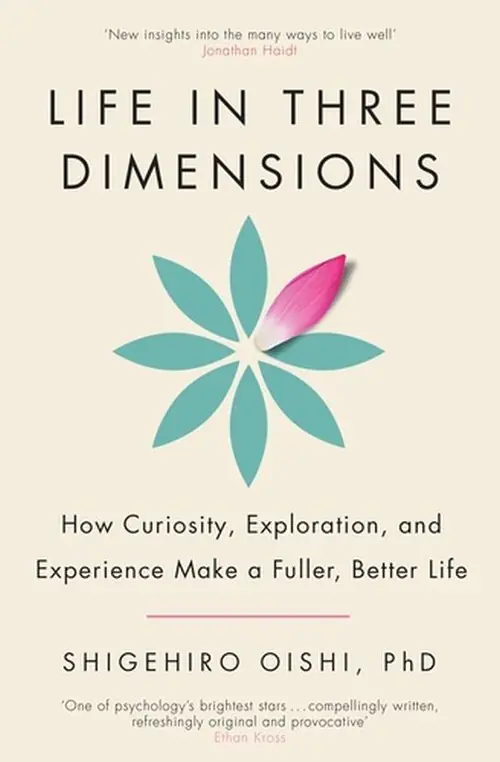
Life in Three Dimensions
Masz tę lub inne książki?
Sprzedaj je u nas

Jonathan Haidt provides fresh perspectives on pathways to a fulfilling life. Adam Grant acknowledges Shigehiro Oishi's work in uncovering a rarely considered aspect of a fulfilling life: psychological richness. This new perspective on happiness suggests that a richer life includes curiosity, exploration, and diverse experiences. Oishi, a leading psychologist, argues that happiness based on simple pleasures may lead to complacency, whereas a life driven by purpose might foster misplaced loyalties. By focusing on psychological richness, individuals can experience personal growth and a deeper life satisfaction. Oishi blends stories from his own life with the experiences of figures like Steve Jobs, Oliver Sacks, and Alison Gopnik. He draws on interdisciplinary research from moral philosophy, literature, culture, neuroscience, and psychology to illustrate how this richness can improve our lives. Laurie Santos describes the book as an engaging guide that emphasizes the significance of inviting more curiosity, exploration, and richness into our lives.
Wybierz stan zużycia:
WIĘCEJ O SKALI
Jonathan Haidt provides fresh perspectives on pathways to a fulfilling life. Adam Grant acknowledges Shigehiro Oishi's work in uncovering a rarely considered aspect of a fulfilling life: psychological richness. This new perspective on happiness suggests that a richer life includes curiosity, exploration, and diverse experiences. Oishi, a leading psychologist, argues that happiness based on simple pleasures may lead to complacency, whereas a life driven by purpose might foster misplaced loyalties. By focusing on psychological richness, individuals can experience personal growth and a deeper life satisfaction. Oishi blends stories from his own life with the experiences of figures like Steve Jobs, Oliver Sacks, and Alison Gopnik. He draws on interdisciplinary research from moral philosophy, literature, culture, neuroscience, and psychology to illustrate how this richness can improve our lives. Laurie Santos describes the book as an engaging guide that emphasizes the significance of inviting more curiosity, exploration, and richness into our lives.
Szczegóły
Inne książki: Shigehiro Oishi

Podobne produkty
Może Ci się spodobać
Inne książki z tej samej kategorii

Napisz opinię o książce i wygraj nagrodę!
W każdym miesiącu wybieramy najlepsze opinie i nagradzamy recenzentów.
Dowiedz się więcejWartość nagród w tym miesiącu
880 zł
Dodaj swoją opinię
Zaloguj się na swoje konto, aby mieć możliwość dodawania opinii.
Czy chcesz zostawić tylko ocenę?
Dodanie samej oceny o książce nie jest brane pod uwagę podczas losowania nagród. By mieć szansę na otrzymanie nagrody musisz napisać opinię o książce.
Już oceniłeś/zrecenzowałeś te książkę w przeszłości.
Możliwe jest dodanie tylko jednej recenzji do każdej z książek.
Sposoby dostawy
Odbiór w punkcie (6)
InPost Paczkomat 24/7

13,99 zł
ORLEN Paczka

12,99 zł




Dostawa na adres (7)
GLS U Ciebie - Kurier

14,99 zł
Kurier DPD

14,99 zł





Sposoby płatności
Płatność z góry
Przedpłata

Zwykły przelew
