Stan książek
Nasze książki są dokładnie sprawdzone i jasno określamy stan każdej z nich.


Nowa
Książka nowa.
Używany - jak nowa
Niezauważalne lub prawie niezauważalne ślady używania. Książkę ciężko odróżnić od nowej pozycji.
Używany - dobry
Normalne ślady używania wynikające z kartkowania podczas czytania, brak większych uszkodzeń lub zagięć.
Używany - widoczne ślady użytkowania
zagięte rogi, przyniszczona okładka, książka posiada wszystkie strony.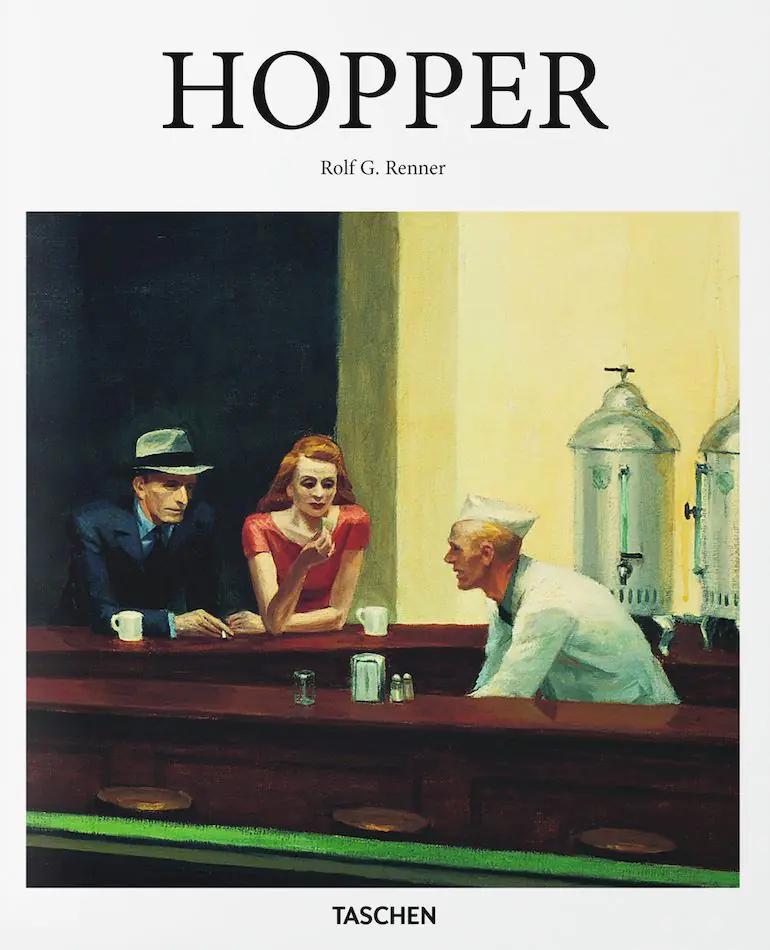
Hopper
Masz tę lub inne książki?
Sprzedaj je u nas

Edward Hopper (1882–1967) epitomizes the quintessential American success narrative, albeit one that unfolded at a slower pace. By the time he was 40, Hopper found himself struggling as an artist, unable to sell his artwork. However, nearing his 80th birthday, he graced the cover of Time magazine. Decades after his passing, Hopper is celebrated as a pivotal figure in modern art, renowned for his unique ability to capture mood and place. His body of work frequently delves into the modern urban experience, portraying scenes with diners, cafes, shopfronts, streetlights, gas stations, rail stations, and hotel rooms. Hopper's paintings are characterized by striking color contrasts and dramatic lighting, with figures that both belong to and stand apart from their environments. An air of eerie unease, alienation, and psychological tension permeates his work, although his depictions of rural or coastal settings occasionally offer a glimpse of peace or hope. This book highlights key artworks from Hopper's career, underscoring his significance not only in American art but also within the broader American consciousness.
Wybierz stan zużycia:
WIĘCEJ O SKALI
Edward Hopper (1882–1967) epitomizes the quintessential American success narrative, albeit one that unfolded at a slower pace. By the time he was 40, Hopper found himself struggling as an artist, unable to sell his artwork. However, nearing his 80th birthday, he graced the cover of Time magazine. Decades after his passing, Hopper is celebrated as a pivotal figure in modern art, renowned for his unique ability to capture mood and place. His body of work frequently delves into the modern urban experience, portraying scenes with diners, cafes, shopfronts, streetlights, gas stations, rail stations, and hotel rooms. Hopper's paintings are characterized by striking color contrasts and dramatic lighting, with figures that both belong to and stand apart from their environments. An air of eerie unease, alienation, and psychological tension permeates his work, although his depictions of rural or coastal settings occasionally offer a glimpse of peace or hope. This book highlights key artworks from Hopper's career, underscoring his significance not only in American art but also within the broader American consciousness.
Szczegóły
Dane producenta:
Inne książki: Rolf G. Renner

Podobne produkty
Może Ci się spodobać
Inne książki z tej samej kategorii

Napisz opinię o książce i wygraj nagrodę!
W każdym miesiącu wybieramy najlepsze opinie i nagradzamy recenzentów.
Dowiedz się więcejWartość nagród w tym miesiącu
880 zł
Dodaj swoją opinię
Zaloguj się na swoje konto, aby mieć możliwość dodawania opinii.
Czy chcesz zostawić tylko ocenę?
Dodanie samej oceny o książce nie jest brane pod uwagę podczas losowania nagród. By mieć szansę na otrzymanie nagrody musisz napisać opinię o książce.
Już oceniłeś/zrecenzowałeś te książkę w przeszłości.
Możliwe jest dodanie tylko jednej recenzji do każdej z książek.
Sposoby dostawy
Odbiór w punkcie (6)
InPost Paczkomat 24/7

13,99 zł
ORLEN Paczka

12,99 zł




Dostawa na adres (7)
GLS U Ciebie - Kurier

14,99 zł
Kurier DPD

14,99 zł





Sposoby płatności
Płatność z góry
Przedpłata

Zwykły przelew
