Stan książek
Nasze książki są dokładnie sprawdzone i jasno określamy stan każdej z nich.

Nowa
Książka nowa.
Używany - jak nowa
Niezauważalne lub prawie niezauważalne ślady używania. Książkę ciężko odróżnić od nowej pozycji.
Używany - dobry
Normalne ślady używania wynikające z kartkowania podczas czytania, brak większych uszkodzeń lub zagięć.
Używany - widoczne ślady użytkowania
zagięte rogi, przyniszczona okładka, książka posiada wszystkie strony.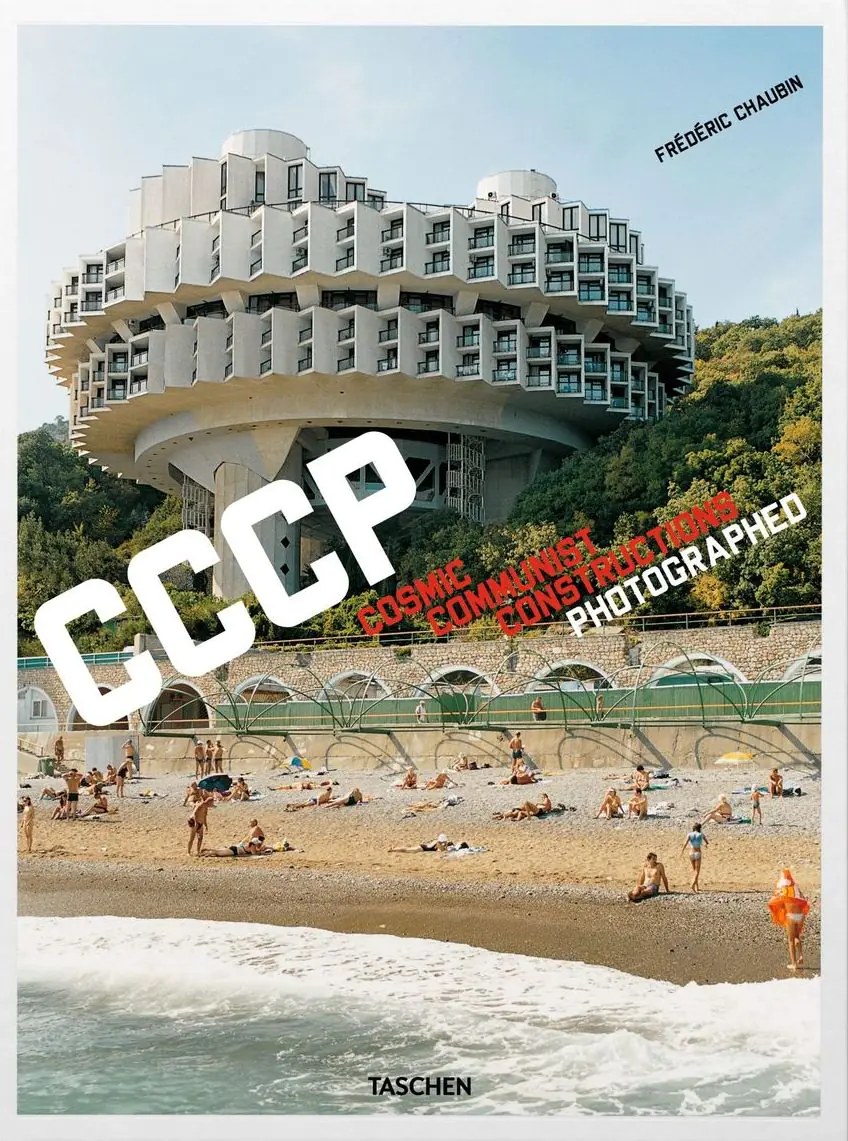
Frederic Chaubin Cosmic Communist Constructions Phtographed
Masz tę lub inne książki?
Sprzedaj je u nas

Awarded the title of architectural book of the year at the International Artbook and Film Festival in Perpignan, France, "Cosmic Communist Constructions Photographed" by Frédéric Chaubin delves into 90 unique buildings across 14 former Soviet Republics. These structures embody what Chaubin identifies as the fourth era of Soviet architecture, a vibrant yet largely unrecognized phase emerging between 1970 and 1990. Unlike the uniform styles of the 1920s or the 1950s, this period lacks a unifying “school” or trend, instead reflecting the erratic creativity sparked by a crumbling system. Architects, seizing the opportunity presented by the disintegration of rigid norms, ventured beyond modernist confines to draw from historical roots or innovate fearlessly. Some, like those who realized projects echoing Constructivist dreams (e.g., the Druzhba Sanatorium in Yalta), and others who embraced expressionist flair (such as the Palace of Weddings in Tbilisi), illustrate this inventive spirit. In Bogatyr, a youth camp draws on Suprematist influences, inspired by lunar base prototype sketches (Prometheus camp). As the Soviet Union neared its end, “speaking architecture” became commonplace: a crematorium adorned with concrete flames (Crematorium, Kiev), an institute topped with a crashed flying saucer (Institute of Scientific Research, Kiev), or a Big Brother-like political center (House of Soviets, Kaliningrad). Through their eclectic styles and radical approaches, these buildings serve as remarkable remnants of a disintegrating system. Their diversity and exoticism not only showcase the vast expanse of the USSR but also symbolize its inevitable collapse, highlighting the widening gaps within the nation. They capture the ideological dreams of an era, from cosmic fascinations to the reawakening of national identity.
Wybierz stan zużycia:
WIĘCEJ O SKALI
Awarded the title of architectural book of the year at the International Artbook and Film Festival in Perpignan, France, "Cosmic Communist Constructions Photographed" by Frédéric Chaubin delves into 90 unique buildings across 14 former Soviet Republics. These structures embody what Chaubin identifies as the fourth era of Soviet architecture, a vibrant yet largely unrecognized phase emerging between 1970 and 1990. Unlike the uniform styles of the 1920s or the 1950s, this period lacks a unifying “school” or trend, instead reflecting the erratic creativity sparked by a crumbling system. Architects, seizing the opportunity presented by the disintegration of rigid norms, ventured beyond modernist confines to draw from historical roots or innovate fearlessly. Some, like those who realized projects echoing Constructivist dreams (e.g., the Druzhba Sanatorium in Yalta), and others who embraced expressionist flair (such as the Palace of Weddings in Tbilisi), illustrate this inventive spirit. In Bogatyr, a youth camp draws on Suprematist influences, inspired by lunar base prototype sketches (Prometheus camp). As the Soviet Union neared its end, “speaking architecture” became commonplace: a crematorium adorned with concrete flames (Crematorium, Kiev), an institute topped with a crashed flying saucer (Institute of Scientific Research, Kiev), or a Big Brother-like political center (House of Soviets, Kaliningrad). Through their eclectic styles and radical approaches, these buildings serve as remarkable remnants of a disintegrating system. Their diversity and exoticism not only showcase the vast expanse of the USSR but also symbolize its inevitable collapse, highlighting the widening gaps within the nation. They capture the ideological dreams of an era, from cosmic fascinations to the reawakening of national identity.
Szczegóły
Dane producenta:
Inne książki: Frederic Chaubin

Podobne produkty
Może Ci się spodobać
Inne książki z tej samej kategorii

Napisz opinię o książce i wygraj nagrodę!
W każdym miesiącu wybieramy najlepsze opinie i nagradzamy recenzentów.
Dowiedz się więcejWartość nagród w tym miesiącu
880 zł
Dodaj swoją opinię
Zaloguj się na swoje konto, aby mieć możliwość dodawania opinii.
Czy chcesz zostawić tylko ocenę?
Dodanie samej oceny o książce nie jest brane pod uwagę podczas losowania nagród. By mieć szansę na otrzymanie nagrody musisz napisać opinię o książce.
Już oceniłeś/zrecenzowałeś te książkę w przeszłości.
Możliwe jest dodanie tylko jednej recenzji do każdej z książek.
Sposoby dostawy
Odbiór w punkcie (6)
InPost Paczkomat 24/7

13,99 zł
ORLEN Paczka

12,99 zł




Dostawa na adres (7)
GLS U Ciebie - Kurier

14,99 zł
Kurier DPD

14,99 zł





Sposoby płatności
Płatność z góry
Przedpłata

Zwykły przelew
