Stan książek
Nasze książki są dokładnie sprawdzone i jasno określamy stan każdej z nich.


Nowa
Książka nowa.
Używany - jak nowa
Niezauważalne lub prawie niezauważalne ślady używania. Książkę ciężko odróżnić od nowej pozycji.
Używany - dobry
Normalne ślady używania wynikające z kartkowania podczas czytania, brak większych uszkodzeń lub zagięć.
Używany - widoczne ślady użytkowania
zagięte rogi, przyniszczona okładka, książka posiada wszystkie strony.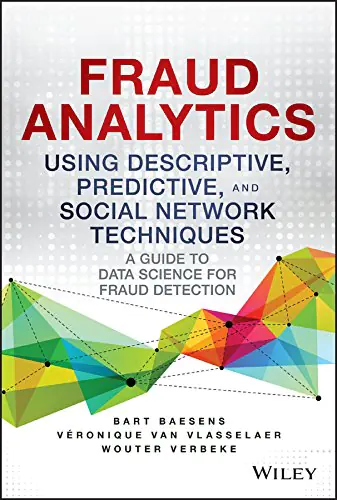
Fraud Analytics Using Descriptive, Predictive, and Social Ne
Masz tę lub inne książki?
Sprzedaj je u nas

Identifying fraud at an early stage is essential to lessen its impact and prevent further complications. The book, "Fraud Analytics Using Descriptive, Predictive, and Social Network Techniques," serves as a crucial manual for developing a thorough fraud detection analytics system. Detecting fraud early requires more specialized methods than spotting it later, and this guide offers a deep dive into both the theoretical and technical elements of these methods. It provides expert guidance on the implementation process, covering data collection, preprocessing, model development, and post-implementation procedures. The techniques discussed are applicable across various industries, such as insurance, credit card transactions, money laundering prevention, healthcare, telecommunications, online advertising, and tax fraud, offering a practical framework for overall fraud prevention. Organizations stand to lose about 5% of their revenue to fraud annually. However, by implementing the analytical strategies outlined in this book, companies can stem this financial drain. The book explores identifying fraud patterns within historical data, employing both labeled and unlabeled data, as well as networked data, aiming to detect and prevent fraud before it spirals out of control, thereby reducing losses, enhancing recovery efforts, and fortifying security. The more prolonged the fraud remains undetected, the more it proliferates, creating widespread damage that is increasingly hard to manage. Therefore, using the techniques discussed is crucial for early detection, which is the cornerstone of effective fraud prevention. Thus, "Fraud Analytics Using Descriptive, Predictive, and Social Network Techniques" offers strategic insights into stopping fraud and preventing its future occurrences.
Wybierz stan zużycia:
WIĘCEJ O SKALI
Identifying fraud at an early stage is essential to lessen its impact and prevent further complications. The book, "Fraud Analytics Using Descriptive, Predictive, and Social Network Techniques," serves as a crucial manual for developing a thorough fraud detection analytics system. Detecting fraud early requires more specialized methods than spotting it later, and this guide offers a deep dive into both the theoretical and technical elements of these methods. It provides expert guidance on the implementation process, covering data collection, preprocessing, model development, and post-implementation procedures. The techniques discussed are applicable across various industries, such as insurance, credit card transactions, money laundering prevention, healthcare, telecommunications, online advertising, and tax fraud, offering a practical framework for overall fraud prevention. Organizations stand to lose about 5% of their revenue to fraud annually. However, by implementing the analytical strategies outlined in this book, companies can stem this financial drain. The book explores identifying fraud patterns within historical data, employing both labeled and unlabeled data, as well as networked data, aiming to detect and prevent fraud before it spirals out of control, thereby reducing losses, enhancing recovery efforts, and fortifying security. The more prolonged the fraud remains undetected, the more it proliferates, creating widespread damage that is increasingly hard to manage. Therefore, using the techniques discussed is crucial for early detection, which is the cornerstone of effective fraud prevention. Thus, "Fraud Analytics Using Descriptive, Predictive, and Social Network Techniques" offers strategic insights into stopping fraud and preventing its future occurrences.
Szczegóły
Inne książki: Baesens Bart

Podobne produkty
Może Ci się spodobać
Inne książki z tej samej kategorii

Napisz opinię o książce i wygraj nagrodę!
W każdym miesiącu wybieramy najlepsze opinie i nagradzamy recenzentów.
Dowiedz się więcejWartość nagród w tym miesiącu
880 zł
Dodaj swoją opinię
Zaloguj się na swoje konto, aby mieć możliwość dodawania opinii.
Czy chcesz zostawić tylko ocenę?
Dodanie samej oceny o książce nie jest brane pod uwagę podczas losowania nagród. By mieć szansę na otrzymanie nagrody musisz napisać opinię o książce.
Już oceniłeś/zrecenzowałeś te książkę w przeszłości.
Możliwe jest dodanie tylko jednej recenzji do każdej z książek.
Sposoby dostawy
Odbiór w punkcie (7)
InPost Paczkomat 24/7

14,99 zł
DPD Pickup Automaty i Punkty Odbioru

11,99 zł





Dostawa na adres (7)
GLS U Ciebie - Kurier

14,99 zł
Kurier DPD

14,99 zł





Sposoby płatności
Płatność z góry
Przedpłata

Zwykły przelew
