Stan książek
Nasze książki są dokładnie sprawdzone i jasno określamy stan każdej z nich.

Nowa
Książka nowa.
Używany - jak nowa
Niezauważalne lub prawie niezauważalne ślady używania. Książkę ciężko odróżnić od nowej pozycji.
Używany - dobry
Normalne ślady używania wynikające z kartkowania podczas czytania, brak większych uszkodzeń lub zagięć.
Używany - widoczne ślady użytkowania
zagięte rogi, przyniszczona okładka, książka posiada wszystkie strony.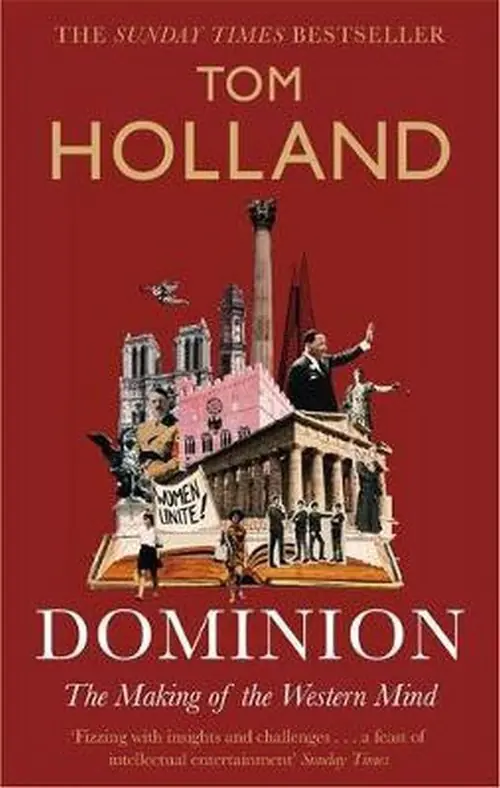
Dominion. The Making of the Western Mind
Masz tę lub inne książki?
Sprzedaj je u nas

If remarkable books inspire a fresh perspective on the world, then "Dominion" is certainly among the most exceptional. Authored with immense knowledge, passion, and a good dose of humor, Tom Holland's work is not only deeply thought-provoking but frequently amusing. As recognized by the Sunday Times as the History Book of the Year, it sheds light on how Christianity, emerging as a powerful legacy of the ancient world, has profoundly shaped Western history. Even in today's world, where many in the West have distanced themselves from the faith of their ancestors and view all religions as mere superstitions, they clearly reflect its enduring influence.While the chasm between a skeptic and a believer might appear insurmountable at close quarters, a broader view reveals Christianity's lasting impact on the West. It permeates aspects typically considered its adversaries—such as science, secularism, and even atheism. "Dominion" delves into the grand narrative of why we are who we are, and why our thought processes follow certain patterns, placing these questions within an expansive historical frame. Spanning events from the Persian invasion of Greece in 480 BC to today's European migration challenges, and referencing figures from Nebuchadnezzar to the Beatles, the book examines why Christianity was so revolutionary and transformative. It investigates how deeply it influenced the mindset of Latin Christendom and considers why Western instincts, even as they become increasingly skeptical of religious doctrines, remain deeply Christian at their core.The book aims to help readers appreciate the revolutionary and unsettling nature of early Christian teachings and to re-evaluate the familiar modern world as a result. We find ourselves at the culmination of a remarkable evolution in understanding human existence—an evolution that can only be fully grasped by tracing its trajectory over thousands of years.
Wybierz stan zużycia:
WIĘCEJ O SKALI
If remarkable books inspire a fresh perspective on the world, then "Dominion" is certainly among the most exceptional. Authored with immense knowledge, passion, and a good dose of humor, Tom Holland's work is not only deeply thought-provoking but frequently amusing. As recognized by the Sunday Times as the History Book of the Year, it sheds light on how Christianity, emerging as a powerful legacy of the ancient world, has profoundly shaped Western history. Even in today's world, where many in the West have distanced themselves from the faith of their ancestors and view all religions as mere superstitions, they clearly reflect its enduring influence.While the chasm between a skeptic and a believer might appear insurmountable at close quarters, a broader view reveals Christianity's lasting impact on the West. It permeates aspects typically considered its adversaries—such as science, secularism, and even atheism. "Dominion" delves into the grand narrative of why we are who we are, and why our thought processes follow certain patterns, placing these questions within an expansive historical frame. Spanning events from the Persian invasion of Greece in 480 BC to today's European migration challenges, and referencing figures from Nebuchadnezzar to the Beatles, the book examines why Christianity was so revolutionary and transformative. It investigates how deeply it influenced the mindset of Latin Christendom and considers why Western instincts, even as they become increasingly skeptical of religious doctrines, remain deeply Christian at their core.The book aims to help readers appreciate the revolutionary and unsettling nature of early Christian teachings and to re-evaluate the familiar modern world as a result. We find ourselves at the culmination of a remarkable evolution in understanding human existence—an evolution that can only be fully grasped by tracing its trajectory over thousands of years.
Szczegóły
Inne książki tych autorów

Podobne produkty
Może Ci się spodobać
Inne książki z tej samej kategorii

Napisz opinię o książce i wygraj nagrodę!
W każdym miesiącu wybieramy najlepsze opinie i nagradzamy recenzentów.
Dowiedz się więcejWartość nagród w tym miesiącu
880 zł
Dodaj swoją opinię
Zaloguj się na swoje konto, aby mieć możliwość dodawania opinii.
Czy chcesz zostawić tylko ocenę?
Dodanie samej oceny o książce nie jest brane pod uwagę podczas losowania nagród. By mieć szansę na otrzymanie nagrody musisz napisać opinię o książce.
Już oceniłeś/zrecenzowałeś te książkę w przeszłości.
Możliwe jest dodanie tylko jednej recenzji do każdej z książek.
Sposoby dostawy
Odbiór w punkcie (6)
InPost Paczkomat 24/7

13,99 zł
ORLEN Paczka

12,99 zł




Dostawa na adres (7)
GLS U Ciebie - Kurier

14,99 zł
Kurier DPD

14,99 zł





Sposoby płatności
Płatność z góry
Przedpłata

Zwykły przelew
