Stan książek
Nasze książki są dokładnie sprawdzone i jasno określamy stan każdej z nich.


Nowa
Książka nowa.
Używany - jak nowa
Niezauważalne lub prawie niezauważalne ślady używania. Książkę ciężko odróżnić od nowej pozycji.
Używany - dobry
Normalne ślady używania wynikające z kartkowania podczas czytania, brak większych uszkodzeń lub zagięć.
Używany - widoczne ślady użytkowania
zagięte rogi, przyniszczona okładka, książka posiada wszystkie strony.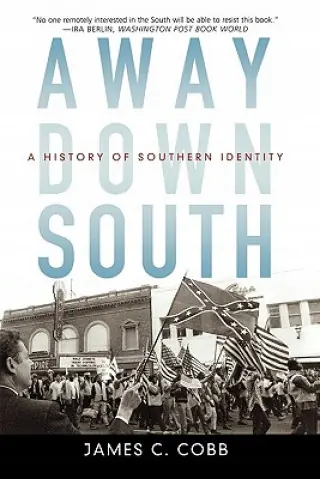
Away Down South: A History of Southern Identity
Masz tę lub inne książki?
Sprzedaj je u nas

From the 17th-century Cavaliers and the iconic "Uncle Tom's Cabin," to Civil Rights museums and contemporary debates surrounding the Confederate flag, this work offers a captivating exploration of Southern identity through the lenses of history, literature, and popular culture. In this perceptive book, James C. Cobb employs dry wit and sharp insight to elucidate how the South first became both perceived and self-identified as distinct from the rest of America. Cobb illustrates how the romanticized myth of aristocratic Cavalier origins in Southern planter society, initially supported by both Northern and Southern writers, faced challenges from abolitionist critics of all races. Following the Civil War, defeated Southern whites clung to the Cavalier legend, intertwining it with the "Lost Cause" narrative, which fueled their determined efforts to reunite with the Union on their terms. Post-World War I, authors like Ellen Glasgow and William Faulkner, along with African American writers of the "Harlem Renaissance," questioned the New South's ideology by juxtaposing the glorified Southern past with its bleak contemporary reality. The Southern self-image evolved further during the Civil Rights movement, as the collapse of white supremacy disrupted the traditional "Southern way of life." Concurrently, African Americans began to openly embrace their regional and racial identities. As the new millennium approached, the South faced another identity dilemma amid global uniformity: if Southern culture permeates everywhere, does the New South equate to a No South? This significant work by one of America's leading Southern historians stands as a masterful synthesis, seamlessly blending comprehensive scholarship with thought-provoking insights.
Wybierz stan zużycia:
WIĘCEJ O SKALI
From the 17th-century Cavaliers and the iconic "Uncle Tom's Cabin," to Civil Rights museums and contemporary debates surrounding the Confederate flag, this work offers a captivating exploration of Southern identity through the lenses of history, literature, and popular culture. In this perceptive book, James C. Cobb employs dry wit and sharp insight to elucidate how the South first became both perceived and self-identified as distinct from the rest of America. Cobb illustrates how the romanticized myth of aristocratic Cavalier origins in Southern planter society, initially supported by both Northern and Southern writers, faced challenges from abolitionist critics of all races. Following the Civil War, defeated Southern whites clung to the Cavalier legend, intertwining it with the "Lost Cause" narrative, which fueled their determined efforts to reunite with the Union on their terms. Post-World War I, authors like Ellen Glasgow and William Faulkner, along with African American writers of the "Harlem Renaissance," questioned the New South's ideology by juxtaposing the glorified Southern past with its bleak contemporary reality. The Southern self-image evolved further during the Civil Rights movement, as the collapse of white supremacy disrupted the traditional "Southern way of life." Concurrently, African Americans began to openly embrace their regional and racial identities. As the new millennium approached, the South faced another identity dilemma amid global uniformity: if Southern culture permeates everywhere, does the New South equate to a No South? This significant work by one of America's leading Southern historians stands as a masterful synthesis, seamlessly blending comprehensive scholarship with thought-provoking insights.
Szczegóły
Inne książki: James Cobb

Podobne produkty
Może Ci się spodobać
Inne książki z tej samej kategorii

Napisz opinię o książce i wygraj nagrodę!
W każdym miesiącu wybieramy najlepsze opinie i nagradzamy recenzentów.
Dowiedz się więcejWartość nagród w tym miesiącu
880 zł
Dodaj swoją opinię
Zaloguj się na swoje konto, aby mieć możliwość dodawania opinii.
Czy chcesz zostawić tylko ocenę?
Dodanie samej oceny o książce nie jest brane pod uwagę podczas losowania nagród. By mieć szansę na otrzymanie nagrody musisz napisać opinię o książce.
Już oceniłeś/zrecenzowałeś te książkę w przeszłości.
Możliwe jest dodanie tylko jednej recenzji do każdej z książek.
Sposoby dostawy
Odbiór w punkcie (7)
InPost Paczkomat 24/7

14,99 zł
DPD Pickup Automaty i Punkty Odbioru

11,99 zł





Dostawa na adres (7)
GLS U Ciebie - Kurier

14,99 zł
Kurier DPD

14,99 zł





Sposoby płatności
Płatność z góry
Przedpłata

Zwykły przelew
