Stan książek
Nasze książki są dokładnie sprawdzone i jasno określamy stan każdej z nich.

Nowa
Książka nowa.
Używany - jak nowa
Niezauważalne lub prawie niezauważalne ślady używania. Książkę ciężko odróżnić od nowej pozycji.
Używany - dobry
Normalne ślady używania wynikające z kartkowania podczas czytania, brak większych uszkodzeń lub zagięć.
Używany - widoczne ślady użytkowania
zagięte rogi, przyniszczona okładka, książka posiada wszystkie strony.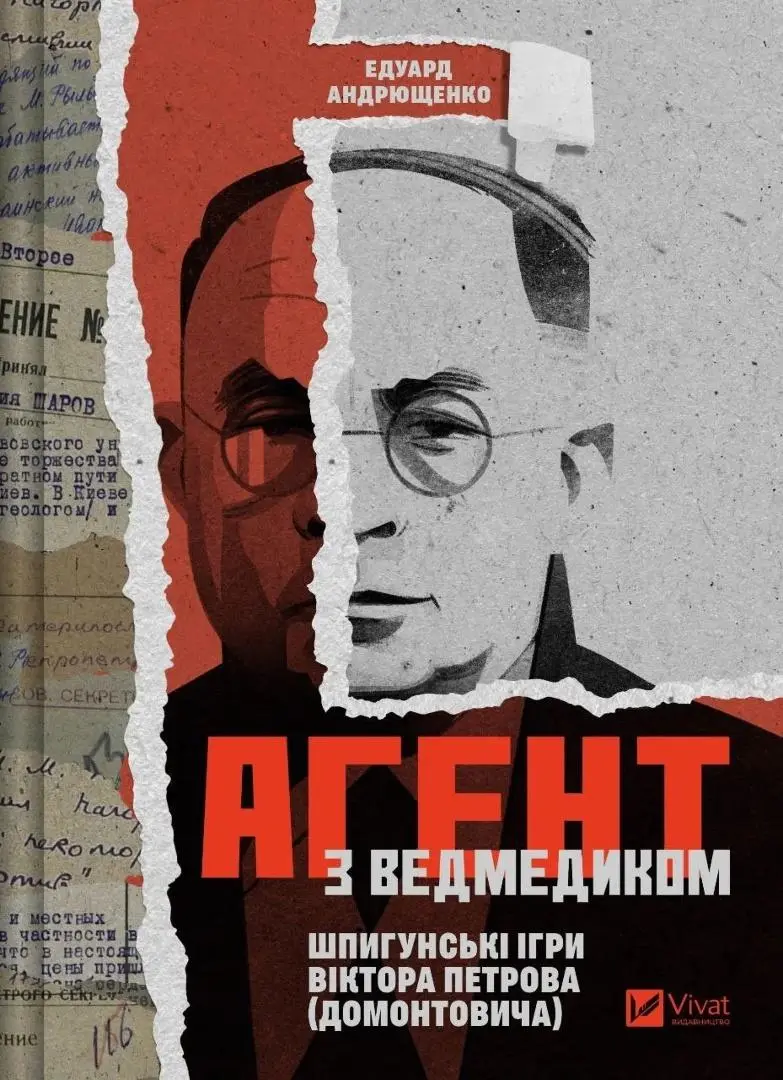
Agent with a teddy bear w.ukraińska
Masz tę lub inne książki?
Sprzedaj je u nas

"Agent with a Teddy Bear" delves into the intriguing dual life of Viktor Petrov, also known as V. Domontovich, who was both an archaeologist and an author of intellectual novels, while also serving as an agent for the Soviet secret services. Drawing from declassified archives from the Security Service of Ukraine and the Foreign Intelligence Service, the narrative unravels the story of agent Ivanov's cooperation with the Soviet authorities. It examines his activities during significant historical periods, including the Great Terror, World War II, his post-war emigration, and his eventual return to the USSR. The book is a poignant exploration of fractured and resilient biographies, dissecting the themes of choice and survival, and the cerebral contest between an individual and the state. The author employs an archaeological approach to storytelling, peeling away layers from the newest to the oldest, to illuminate not just Viktor Petrov's duplicity, but also the experiences of his contemporaries like Rylsky, Bagryany, Shevelov, and Krymsky.
Wybierz stan zużycia:
WIĘCEJ O SKALI
"Agent with a Teddy Bear" delves into the intriguing dual life of Viktor Petrov, also known as V. Domontovich, who was both an archaeologist and an author of intellectual novels, while also serving as an agent for the Soviet secret services. Drawing from declassified archives from the Security Service of Ukraine and the Foreign Intelligence Service, the narrative unravels the story of agent Ivanov's cooperation with the Soviet authorities. It examines his activities during significant historical periods, including the Great Terror, World War II, his post-war emigration, and his eventual return to the USSR. The book is a poignant exploration of fractured and resilient biographies, dissecting the themes of choice and survival, and the cerebral contest between an individual and the state. The author employs an archaeological approach to storytelling, peeling away layers from the newest to the oldest, to illuminate not just Viktor Petrov's duplicity, but also the experiences of his contemporaries like Rylsky, Bagryany, Shevelov, and Krymsky.
Szczegóły
Inne książki: Eduard Andryushchenko

Podobne produkty
Może Ci się spodobać
Inne książki z tej samej kategorii

Napisz opinię o książce i wygraj nagrodę!
W każdym miesiącu wybieramy najlepsze opinie i nagradzamy recenzentów.
Dowiedz się więcejWartość nagród w tym miesiącu
880 zł
Dodaj swoją opinię
Zaloguj się na swoje konto, aby mieć możliwość dodawania opinii.
Czy chcesz zostawić tylko ocenę?
Dodanie samej oceny o książce nie jest brane pod uwagę podczas losowania nagród. By mieć szansę na otrzymanie nagrody musisz napisać opinię o książce.
Już oceniłeś/zrecenzowałeś te książkę w przeszłości.
Możliwe jest dodanie tylko jednej recenzji do każdej z książek.
Sposoby dostawy
Odbiór w punkcie (6)
InPost Paczkomaty 24/7

13,99 zł
ORLEN Paczka

12,99 zł




Dostawa na adres (7)
GLS U Ciebie - Kurier

14,99 zł
Kurier DPD

14,99 zł





Sposoby płatności
Płatność z góry
Przedpłata

Zwykły przelew
