Stan książek
Nasze książki są dokładnie sprawdzone i jasno określamy stan każdej z nich.

Nowa
Książka nowa.
Używany - jak nowa
Niezauważalne lub prawie niezauważalne ślady używania. Książkę ciężko odróżnić od nowej pozycji.
Używany - dobry
Normalne ślady używania wynikające z kartkowania podczas czytania, brak większych uszkodzeń lub zagięć.
Używany - widoczne ślady użytkowania
zagięte rogi, przyniszczona okładka, książka posiada wszystkie strony.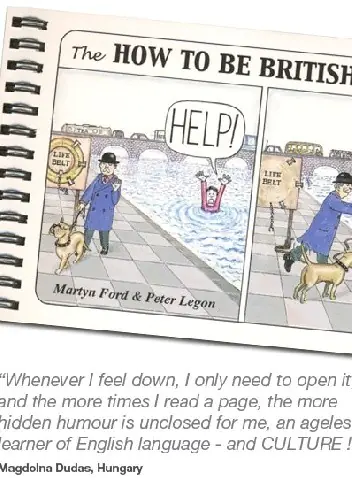
The How to be British Collection
DODAJ DO LISTY ŻYCZEŃ
Masz tę lub inne książki?
Sprzedaj je u nas

"The How to be British Collection" is a beloved compilation of vibrant cartoon illustrations paired with texts that humorously explore the charming quirks of British life and character. The authors, drawing from their extensive backgrounds in teaching English as a Foreign Language, provide an entertaining guide for navigating the intricacies of the English language and understanding Britain's peculiar habits. This collection delivers a gentle satire that occasionally pokes fun at bland cuisine, fashion mishaps, or questionable hygiene, yet maintains a tone that is more nostalgic than mocking. The book affectionately captures the spirit of pet-loving, royal-watching, tea-drinking Brits in a series of whimsical cartoons. Well-known illustrations such as "How to be Polite" and "How to Complain" have found an international audience, possibly due to their insightful depictions of that quintessential British hesitancy that often confounds and amuses non-native observers. To blend seamlessly into British society, or at least go unnoticed, one must master the art of not 'making a fuss'—an action as unwelcome as causing a 'scene' or 'drawing attention to oneself'. For instance, the "How To Be Polite" illustration humorously portrays a foreign visitor falling into a river and initially shouting for help, which goes ignored by a nearby Englishman. However, once the visitor modifies his plea to a more understated, polite request, the gentleman eagerly comes to his rescue, life belt in hand, dog wagging tail approvingly. The book highlights how cultural missteps can pose challenges, particularly in today's world where many people travel internationally or reside abroad. While newcomers to Britain often prepare for the ritual of weather-related small talk, this collection questions how effectively one can engage in such conversations across varying levels of fluency. Its lasting appeal lies in the universal recognition of feeling vulnerable outside our linguistic comfort zones. In one scenario, a visitor armed with a phrasebook feels triumphant after posing a well-phrased question to a local elder, only to be baffled by her meandering, elaborate response. It's a relatable moment many have experienced. To guide the uninitiated through these cultural and linguistic hurdles, the book frequently includes collectible Expressions to learn, alongside Expressions to avoid. Under the section on Real English, which tackles the complexities of colloquial speech including idioms and slang—even occasional taboo words—readers might find Expressions to learn such as "'E nicked it off of a lorry and now the coppers 'ave done 'im for it." Meanwhile, an Expression to avoid might be, "That's not correct English, Mrs. Jones -- it says so here in my grammar book." Binding Type: Spiral-bound Number of Pages: 64 Author: Peter Legon
Wybierz stan zużycia:
WIĘCEJ O SKALI
nowa
jak nowa
17.65 zł
dobry
Pakujemy dzisiaj

- normalne ślady użytkowania wynikające z kartkowania podczas czytania
- brak większych uszkodzeń lub zagięć
widoczne ślady używania
"The How to be British Collection" is a beloved compilation of vibrant cartoon illustrations paired with texts that humorously explore the charming quirks of British life and character. The authors, drawing from their extensive backgrounds in teaching English as a Foreign Language, provide an entertaining guide for navigating the intricacies of the English language and understanding Britain's peculiar habits. This collection delivers a gentle satire that occasionally pokes fun at bland cuisine, fashion mishaps, or questionable hygiene, yet maintains a tone that is more nostalgic than mocking. The book affectionately captures the spirit of pet-loving, royal-watching, tea-drinking Brits in a series of whimsical cartoons. Well-known illustrations such as "How to be Polite" and "How to Complain" have found an international audience, possibly due to their insightful depictions of that quintessential British hesitancy that often confounds and amuses non-native observers. To blend seamlessly into British society, or at least go unnoticed, one must master the art of not 'making a fuss'—an action as unwelcome as causing a 'scene' or 'drawing attention to oneself'. For instance, the "How To Be Polite" illustration humorously portrays a foreign visitor falling into a river and initially shouting for help, which goes ignored by a nearby Englishman. However, once the visitor modifies his plea to a more understated, polite request, the gentleman eagerly comes to his rescue, life belt in hand, dog wagging tail approvingly. The book highlights how cultural missteps can pose challenges, particularly in today's world where many people travel internationally or reside abroad. While newcomers to Britain often prepare for the ritual of weather-related small talk, this collection questions how effectively one can engage in such conversations across varying levels of fluency. Its lasting appeal lies in the universal recognition of feeling vulnerable outside our linguistic comfort zones. In one scenario, a visitor armed with a phrasebook feels triumphant after posing a well-phrased question to a local elder, only to be baffled by her meandering, elaborate response. It's a relatable moment many have experienced. To guide the uninitiated through these cultural and linguistic hurdles, the book frequently includes collectible Expressions to learn, alongside Expressions to avoid. Under the section on Real English, which tackles the complexities of colloquial speech including idioms and slang—even occasional taboo words—readers might find Expressions to learn such as "'E nicked it off of a lorry and now the coppers 'ave done 'im for it." Meanwhile, an Expression to avoid might be, "That's not correct English, Mrs. Jones -- it says so here in my grammar book." Binding Type: Spiral-bound Number of Pages: 64 Author: Peter Legon
Szczegóły
Inne książki tych autorów

Podobne produkty
Może Ci się spodobać
Inne książki z tej samej kategorii

Napisz opinię o książce i wygraj nagrodę!
W każdym miesiącu wybieramy najlepsze opinie i nagradzamy recenzentów.
Dowiedz się więcejWartość nagród w tym miesiącu
880 zł
Dodaj swoją opinię
Zaloguj się na swoje konto, aby mieć możliwość dodawania opinii.
Czy chcesz zostawić tylko ocenę?
Dodanie samej oceny o książce nie jest brane pod uwagę podczas losowania nagród. By mieć szansę na otrzymanie nagrody musisz napisać opinię o książce.
Już oceniłeś/zrecenzowałeś te książkę w przeszłości.
Możliwe jest dodanie tylko jednej recenzji do każdej z książek.
Sposoby dostawy
Odbiór w punkcie (7)
InPost Paczkomat 24/7

14,99 zł
DPD Pickup Automaty i Punkty Odbioru

11,99 zł




Dostawa na adres (7)
GLS U Ciebie - Kurier
14,99 zł
Kurier DPD

14,99 zł





Sposoby płatności
Płatność z góry
Przedpłata

Zwykły przelew
