Stan książek
Nasze książki są dokładnie sprawdzone i jasno określamy stan każdej z nich.


Nowa
Książka nowa.
Używany - jak nowa
Niezauważalne lub prawie niezauważalne ślady używania. Książkę ciężko odróżnić od nowej pozycji.
Używany - dobry
Normalne ślady używania wynikające z kartkowania podczas czytania, brak większych uszkodzeń lub zagięć.
Używany - widoczne ślady użytkowania
zagięte rogi, przyniszczona okładka, książka posiada wszystkie strony.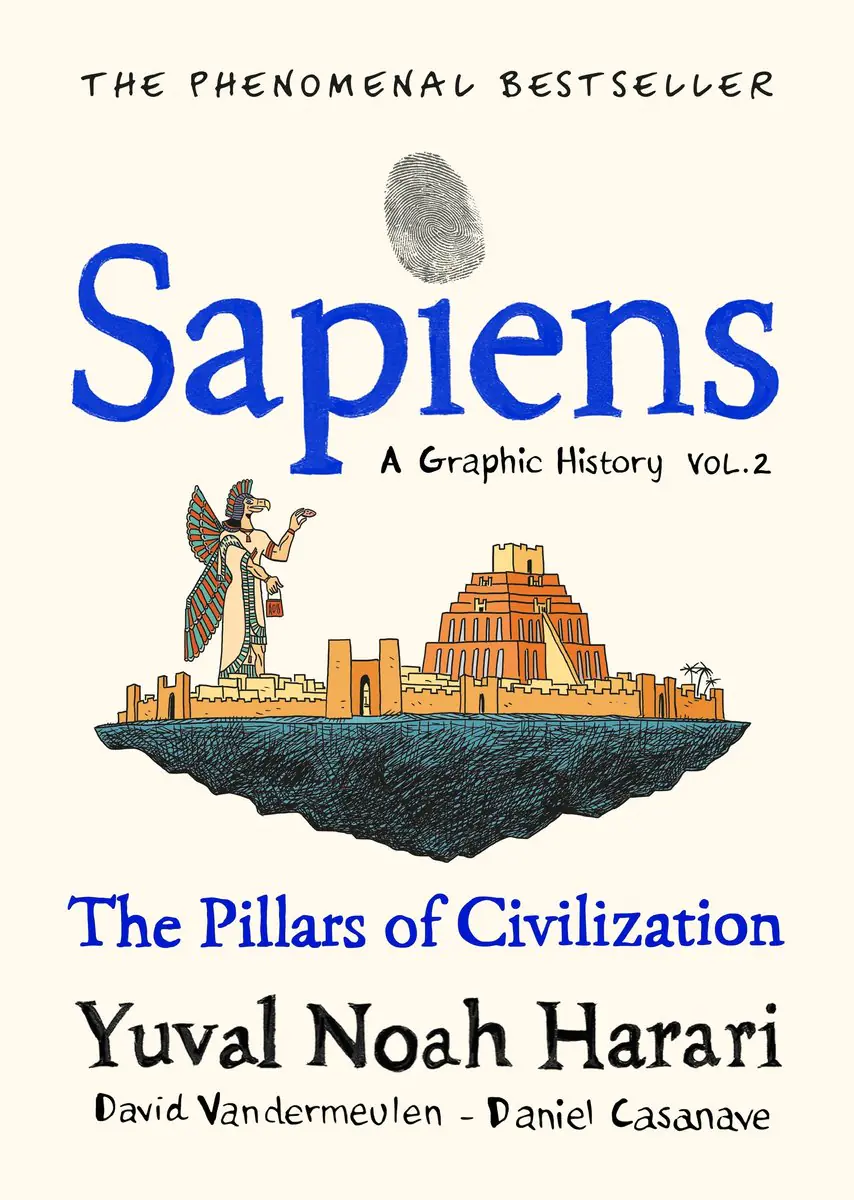
Sapiens a Graphic History, Volume 2
Masz tę lub inne książki?
Sprzedaj je u nas

The second installment in a sweeping and vividly illustrated graphic portrayal of humanity's history, based on the international bestseller by Yuval Noah Harari, explores the profound transformations prompted by the Agricultural Revolution. When Homo sapiens, once wandering nomads, began to establish permanent settlements, they embarked on a journey of intensified labor. But did this shift result in improved living conditions? In "The Pillars of Civilization," Yuval Noah Harari, alongside Prof. Saraswati and Dr. Fiction, delves into the evolution of human society, unveiling the ways the cultivation of wheat revolutionized the world and ingrained elements such as war, famine, disease, and inequality into human life.This volume creatively narrates the beginnings of modern agriculture through a lens reminiscent of Elizabethan drama. The fluctuating fortunes of crops and livestock are humorously documented in a simulated Daily Business News column, while a unique superhero detective narrative exposes the emergence of social inequality. This daring and colorful reinterpretation of humankind's story, adapted from Harari's "Sapiens: A Brief History of Humankind," can stand alone or serve as a sequel to the first volume, "The Birth of Humankind." Notable figures have praised Harari's work: Bill Gates recommended "Sapiens" to anyone curious about human history and our future. Barack Obama found it thought-provoking, highlighting the brief time humans have inhabited Earth. Chris Evans described it as stunning, possibly the best book he’s read. Matt Haig appreciated its insightful content and the reminder of our humanity. The "Sunday Times" praised its clarity and power, saying it transforms our understanding of the world, while the "Guardian" commended its provocative nature and its ability to make the familiar seem alien.
Wybierz stan zużycia:
WIĘCEJ O SKALI
The second installment in a sweeping and vividly illustrated graphic portrayal of humanity's history, based on the international bestseller by Yuval Noah Harari, explores the profound transformations prompted by the Agricultural Revolution. When Homo sapiens, once wandering nomads, began to establish permanent settlements, they embarked on a journey of intensified labor. But did this shift result in improved living conditions? In "The Pillars of Civilization," Yuval Noah Harari, alongside Prof. Saraswati and Dr. Fiction, delves into the evolution of human society, unveiling the ways the cultivation of wheat revolutionized the world and ingrained elements such as war, famine, disease, and inequality into human life.This volume creatively narrates the beginnings of modern agriculture through a lens reminiscent of Elizabethan drama. The fluctuating fortunes of crops and livestock are humorously documented in a simulated Daily Business News column, while a unique superhero detective narrative exposes the emergence of social inequality. This daring and colorful reinterpretation of humankind's story, adapted from Harari's "Sapiens: A Brief History of Humankind," can stand alone or serve as a sequel to the first volume, "The Birth of Humankind." Notable figures have praised Harari's work: Bill Gates recommended "Sapiens" to anyone curious about human history and our future. Barack Obama found it thought-provoking, highlighting the brief time humans have inhabited Earth. Chris Evans described it as stunning, possibly the best book he’s read. Matt Haig appreciated its insightful content and the reminder of our humanity. The "Sunday Times" praised its clarity and power, saying it transforms our understanding of the world, while the "Guardian" commended its provocative nature and its ability to make the familiar seem alien.
Szczegóły
Inne książki tych autorów

Podobne produkty
Może Ci się spodobać
Inne książki z tej samej kategorii

Napisz opinię o książce i wygraj nagrodę!
W każdym miesiącu wybieramy najlepsze opinie i nagradzamy recenzentów.
Dowiedz się więcejWartość nagród w tym miesiącu
880 zł
Dodaj swoją opinię
Zaloguj się na swoje konto, aby mieć możliwość dodawania opinii.
Czy chcesz zostawić tylko ocenę?
Dodanie samej oceny o książce nie jest brane pod uwagę podczas losowania nagród. By mieć szansę na otrzymanie nagrody musisz napisać opinię o książce.
Już oceniłeś/zrecenzowałeś te książkę w przeszłości.
Możliwe jest dodanie tylko jednej recenzji do każdej z książek.
Sposoby dostawy
Odbiór w punkcie (6)
InPost Paczkomat 24/7

13,99 zł
ORLEN Paczka

12,99 zł




Dostawa na adres (7)
GLS U Ciebie - Kurier

14,99 zł
Kurier DPD

14,99 zł





Sposoby płatności
Płatność z góry
Przedpłata

Zwykły przelew
