Stan książek
Nasze książki są dokładnie sprawdzone i jasno określamy stan każdej z nich.

Nowa
Książka nowa.
Używany - jak nowa
Niezauważalne lub prawie niezauważalne ślady używania. Książkę ciężko odróżnić od nowej pozycji.
Używany - dobry
Normalne ślady używania wynikające z kartkowania podczas czytania, brak większych uszkodzeń lub zagięć.
Używany - widoczne ślady użytkowania
zagięte rogi, przyniszczona okładka, książka posiada wszystkie strony.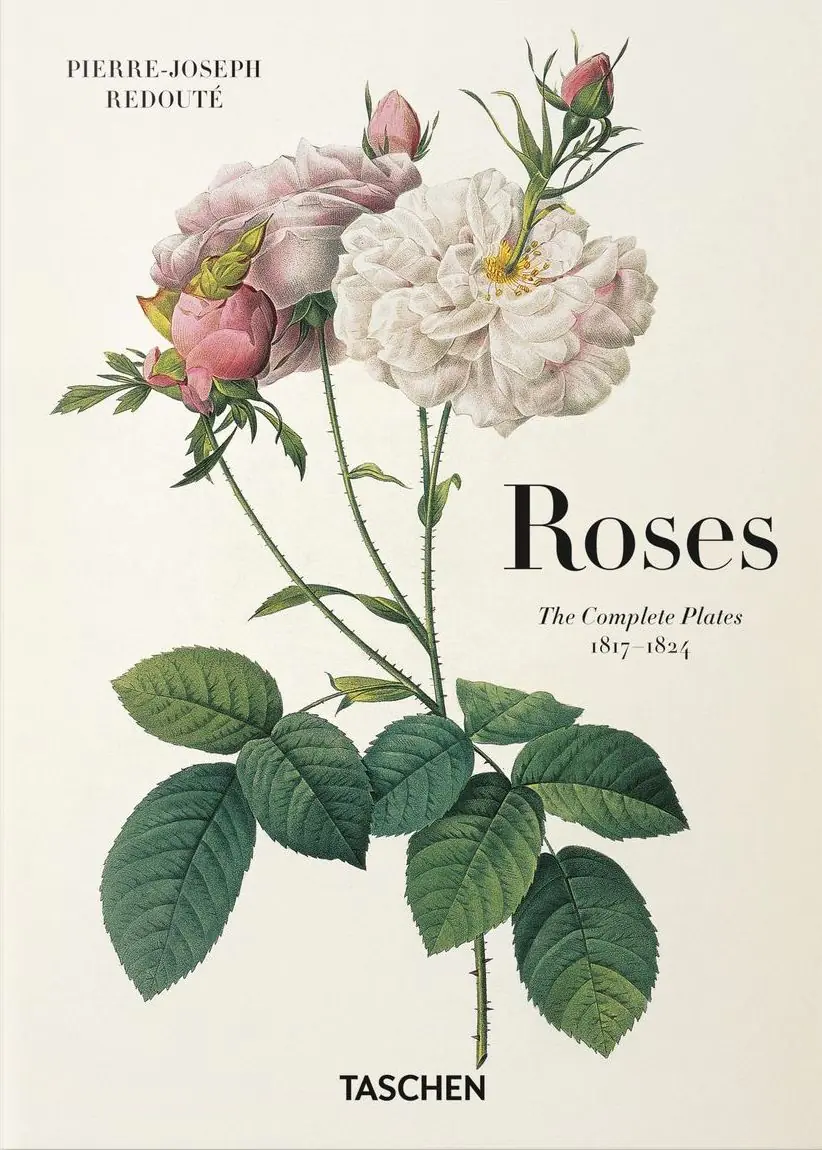
Roses
Masz tę lub inne książki?
Sprzedaj je u nas

The art of botanical illustration, with roots stretching back to the Renaissance, was born from a desire to meticulously document the unpredictable beauty of nature. This discipline required artists of exceptional precision and talent. Among these artists, Pierre-Joseph Redouté stands out as a preeminent figure in the realm of botanical painting and engraving. By working with live plants rather than relying solely on herbarium specimens, Redouté's watercolors exude an extraordinary subtlety and vibrancy. He also pioneered the "stipple-engraving" technique in France, constantly pushing the boundaries for more accurate representations in his art. Through his career, he was fortunate to gain support from significant patrons like Marie Antoinette and Empress Josephine Bonaparte, which ensured his work received both financial backing and widespread recognition. His extensive oeuvre consists of over 2,000 plant paintings marked by meticulous detail and adherence to the natural form. In the sumptuous edition of Les Roses, Redouté devotes his attention to this captivating and symbolic bloom. Initially published in three volumes from 1817 to 1824, this collection is celebrated as his most distinguished masterpiece.
Wybierz stan zużycia:
WIĘCEJ O SKALI
The art of botanical illustration, with roots stretching back to the Renaissance, was born from a desire to meticulously document the unpredictable beauty of nature. This discipline required artists of exceptional precision and talent. Among these artists, Pierre-Joseph Redouté stands out as a preeminent figure in the realm of botanical painting and engraving. By working with live plants rather than relying solely on herbarium specimens, Redouté's watercolors exude an extraordinary subtlety and vibrancy. He also pioneered the "stipple-engraving" technique in France, constantly pushing the boundaries for more accurate representations in his art. Through his career, he was fortunate to gain support from significant patrons like Marie Antoinette and Empress Josephine Bonaparte, which ensured his work received both financial backing and widespread recognition. His extensive oeuvre consists of over 2,000 plant paintings marked by meticulous detail and adherence to the natural form. In the sumptuous edition of Les Roses, Redouté devotes his attention to this captivating and symbolic bloom. Initially published in three volumes from 1817 to 1824, this collection is celebrated as his most distinguished masterpiece.
Szczegóły
Inne książki tych autorów

Podobne produkty
Może Ci się spodobać
Inne książki z tej samej kategorii

Napisz opinię o książce i wygraj nagrodę!
W każdym miesiącu wybieramy najlepsze opinie i nagradzamy recenzentów.
Dowiedz się więcejWartość nagród w tym miesiącu
880 zł
Dodaj swoją opinię
Zaloguj się na swoje konto, aby mieć możliwość dodawania opinii.
Czy chcesz zostawić tylko ocenę?
Dodanie samej oceny o książce nie jest brane pod uwagę podczas losowania nagród. By mieć szansę na otrzymanie nagrody musisz napisać opinię o książce.
Już oceniłeś/zrecenzowałeś te książkę w przeszłości.
Możliwe jest dodanie tylko jednej recenzji do każdej z książek.
Sposoby dostawy
Odbiór w punkcie (6)
InPost Paczkomat 24/7

13,99 zł
ORLEN Paczka

12,99 zł




Dostawa na adres (7)
GLS U Ciebie - Kurier

14,99 zł
Kurier DPD

14,99 zł





Sposoby płatności
Płatność z góry
Przedpłata

Zwykły przelew
