Stan książek
Nasze książki są dokładnie sprawdzone i jasno określamy stan każdej z nich.

Nowa
Książka nowa.
Używany - jak nowa
Niezauważalne lub prawie niezauważalne ślady używania. Książkę ciężko odróżnić od nowej pozycji.
Używany - dobry
Normalne ślady używania wynikające z kartkowania podczas czytania, brak większych uszkodzeń lub zagięć.
Używany - widoczne ślady użytkowania
zagięte rogi, przyniszczona okładka, książka posiada wszystkie strony.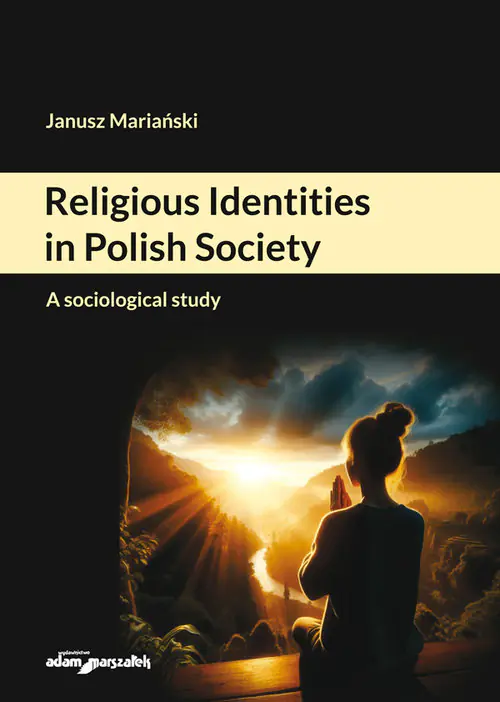
Religious Identities in Polish Society
Masz tę lub inne książki?
Sprzedaj je u nas

Father Professor Janusz Mariański insightfully points out that sociology acts as an early warning system, enabling us to detect trends and changes that others have yet to see. In the context of the evolving religious identity of Polish society, the Author examines not only the processes of secularization, laicization, and the rise of pluralistic and individualistic tendencies, but also the counteracting forces of anti-secularization and evangelization. The notion of secularization remains a vital area of study, and religious deprivatization is equally significant. Social dynamics are not predetermined by cultural determinism; instead, they are shaped by the actions and ideas of engaged individuals with spiritual awareness. Modernity arises from the lived experiences of these individuals, suggesting that contemporary societies are not destined to be secular by nature. However, this does not exclude the possibility of profound changes in traditional forms of religious expression. The trajectory of our future largely depends on our own actions and decisions. As highlighted in the conclusion, “In religious and moral matters, as in all human affairs, there is no linear evolution or single rule governing the unfolding of religious and moral processes.” Prof. Wojciech Świątkiewicz
Wybierz stan zużycia:
WIĘCEJ O SKALI
Father Professor Janusz Mariański insightfully points out that sociology acts as an early warning system, enabling us to detect trends and changes that others have yet to see. In the context of the evolving religious identity of Polish society, the Author examines not only the processes of secularization, laicization, and the rise of pluralistic and individualistic tendencies, but also the counteracting forces of anti-secularization and evangelization. The notion of secularization remains a vital area of study, and religious deprivatization is equally significant. Social dynamics are not predetermined by cultural determinism; instead, they are shaped by the actions and ideas of engaged individuals with spiritual awareness. Modernity arises from the lived experiences of these individuals, suggesting that contemporary societies are not destined to be secular by nature. However, this does not exclude the possibility of profound changes in traditional forms of religious expression. The trajectory of our future largely depends on our own actions and decisions. As highlighted in the conclusion, “In religious and moral matters, as in all human affairs, there is no linear evolution or single rule governing the unfolding of religious and moral processes.” Prof. Wojciech Świątkiewicz
Szczegóły
Inne książki: Janusz Mariański

Podobne produkty
Może Ci się spodobać
Inne książki z tej samej kategorii

Napisz opinię o książce i wygraj nagrodę!
W każdym miesiącu wybieramy najlepsze opinie i nagradzamy recenzentów.
Dowiedz się więcejWartość nagród w tym miesiącu
880 zł
Dodaj swoją opinię
Zaloguj się na swoje konto, aby mieć możliwość dodawania opinii.
Czy chcesz zostawić tylko ocenę?
Dodanie samej oceny o książce nie jest brane pod uwagę podczas losowania nagród. By mieć szansę na otrzymanie nagrody musisz napisać opinię o książce.
Już oceniłeś/zrecenzowałeś te książkę w przeszłości.
Możliwe jest dodanie tylko jednej recenzji do każdej z książek.
Sposoby dostawy
Odbiór w punkcie (6)
InPost Paczkomat 24/7

13,99 zł
ORLEN Paczka

12,99 zł




Dostawa na adres (7)
GLS U Ciebie - Kurier

14,99 zł
Kurier DPD

14,99 zł





Sposoby płatności
Płatność z góry
Przedpłata

Zwykły przelew
