Stan książek
Nasze książki są dokładnie sprawdzone i jasno określamy stan każdej z nich.

Nowa
Książka nowa.
Używany - jak nowa
Niezauważalne lub prawie niezauważalne ślady używania. Książkę ciężko odróżnić od nowej pozycji.
Używany - dobry
Normalne ślady używania wynikające z kartkowania podczas czytania, brak większych uszkodzeń lub zagięć.
Używany - widoczne ślady użytkowania
zagięte rogi, przyniszczona okładka, książka posiada wszystkie strony.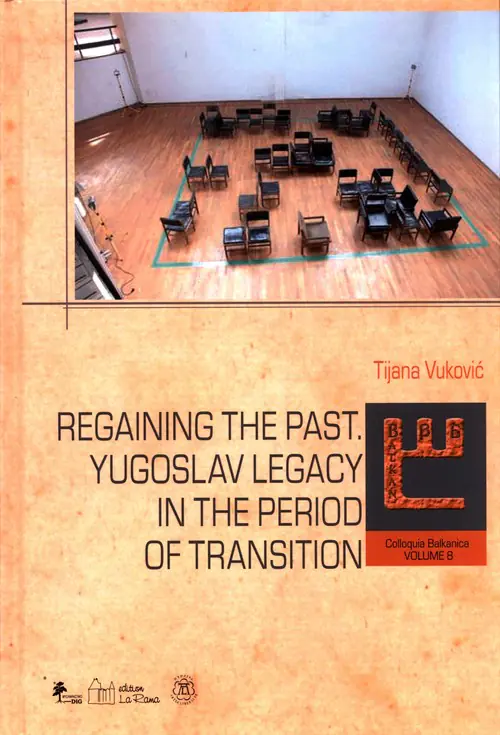
Regaining The past. Yugoslav legacy in the period of transition
DODAJ DO LISTY ŻYCZEŃ
Masz tę lub inne książki?
Sprzedaj je u nas

The author adeptly addresses the paradox of Yugoslavia's dissolution as a nation while it persists in personal memories and within certain cultural entities in Serbia. Tijana Vuković's study, spanning from 2003 to 2020, seeks to present verified historical insights into the reception and continuity of the Yugoslav legacy. This research aims to aid in overcoming the cultural trauma and challenges that arose from Yugoslavia's disintegration.Tijana Vuković delves into the influence and significance of the Yugoslav narrative and heritage across various cultural institutions, examining their economic backgrounds, decision-making processes, and socio-cultural as well as production conditions. In her exploration, she highlights official bodies such as the Serbian Pavilion in Venice, the Museum of Contemporary Art in Belgrade, and the Museum of Yugoslavia. She also brings attention to alternative spaces like the Centre for Cultural Decontamination, squat Inex, and the cultural hub Catch 22.This research provides an anthropological perspective by revealing the operational realities on the ground, serving as a prelude to a richer understanding and a more comprehensive mapping of Serbian institutions in the post-Yugoslav era. While these instances may seem isolated, they offer a shared platform for various interpretations of the developments concerning the Yugoslav cultural nation and the concept of Yugoslavism, or any fragmented ex-nationalism, particularly in terms of its cultural possibilities.
Wybierz stan zużycia:
WIĘCEJ O SKALI
nowa
41.34 zł
jak nowa
Pakujemy 28.09

- niezauważalne lub prawie niezauważalne ślady używania
- książkę ciężko odróżnić od nowej pozycji
dobry
widoczne ślady używania
Dostępna ilość 1
Uwaga została 1 szt.
Posiadamy 3 szt.
The author adeptly addresses the paradox of Yugoslavia's dissolution as a nation while it persists in personal memories and within certain cultural entities in Serbia. Tijana Vuković's study, spanning from 2003 to 2020, seeks to present verified historical insights into the reception and continuity of the Yugoslav legacy. This research aims to aid in overcoming the cultural trauma and challenges that arose from Yugoslavia's disintegration.Tijana Vuković delves into the influence and significance of the Yugoslav narrative and heritage across various cultural institutions, examining their economic backgrounds, decision-making processes, and socio-cultural as well as production conditions. In her exploration, she highlights official bodies such as the Serbian Pavilion in Venice, the Museum of Contemporary Art in Belgrade, and the Museum of Yugoslavia. She also brings attention to alternative spaces like the Centre for Cultural Decontamination, squat Inex, and the cultural hub Catch 22.This research provides an anthropological perspective by revealing the operational realities on the ground, serving as a prelude to a richer understanding and a more comprehensive mapping of Serbian institutions in the post-Yugoslav era. While these instances may seem isolated, they offer a shared platform for various interpretations of the developments concerning the Yugoslav cultural nation and the concept of Yugoslavism, or any fragmented ex-nationalism, particularly in terms of its cultural possibilities.
Szczegóły
Inne książki: Vuković Tijana

Podobne produkty
Może Ci się spodobać
Inne książki z tej samej kategorii

Napisz opinię o książce i wygraj nagrodę!
W każdym miesiącu wybieramy najlepsze opinie i nagradzamy recenzentów.
Dowiedz się więcejWartość nagród w tym miesiącu
880 zł
Dodaj swoją opinię
Zaloguj się na swoje konto, aby mieć możliwość dodawania opinii.
Czy chcesz zostawić tylko ocenę?
Dodanie samej oceny o książce nie jest brane pod uwagę podczas losowania nagród. By mieć szansę na otrzymanie nagrody musisz napisać opinię o książce.
Już oceniłeś/zrecenzowałeś te książkę w przeszłości.
Możliwe jest dodanie tylko jednej recenzji do każdej z książek.
Sposoby dostawy
Odbiór w punkcie (7)
InPost Paczkomat 24/7

14,99 zł
DPD Pickup Automaty i Punkty Odbioru

11,99 zł





Dostawa na adres (7)
GLS U Ciebie - Kurier

14,99 zł
Kurier DPD

14,99 zł





Sposoby płatności
Płatność z góry
Przedpłata

Zwykły przelew
