Stan książek
Nasze książki są dokładnie sprawdzone i jasno określamy stan każdej z nich.


Nowa
Książka nowa.
Używany - jak nowa
Niezauważalne lub prawie niezauważalne ślady używania. Książkę ciężko odróżnić od nowej pozycji.
Używany - dobry
Normalne ślady używania wynikające z kartkowania podczas czytania, brak większych uszkodzeń lub zagięć.
Używany - widoczne ślady użytkowania
zagięte rogi, przyniszczona okładka, książka posiada wszystkie strony.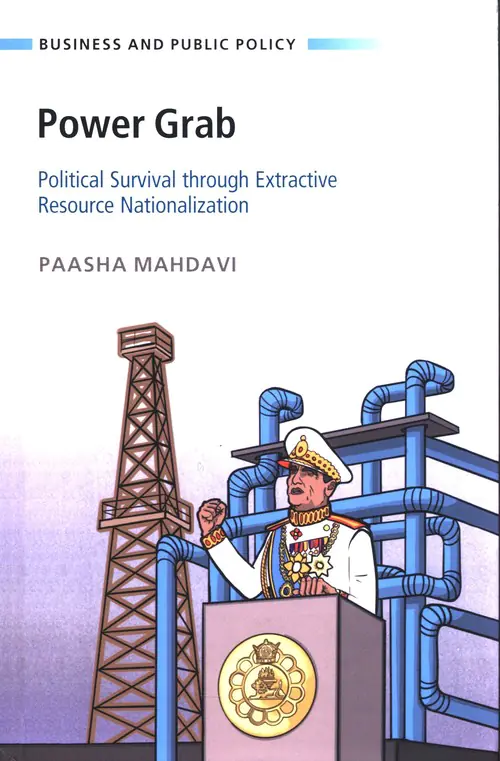
Power Grab
Masz tę lub inne książki?
Sprzedaj je u nas

For leaders governing regions rich in extractive resources like petroleum, metals, and essential minerals for the transition to clean energy, the ability to transform these natural assets into fiscal strength is crucial. Missing the chance to harness these revenues often results in short-lived leadership, while effectively managing resource wealth can pave the way for more sustainable governance. This book posits that leaders often choose to nationalize extractive industries to prolong their time in power. By controlling these means of production and setting up state-run enterprises, they secure funds that might otherwise benefit private companies, using this enhanced revenue to bolster political backing. Through a mix of detailed case studies and innovative cross-national statistical techniques, Mahdavi explores a significant political decision: nationalize to gain immediate benefits, albeit risking future economic stability, or allow private operations to continue, thus ensuring long-term fiscal stability at the expense of immediate profits.
Wybierz stan zużycia:
WIĘCEJ O SKALI
For leaders governing regions rich in extractive resources like petroleum, metals, and essential minerals for the transition to clean energy, the ability to transform these natural assets into fiscal strength is crucial. Missing the chance to harness these revenues often results in short-lived leadership, while effectively managing resource wealth can pave the way for more sustainable governance. This book posits that leaders often choose to nationalize extractive industries to prolong their time in power. By controlling these means of production and setting up state-run enterprises, they secure funds that might otherwise benefit private companies, using this enhanced revenue to bolster political backing. Through a mix of detailed case studies and innovative cross-national statistical techniques, Mahdavi explores a significant political decision: nationalize to gain immediate benefits, albeit risking future economic stability, or allow private operations to continue, thus ensuring long-term fiscal stability at the expense of immediate profits.
Szczegóły
Dane producenta:
Inne książki: Mahdavi Paasha

Podobne produkty
Może Ci się spodobać
Inne książki z tej samej kategorii

Napisz opinię o książce i wygraj nagrodę!
W każdym miesiącu wybieramy najlepsze opinie i nagradzamy recenzentów.
Dowiedz się więcejWartość nagród w tym miesiącu
880 zł
Dodaj swoją opinię
Zaloguj się na swoje konto, aby mieć możliwość dodawania opinii.
Czy chcesz zostawić tylko ocenę?
Dodanie samej oceny o książce nie jest brane pod uwagę podczas losowania nagród. By mieć szansę na otrzymanie nagrody musisz napisać opinię o książce.
Już oceniłeś/zrecenzowałeś te książkę w przeszłości.
Możliwe jest dodanie tylko jednej recenzji do każdej z książek.
Sposoby dostawy
Odbiór w punkcie (7)
InPost Paczkomat 24/7

14,99 zł
DPD Pickup Automaty i Punkty Odbioru

10,49 zł





Dostawa na adres (7)
GLS U Ciebie - Kurier

14,99 zł
Kurier DPD

14,99 zł





Sposoby płatności
Płatność z góry
Przedpłata

Zwykły przelew
