Stan książek
Nasze książki są dokładnie sprawdzone i jasno określamy stan każdej z nich.

Nowa
Książka nowa.
Używany - jak nowa
Niezauważalne lub prawie niezauważalne ślady używania. Książkę ciężko odróżnić od nowej pozycji.
Używany - dobry
Normalne ślady używania wynikające z kartkowania podczas czytania, brak większych uszkodzeń lub zagięć.
Używany - widoczne ślady użytkowania
zagięte rogi, przyniszczona okładka, książka posiada wszystkie strony.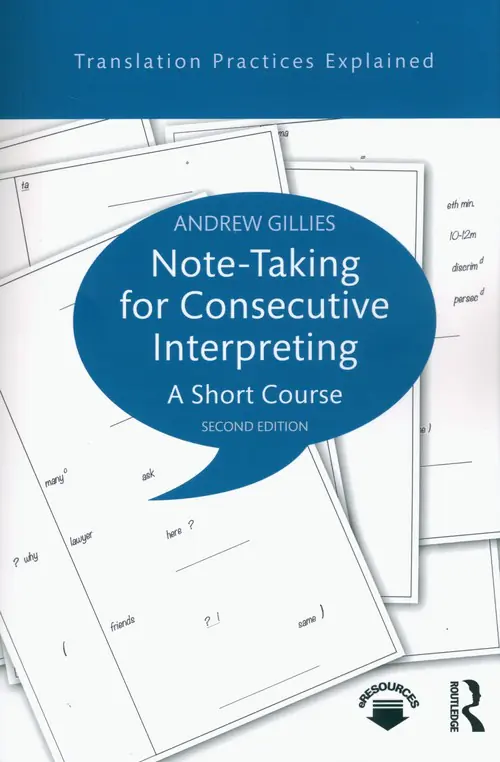
Note-taking for Consecutive Interpreting
Masz tę lub inne książki?
Sprzedaj je u nas

"Note-taking for Consecutive Interpreting: A Short Course" serves as a comprehensive, step-by-step guide to mastering note-taking skills. The system is built on a variety of proven methods that are straightforward to learn, reliable, and effective. Each chapter introduces a specific technique, supplemented with examples, tasks, and exercises. The second edition has undergone significant updates, featuring an enhanced chapter on speech analysis, new sections focusing on comparisons and connections, and revised example speeches and notes. Additionally, it includes a section summarizing other authors' guidelines on note-taking for reference and comparison. The author consistently uses English while providing insights on accessing resources in other languages, which establishes a solid foundation for professionals engaged in conference or consecutive interpreting across any language pair. This approachable guide is particularly beneficial for student interpreters, professionals aiming to refine their skills, and instructors seeking innovative note-taking teaching strategies.
Wybierz stan zużycia:
WIĘCEJ O SKALI
"Note-taking for Consecutive Interpreting: A Short Course" serves as a comprehensive, step-by-step guide to mastering note-taking skills. The system is built on a variety of proven methods that are straightforward to learn, reliable, and effective. Each chapter introduces a specific technique, supplemented with examples, tasks, and exercises. The second edition has undergone significant updates, featuring an enhanced chapter on speech analysis, new sections focusing on comparisons and connections, and revised example speeches and notes. Additionally, it includes a section summarizing other authors' guidelines on note-taking for reference and comparison. The author consistently uses English while providing insights on accessing resources in other languages, which establishes a solid foundation for professionals engaged in conference or consecutive interpreting across any language pair. This approachable guide is particularly beneficial for student interpreters, professionals aiming to refine their skills, and instructors seeking innovative note-taking teaching strategies.
Szczegóły
Inne książki: Andrew Gillies

Podobne produkty
Może Ci się spodobać
Inne książki z tej samej kategorii

Napisz opinię o książce i wygraj nagrodę!
W każdym miesiącu wybieramy najlepsze opinie i nagradzamy recenzentów.
Dowiedz się więcejWartość nagród w tym miesiącu
880 zł
Dodaj swoją opinię
Zaloguj się na swoje konto, aby mieć możliwość dodawania opinii.
Czy chcesz zostawić tylko ocenę?
Dodanie samej oceny o książce nie jest brane pod uwagę podczas losowania nagród. By mieć szansę na otrzymanie nagrody musisz napisać opinię o książce.
Już oceniłeś/zrecenzowałeś te książkę w przeszłości.
Możliwe jest dodanie tylko jednej recenzji do każdej z książek.
Sposoby dostawy
Odbiór w punkcie (6)
InPost Paczkomat 24/7

13,99 zł
ORLEN Paczka

12,99 zł




Dostawa na adres (7)
GLS U Ciebie - Kurier

14,99 zł
Kurier DPD

14,99 zł





Sposoby płatności
Płatność z góry
Przedpłata

Zwykły przelew
