Stan książek
Nasze książki są dokładnie sprawdzone i jasno określamy stan każdej z nich.


Nowa
Książka nowa.
Używany - jak nowa
Niezauważalne lub prawie niezauważalne ślady używania. Książkę ciężko odróżnić od nowej pozycji.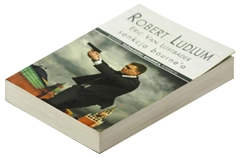
Używany - dobry
Normalne ślady używania wynikające z kartkowania podczas czytania, brak większych uszkodzeń lub zagięć.
Używany - widoczne ślady użytkowania
zagięte rogi, przyniszczona okładka, książka posiada wszystkie strony.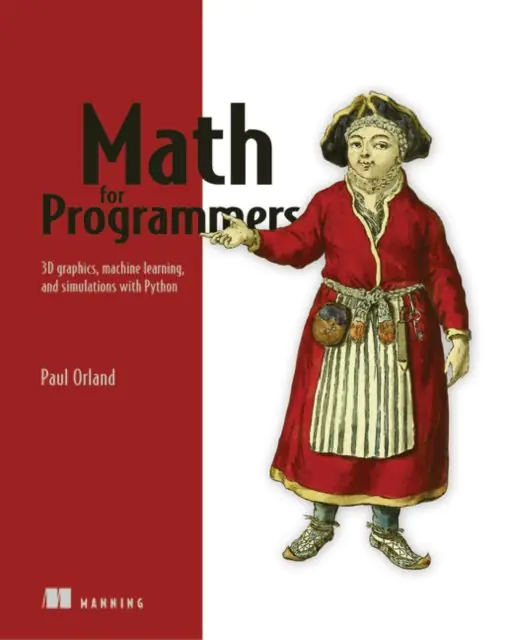
Math for Programmers
Masz tę lub inne książki?
Sprzedaj je u nas

To land a position in fields like data science, machine learning, computer graphics, and cryptography, possessing robust mathematical abilities is crucial. "Math for Programmers" is a book that equips you with the essential math skills needed in these highly sought-after professions, with a focus tailored to developers. Enriched with an abundance of engaging graphics and over 200 exercises and mini-projects, the book opens doors to stimulating and profitable careers in today’s most exciting programming areas. Key takeaways include 2D and 3D vector math, matrices, linear transformations, core concepts from linear algebra, multivariable calculus, and algorithms for regression, classification, and clustering. It contains practical real-world examples. The book targets programmers with basic algebra knowledge, even those who might need a refresher. A formal background in linear algebra or calculus isn’t necessary. In today’s competitive landscape, companies increasingly recognize the necessity to apply data science and leverage effective machine learning strategies to stay ahead. This requires developers who are adept at coding and familiar with statistical tools, linear algebra, and calculus. Moreover, mathematics is essential in modern applications such as game development, computer graphics and animation, image and signal processing, pricing engines, and stock market analysis. Paul Orland, CEO of Tachyus, a startup in Silicon Valley, specializes in predictive analytics software aimed at optimizing energy production for the oil and gas industry. As the founding CTO, he directed the engineering team in transitioning hybrid machine learning and physics models into products, developing distributed optimization algorithms, and crafting bespoke web-based data visualizations. He holds a B.S. in mathematics from Yale University and an M.S. in physics from the University of Washington.
Wybierz stan zużycia:
WIĘCEJ O SKALI
To land a position in fields like data science, machine learning, computer graphics, and cryptography, possessing robust mathematical abilities is crucial. "Math for Programmers" is a book that equips you with the essential math skills needed in these highly sought-after professions, with a focus tailored to developers. Enriched with an abundance of engaging graphics and over 200 exercises and mini-projects, the book opens doors to stimulating and profitable careers in today’s most exciting programming areas. Key takeaways include 2D and 3D vector math, matrices, linear transformations, core concepts from linear algebra, multivariable calculus, and algorithms for regression, classification, and clustering. It contains practical real-world examples. The book targets programmers with basic algebra knowledge, even those who might need a refresher. A formal background in linear algebra or calculus isn’t necessary. In today’s competitive landscape, companies increasingly recognize the necessity to apply data science and leverage effective machine learning strategies to stay ahead. This requires developers who are adept at coding and familiar with statistical tools, linear algebra, and calculus. Moreover, mathematics is essential in modern applications such as game development, computer graphics and animation, image and signal processing, pricing engines, and stock market analysis. Paul Orland, CEO of Tachyus, a startup in Silicon Valley, specializes in predictive analytics software aimed at optimizing energy production for the oil and gas industry. As the founding CTO, he directed the engineering team in transitioning hybrid machine learning and physics models into products, developing distributed optimization algorithms, and crafting bespoke web-based data visualizations. He holds a B.S. in mathematics from Yale University and an M.S. in physics from the University of Washington.
Szczegóły
Inne książki: Paul Orland

Podobne produkty
Może Ci się spodobać
Inne książki z tej samej kategorii

Napisz opinię o książce i wygraj nagrodę!
W każdym miesiącu wybieramy najlepsze opinie i nagradzamy recenzentów.
Dowiedz się więcejWartość nagród w tym miesiącu
880 zł
Dodaj swoją opinię
Zaloguj się na swoje konto, aby mieć możliwość dodawania opinii.
Czy chcesz zostawić tylko ocenę?
Dodanie samej oceny o książce nie jest brane pod uwagę podczas losowania nagród. By mieć szansę na otrzymanie nagrody musisz napisać opinię o książce.
Już oceniłeś/zrecenzowałeś te książkę w przeszłości.
Możliwe jest dodanie tylko jednej recenzji do każdej z książek.
Sposoby dostawy
Płatne z góry

InPost Paczkomaty 24/7
13.99 zł
Darmowa od 190 zł

ORLEN Paczka
12.99 zł
Darmowa od 190 zł

Automaty DHL BOX 24/7 i punkty POP
12.99 zł
Darmowa od 190 zł

DPD Pickup Automaty i Punkty Odbioru
8.99 zł
Darmowa od 190 zł

Automaty Orlen Paczka, sklepy Żabka i inne
12.99 zł
Darmowa od 190 zł

GLS U Ciebie - Kurier
14.99 zł
Darmowa od 190 zł

Kurier DPD
14.99 zł
Darmowa od 190 zł

Kurier InPost
14.99 zł
Darmowa od 190 zł

Pocztex Kurier
13.99 zł
Darmowa od 190 zł

Kurier DHL
14.99 zł
Darmowa od 190 zł

Kurier GLS - kraje UE
69.00 zł

Punkt odbioru (Dębica)
2.99 zł
Darmowa od 190 zł
Płatne przy odbiorze

Kurier GLS pobranie
23.99 zł
Sposoby płatności
Płatność z góry
Przedpłata

Zwykły przelew
