Stan książek
Nasze książki są dokładnie sprawdzone i jasno określamy stan każdej z nich.

Nowa
Książka nowa.
Używany - jak nowa
Niezauważalne lub prawie niezauważalne ślady używania. Książkę ciężko odróżnić od nowej pozycji.
Używany - dobry
Normalne ślady używania wynikające z kartkowania podczas czytania, brak większych uszkodzeń lub zagięć.
Używany - widoczne ślady użytkowania
zagięte rogi, przyniszczona okładka, książka posiada wszystkie strony.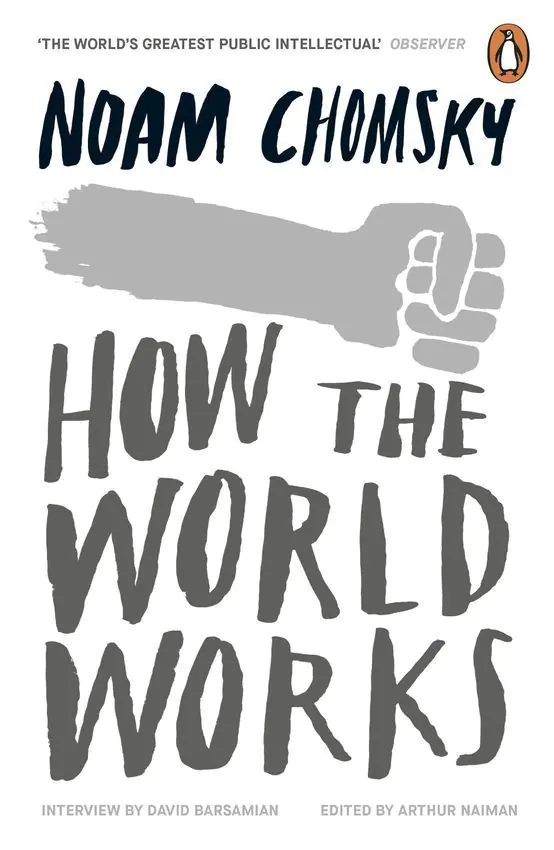
How the World Works
Masz tę lub inne książki?
Sprzedaj je u nas

In "How the World Works," Noam Chomsky provides a profound analysis of modern geopolitics with unmatched clarity and argumentative strength. This collection, compiled and edited by Arthur Naiman and featuring interviews and speeches conducted by David Barsamian, is divided into four sections. Originally, each section was published in the US as separate short books, collectively selling over 500,000 copies. One part, "What Uncle Sam Really Wants," delves into US foreign policy, while "The Prosperous Few and the Restless Many" examines the global economy, food issues, Third World economic shifts, and the roots of racism. Another section, "Secrets, Lies and Democracy," explores the US political scene, the CIA, religious extremism, global inequality, and potential ecological disasters. Finally, "The Common Good" discusses themes of equality, freedom, media influence, the myth of Third World debt, and the creation of dissent.
Wybierz stan zużycia:
WIĘCEJ O SKALI
In "How the World Works," Noam Chomsky provides a profound analysis of modern geopolitics with unmatched clarity and argumentative strength. This collection, compiled and edited by Arthur Naiman and featuring interviews and speeches conducted by David Barsamian, is divided into four sections. Originally, each section was published in the US as separate short books, collectively selling over 500,000 copies. One part, "What Uncle Sam Really Wants," delves into US foreign policy, while "The Prosperous Few and the Restless Many" examines the global economy, food issues, Third World economic shifts, and the roots of racism. Another section, "Secrets, Lies and Democracy," explores the US political scene, the CIA, religious extremism, global inequality, and potential ecological disasters. Finally, "The Common Good" discusses themes of equality, freedom, media influence, the myth of Third World debt, and the creation of dissent.
Szczegóły
Inne książki: Noam Chomsky

Podobne produkty
Może Ci się spodobać
Inne książki z tej samej kategorii

Napisz opinię o książce i wygraj nagrodę!
W każdym miesiącu wybieramy najlepsze opinie i nagradzamy recenzentów.
Dowiedz się więcejWartość nagród w tym miesiącu
880 zł
Dodaj swoją opinię
Zaloguj się na swoje konto, aby mieć możliwość dodawania opinii.
Czy chcesz zostawić tylko ocenę?
Dodanie samej oceny o książce nie jest brane pod uwagę podczas losowania nagród. By mieć szansę na otrzymanie nagrody musisz napisać opinię o książce.
Już oceniłeś/zrecenzowałeś te książkę w przeszłości.
Możliwe jest dodanie tylko jednej recenzji do każdej z książek.
Sposoby dostawy
Odbiór w punkcie (7)
InPost Paczkomat 24/7

14,99 zł
DPD Pickup Automaty i Punkty Odbioru

11,99 zł



Dostawa na adres (7)
GLS U Ciebie - Kurier
14,99 zł
Kurier DPD

14,99 zł





Sposoby płatności
Płatność z góry
Przedpłata

Zwykły przelew
