Stan książek
Nasze książki są dokładnie sprawdzone i jasno określamy stan każdej z nich.

Nowa
Książka nowa.
Używany - jak nowa
Niezauważalne lub prawie niezauważalne ślady używania. Książkę ciężko odróżnić od nowej pozycji.
Używany - dobry
Normalne ślady używania wynikające z kartkowania podczas czytania, brak większych uszkodzeń lub zagięć.
Używany - widoczne ślady użytkowania
zagięte rogi, przyniszczona okładka, książka posiada wszystkie strony.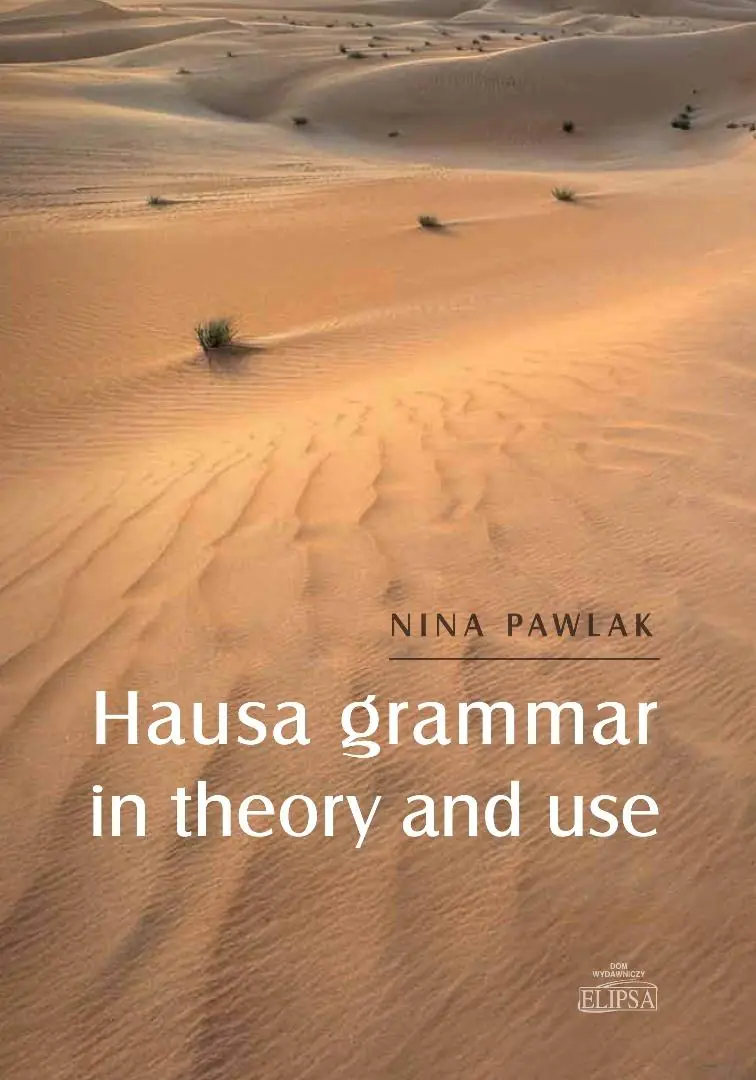
Hausa grammar in theory and use
Masz tę lub inne książki?
Sprzedaj je u nas

This publication is notable for being one of the earliest Hausa grammar books tailored specifically for educational purposes. With a straightforward and intuitive design, it includes well-organized tables and examples that simplify even the most complicated rules. The format allows for rapid reference to essential grammatical patterns, which greatly benefits learners as they delve into the nuances of the language. One of its significant features is its comparative approach, which accentuates the structural dissimilarities between Hausa and European languages, particularly English, and addresses discrepancies in grammatical terms. This insight aids learners not only in comprehending the mechanics of Hausa but also in understanding why certain structures differ from what they are accustomed to. Each section of the book gives focused attention to topics like adjectives, non-verbal sentences, noun plurals, verb conjugation, and word formation. Rather than aiming for thoroughness, it prioritizes practical challenges, exceptions, and diverse viewpoints that typical grammars might miss. This methodology fosters a more adaptable and innovative use of the language. Compact and user-friendly, the book fills a crucial void in resources for learning Hausa, proving to be an essential resource for students who seek both simplicity and thoroughness, as well as for anyone who wishes to grasp the language beyond basic communicative interactions.
Wybierz stan zużycia:
WIĘCEJ O SKALI
This publication is notable for being one of the earliest Hausa grammar books tailored specifically for educational purposes. With a straightforward and intuitive design, it includes well-organized tables and examples that simplify even the most complicated rules. The format allows for rapid reference to essential grammatical patterns, which greatly benefits learners as they delve into the nuances of the language. One of its significant features is its comparative approach, which accentuates the structural dissimilarities between Hausa and European languages, particularly English, and addresses discrepancies in grammatical terms. This insight aids learners not only in comprehending the mechanics of Hausa but also in understanding why certain structures differ from what they are accustomed to. Each section of the book gives focused attention to topics like adjectives, non-verbal sentences, noun plurals, verb conjugation, and word formation. Rather than aiming for thoroughness, it prioritizes practical challenges, exceptions, and diverse viewpoints that typical grammars might miss. This methodology fosters a more adaptable and innovative use of the language. Compact and user-friendly, the book fills a crucial void in resources for learning Hausa, proving to be an essential resource for students who seek both simplicity and thoroughness, as well as for anyone who wishes to grasp the language beyond basic communicative interactions.
Szczegóły
Inne książki: Nina Pawlak

Podobne produkty
Może Ci się spodobać
Inne książki z tej samej kategorii

Napisz opinię o książce i wygraj nagrodę!
W każdym miesiącu wybieramy najlepsze opinie i nagradzamy recenzentów.
Dowiedz się więcejWartość nagród w tym miesiącu
880 zł
Dodaj swoją opinię
Zaloguj się na swoje konto, aby mieć możliwość dodawania opinii.
Czy chcesz zostawić tylko ocenę?
Dodanie samej oceny o książce nie jest brane pod uwagę podczas losowania nagród. By mieć szansę na otrzymanie nagrody musisz napisać opinię o książce.
Już oceniłeś/zrecenzowałeś te książkę w przeszłości.
Możliwe jest dodanie tylko jednej recenzji do każdej z książek.
Sposoby dostawy
Odbiór w punkcie (6)
InPost Paczkomat 24/7

13,99 zł
ORLEN Paczka

12,99 zł




Dostawa na adres (7)
GLS U Ciebie - Kurier

14,99 zł
Kurier DPD

14,99 zł





Sposoby płatności
Płatność z góry
Przedpłata

Zwykły przelew
