Stan książek
Nasze książki są dokładnie sprawdzone i jasno określamy stan każdej z nich.


Nowa
Książka nowa.
Używany - jak nowa
Niezauważalne lub prawie niezauważalne ślady używania. Książkę ciężko odróżnić od nowej pozycji.
Używany - dobry
Normalne ślady używania wynikające z kartkowania podczas czytania, brak większych uszkodzeń lub zagięć.
Używany - widoczne ślady użytkowania
zagięte rogi, przyniszczona okładka, książka posiada wszystkie strony.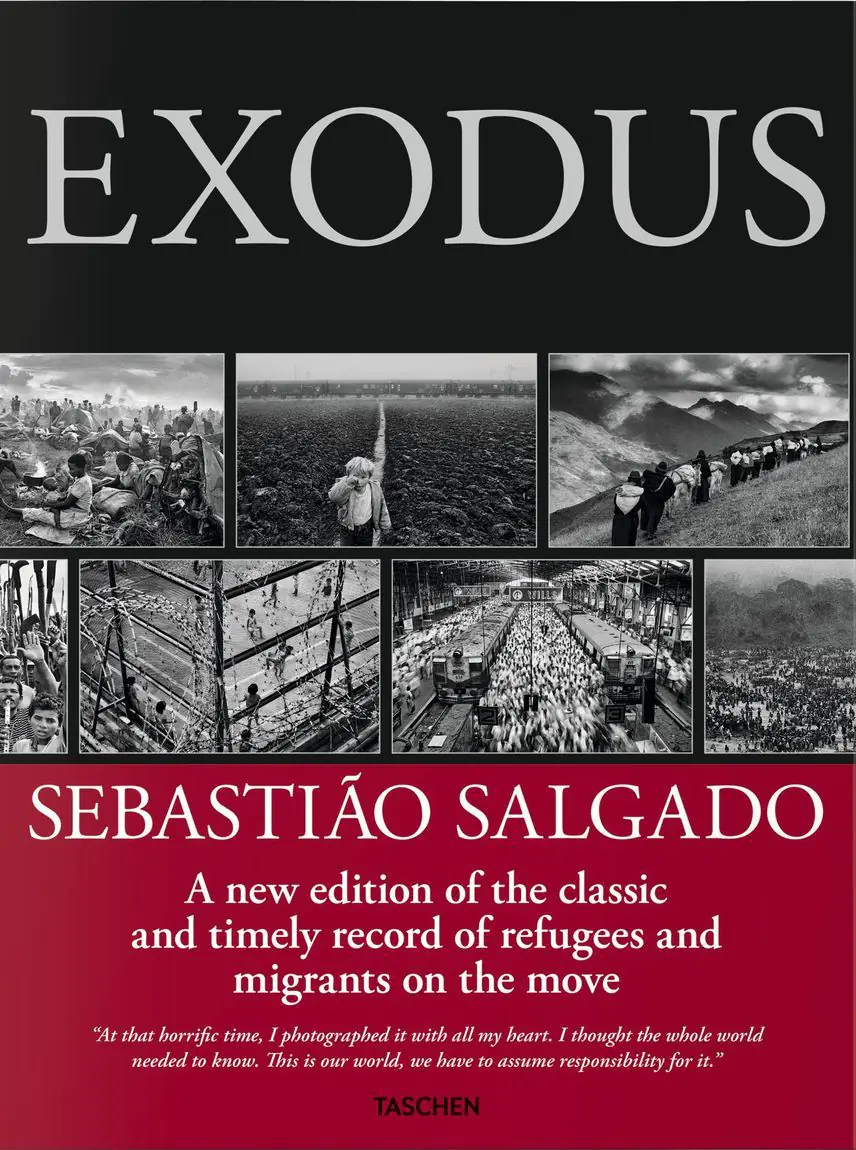
Exodus
Masz tę lub inne książki?
Sprzedaj je u nas

Sebastião Salgado's "Exodus," though published nearly two decades ago, continues to resonate with its depiction of global human migration. The essential narrative of movement remains unchanged despite the shifting geopolitical landscapes—from Rwanda's turmoil to the Syrian conflict. Throughout his six-year journey, Salgado immersed himself in the lives of migrants, traversing over 35 countries to capture the essence of displacement found on roadsides, in refugee camps, and within the congested alleyways of sprawling city slums.His compelling work presents a myriad of stories: from Latin Americans crossing into the United States to Jews departing the former Soviet Union, Kosovars escaping into Albania, and Hutu refugees from Rwanda. It also chronicles the plight of early "boat people," Arabs and sub-Saharan Africans, braving the treacherous Mediterranean waters in pursuit of safety in Europe.The individuals that Salgado encounters present a complex picture of dignity and endurance in the face of dire adversity. His lens captures the tormented scars of violence and greed, yet also glimpses of hope and the innate human quest for survival. His attention to both grand movements and minute details—be it a crowded boat, a heavily laden truck, a simple bundle, or a child's bandaged leg—brings a stark reality to the phenomenon of migration.Through his empathetic perspective, Salgado emphasizes the profound personal narratives behind staggering statistics. He transforms the faceless masses often portrayed in media coverage into intimate portraits, encapsulating individual identities amid the vast and sometimes desolate backdrop of migration. Even amid a landscape of lost homes, lands, and loved ones, Salgado's work reveals the enduring perseverance and humanity of those on their journey.
Wybierz stan zużycia:
WIĘCEJ O SKALI
Sebastião Salgado's "Exodus," though published nearly two decades ago, continues to resonate with its depiction of global human migration. The essential narrative of movement remains unchanged despite the shifting geopolitical landscapes—from Rwanda's turmoil to the Syrian conflict. Throughout his six-year journey, Salgado immersed himself in the lives of migrants, traversing over 35 countries to capture the essence of displacement found on roadsides, in refugee camps, and within the congested alleyways of sprawling city slums.His compelling work presents a myriad of stories: from Latin Americans crossing into the United States to Jews departing the former Soviet Union, Kosovars escaping into Albania, and Hutu refugees from Rwanda. It also chronicles the plight of early "boat people," Arabs and sub-Saharan Africans, braving the treacherous Mediterranean waters in pursuit of safety in Europe.The individuals that Salgado encounters present a complex picture of dignity and endurance in the face of dire adversity. His lens captures the tormented scars of violence and greed, yet also glimpses of hope and the innate human quest for survival. His attention to both grand movements and minute details—be it a crowded boat, a heavily laden truck, a simple bundle, or a child's bandaged leg—brings a stark reality to the phenomenon of migration.Through his empathetic perspective, Salgado emphasizes the profound personal narratives behind staggering statistics. He transforms the faceless masses often portrayed in media coverage into intimate portraits, encapsulating individual identities amid the vast and sometimes desolate backdrop of migration. Even amid a landscape of lost homes, lands, and loved ones, Salgado's work reveals the enduring perseverance and humanity of those on their journey.
Szczegóły
Dane producenta:
Inne książki tych autorów

Podobne produkty
Może Ci się spodobać
Inne książki z tej samej kategorii

Napisz opinię o książce i wygraj nagrodę!
W każdym miesiącu wybieramy najlepsze opinie i nagradzamy recenzentów.
Dowiedz się więcejWartość nagród w tym miesiącu
880 zł
Dodaj swoją opinię
Zaloguj się na swoje konto, aby mieć możliwość dodawania opinii.
Czy chcesz zostawić tylko ocenę?
Dodanie samej oceny o książce nie jest brane pod uwagę podczas losowania nagród. By mieć szansę na otrzymanie nagrody musisz napisać opinię o książce.
Już oceniłeś/zrecenzowałeś te książkę w przeszłości.
Możliwe jest dodanie tylko jednej recenzji do każdej z książek.
Sposoby dostawy
Odbiór w punkcie (6)
InPost Paczkomat 24/7

13,99 zł
ORLEN Paczka

12,99 zł




Dostawa na adres (7)
GLS U Ciebie - Kurier

14,99 zł
Kurier DPD

14,99 zł





Sposoby płatności
Płatność z góry
Przedpłata

Zwykły przelew
