Stan książek
Nasze książki są dokładnie sprawdzone i jasno określamy stan każdej z nich.


Nowa
Książka nowa.
Używany - jak nowa
Niezauważalne lub prawie niezauważalne ślady używania. Książkę ciężko odróżnić od nowej pozycji.
Używany - dobry
Normalne ślady używania wynikające z kartkowania podczas czytania, brak większych uszkodzeń lub zagięć.
Używany - widoczne ślady użytkowania
zagięte rogi, przyniszczona okładka, książka posiada wszystkie strony.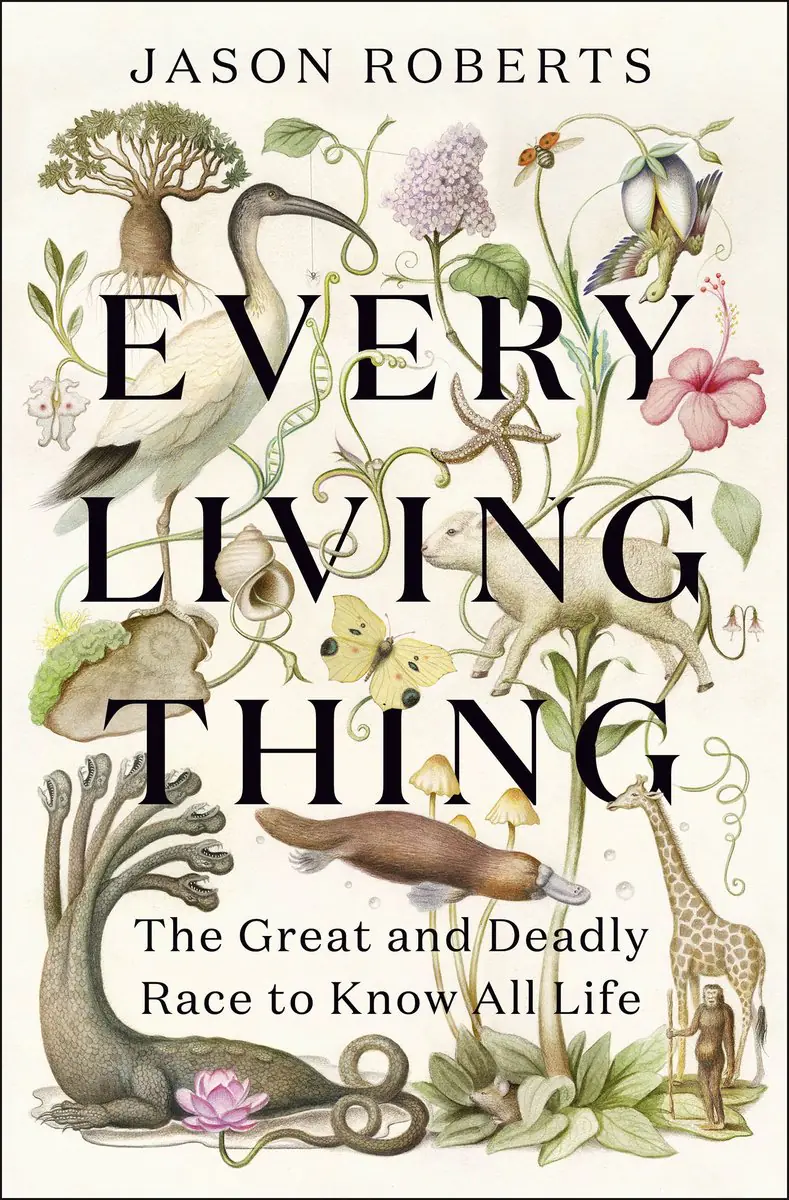
Every Living Thing
Masz tę lub inne książki?
Sprzedaj je u nas

In the 18th century, two remarkable minds set out on an ambitious journey to catalog all life on Earth, leading to a historic scientific rivalry. Carl Linnaeus, a devout Swedish physician with a showman's instinct, sought to classify life into clear, unchanging categories. Meanwhile, Georges-Louis de Buffon, a French aristocrat and curator of the royal gardens, perceived life as a dynamic, ever-evolving entity. Both men initially underestimated the sheer diversity of life, assuming the Earth harbored only a few thousand species. As they delved deeper into nature's complexity, their initial objectives proved elusive. Linnaeus, supported by his dedicated explorers whom he referred to as "apostles" (only half survived their missions), introduced concepts such as mammal, primate, and homo sapiens. However, his legacy is also marred by the denial of species change and the dissemination of racist theories. In contrast, Buffon was instrumental in shaping early ideas about evolution and genetics, and he vehemently opposed prejudice. Their conflicting ideas left a lasting impact, with Buffon seemingly gaining the upper hand during their lifetimes. Their enduring legacies, marked by opposing views on nature and humanity, resonate through the centuries. In his meticulously researched and engaging narrative, bestselling author Jason Roberts brilliantly explores this saga of competition and discovery, offering insights that continue to influence our understanding of the natural world.
Wybierz stan zużycia:
WIĘCEJ O SKALI
In the 18th century, two remarkable minds set out on an ambitious journey to catalog all life on Earth, leading to a historic scientific rivalry. Carl Linnaeus, a devout Swedish physician with a showman's instinct, sought to classify life into clear, unchanging categories. Meanwhile, Georges-Louis de Buffon, a French aristocrat and curator of the royal gardens, perceived life as a dynamic, ever-evolving entity. Both men initially underestimated the sheer diversity of life, assuming the Earth harbored only a few thousand species. As they delved deeper into nature's complexity, their initial objectives proved elusive. Linnaeus, supported by his dedicated explorers whom he referred to as "apostles" (only half survived their missions), introduced concepts such as mammal, primate, and homo sapiens. However, his legacy is also marred by the denial of species change and the dissemination of racist theories. In contrast, Buffon was instrumental in shaping early ideas about evolution and genetics, and he vehemently opposed prejudice. Their conflicting ideas left a lasting impact, with Buffon seemingly gaining the upper hand during their lifetimes. Their enduring legacies, marked by opposing views on nature and humanity, resonate through the centuries. In his meticulously researched and engaging narrative, bestselling author Jason Roberts brilliantly explores this saga of competition and discovery, offering insights that continue to influence our understanding of the natural world.
Szczegóły
Inne książki: Jason Roberts

Podobne produkty
Może Ci się spodobać
Inne książki z tej samej kategorii

Napisz opinię o książce i wygraj nagrodę!
W każdym miesiącu wybieramy najlepsze opinie i nagradzamy recenzentów.
Dowiedz się więcejWartość nagród w tym miesiącu
880 zł
Dodaj swoją opinię
Zaloguj się na swoje konto, aby mieć możliwość dodawania opinii.
Czy chcesz zostawić tylko ocenę?
Dodanie samej oceny o książce nie jest brane pod uwagę podczas losowania nagród. By mieć szansę na otrzymanie nagrody musisz napisać opinię o książce.
Już oceniłeś/zrecenzowałeś te książkę w przeszłości.
Możliwe jest dodanie tylko jednej recenzji do każdej z książek.
Sposoby dostawy
Odbiór w punkcie (6)
InPost Paczkomat 24/7

14,99 zł
DPD Pickup Automaty i Punkty Odbioru

10,49 zł




Dostawa na adres (7)
GLS U Ciebie - Kurier

14,99 zł
Kurier DPD

14,99 zł





Sposoby płatności
Płatność z góry
Przedpłata

Zwykły przelew
