Stan książek
Nasze książki są dokładnie sprawdzone i jasno określamy stan każdej z nich.


Nowa
Książka nowa.
Używany - jak nowa
Niezauważalne lub prawie niezauważalne ślady używania. Książkę ciężko odróżnić od nowej pozycji.
Używany - dobry
Normalne ślady używania wynikające z kartkowania podczas czytania, brak większych uszkodzeń lub zagięć.
Używany - widoczne ślady użytkowania
zagięte rogi, przyniszczona okładka, książka posiada wszystkie strony.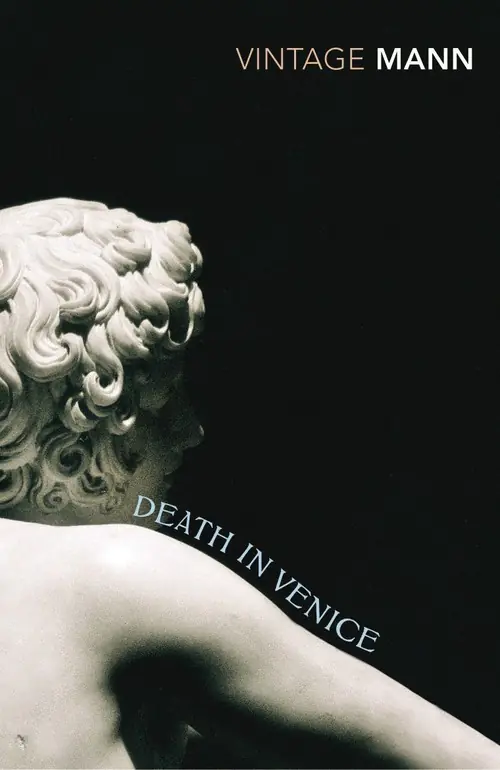
Death in Venice
Masz tę lub inne książki?
Sprzedaj je u nas

Thomas Mann, a notable figure in literature, was born in 1875 in the city of Lübeck into a family of successful merchants. His early education was shaped by the rigorous discipline of North German educators. At the age of nineteen, Mann began working at an insurance office, during which he wrote his first story, *Fallen*, in secrecy. His passion for writing soon led him to leave the insurance job to pursue studies in art and literature at the University of Munich. After spending a year in Rome, Mann dedicated himself fully to his writing career. At just twenty-five, he published his first significant novel, *Buddenbrooks*, which achieved great success in Germany until it was banned and burned by the Hitler regime, selling over a million copies. His subsequent major work, *The Magic Mountain*, was released in 1924, followed by the initial volume of his tetralogy *Joseph and His Brothers* in 1933. Mann's literary talents were recognized internationally when he was awarded the Nobel Prize for Literature in 1929. In 1933, Mann emigrated from Germany to Switzerland, and later, in 1938, he made the United States his home, where he penned works like *Doctor Faustus* and *The Holy Sinner*. During his time in the U.S., he was honored by being made a Fellow of the Library of Congress. Mann returned to Germany for a visit in 1949 before moving back to Switzerland in 1952, where he completed *The Black Swan* and *Confessions of Felix Krull*. He remained in Switzerland until his death in 1955.
Wybierz stan zużycia:
WIĘCEJ O SKALI
Thomas Mann, a notable figure in literature, was born in 1875 in the city of Lübeck into a family of successful merchants. His early education was shaped by the rigorous discipline of North German educators. At the age of nineteen, Mann began working at an insurance office, during which he wrote his first story, *Fallen*, in secrecy. His passion for writing soon led him to leave the insurance job to pursue studies in art and literature at the University of Munich. After spending a year in Rome, Mann dedicated himself fully to his writing career. At just twenty-five, he published his first significant novel, *Buddenbrooks*, which achieved great success in Germany until it was banned and burned by the Hitler regime, selling over a million copies. His subsequent major work, *The Magic Mountain*, was released in 1924, followed by the initial volume of his tetralogy *Joseph and His Brothers* in 1933. Mann's literary talents were recognized internationally when he was awarded the Nobel Prize for Literature in 1929. In 1933, Mann emigrated from Germany to Switzerland, and later, in 1938, he made the United States his home, where he penned works like *Doctor Faustus* and *The Holy Sinner*. During his time in the U.S., he was honored by being made a Fellow of the Library of Congress. Mann returned to Germany for a visit in 1949 before moving back to Switzerland in 1952, where he completed *The Black Swan* and *Confessions of Felix Krull*. He remained in Switzerland until his death in 1955.
Szczegóły
Inne książki: Thomas Mann

Podobne produkty
Może Ci się spodobać
Inne książki z tej samej kategorii

Napisz opinię o książce i wygraj nagrodę!
W każdym miesiącu wybieramy najlepsze opinie i nagradzamy recenzentów.
Dowiedz się więcejWartość nagród w tym miesiącu
880 zł
Dodaj swoją opinię
Zaloguj się na swoje konto, aby mieć możliwość dodawania opinii.
Czy chcesz zostawić tylko ocenę?
Dodanie samej oceny o książce nie jest brane pod uwagę podczas losowania nagród. By mieć szansę na otrzymanie nagrody musisz napisać opinię o książce.
Już oceniłeś/zrecenzowałeś te książkę w przeszłości.
Możliwe jest dodanie tylko jednej recenzji do każdej z książek.
Sposoby dostawy
Odbiór w punkcie (6)
InPost Paczkomat 24/7

13,99 zł
ORLEN Paczka

12,99 zł




Dostawa na adres (7)
GLS U Ciebie - Kurier

14,99 zł
Kurier DPD

14,99 zł





Sposoby płatności
Płatność z góry
Przedpłata

Zwykły przelew
