Stan książek
Nasze książki są dokładnie sprawdzone i jasno określamy stan każdej z nich.

Nowa
Książka nowa.
Używany - jak nowa
Niezauważalne lub prawie niezauważalne ślady używania. Książkę ciężko odróżnić od nowej pozycji.
Używany - dobry
Normalne ślady używania wynikające z kartkowania podczas czytania, brak większych uszkodzeń lub zagięć.
Używany - widoczne ślady użytkowania
zagięte rogi, przyniszczona okładka, książka posiada wszystkie strony.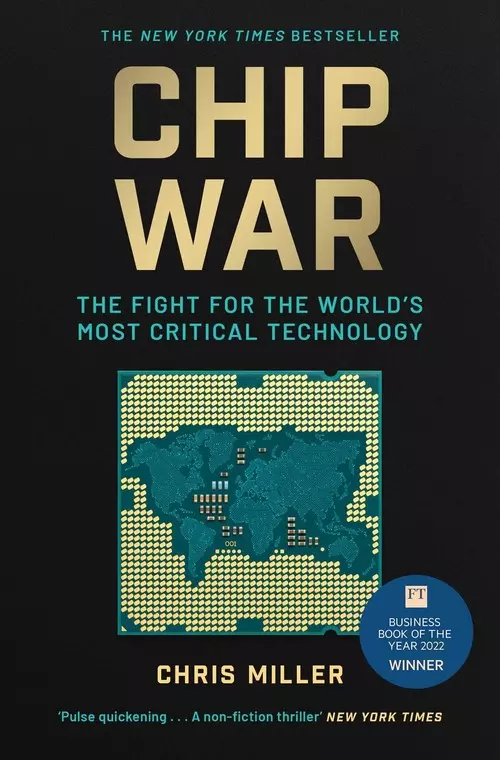
Chip War: The Fight for the World's Most Critical Technology
Masz tę lub inne książki?
Sprzedaj je u nas

The gripping narrative of the protracted struggle to command the world's most pivotal resource—microchip technology—is at the heart of this book. The foundation of modern power—whether military, economic, or geopolitical—rests on the capabilities of computer chips. The United States has traditionally secured its superpower status through its dominance in developing cutting-edge computer chips and leveraging the technologies they enable. Chips are ubiquitous; they drive everything from automobiles to smartphones, financial markets, and even the electrical grid. However, America's technological supremacy is now threatened by the misguided belief that globalizing the chip industry, allowing manufacturing to shift to Taiwan, Korea, and Europe, aligns with its national interests. In "Chip War," economic historian Chris Miller delves into China's astronomical investment in microchip technology, likening it to a modern-day Manhattan Project aimed at rivaling the U.S. Miller vividly recounts the chronological development that allowed the United States to excel in chip design, illustrating how accelerating chip technology played a crucial role in surpassing Soviet-era weaponry. This ongoing battle for tech supremacy will significantly influence our future. China's economic vulnerability is underscored by its reliance on imported chips, a dependency more substantial than its oil imports. With 37 percent of the global chip production stemming from Taiwan, precariously close to China's military reach, there is growing concern in the West that a geopolitical resolution might soon unfold.
Wybierz stan zużycia:
WIĘCEJ O SKALI
The gripping narrative of the protracted struggle to command the world's most pivotal resource—microchip technology—is at the heart of this book. The foundation of modern power—whether military, economic, or geopolitical—rests on the capabilities of computer chips. The United States has traditionally secured its superpower status through its dominance in developing cutting-edge computer chips and leveraging the technologies they enable. Chips are ubiquitous; they drive everything from automobiles to smartphones, financial markets, and even the electrical grid. However, America's technological supremacy is now threatened by the misguided belief that globalizing the chip industry, allowing manufacturing to shift to Taiwan, Korea, and Europe, aligns with its national interests. In "Chip War," economic historian Chris Miller delves into China's astronomical investment in microchip technology, likening it to a modern-day Manhattan Project aimed at rivaling the U.S. Miller vividly recounts the chronological development that allowed the United States to excel in chip design, illustrating how accelerating chip technology played a crucial role in surpassing Soviet-era weaponry. This ongoing battle for tech supremacy will significantly influence our future. China's economic vulnerability is underscored by its reliance on imported chips, a dependency more substantial than its oil imports. With 37 percent of the global chip production stemming from Taiwan, precariously close to China's military reach, there is growing concern in the West that a geopolitical resolution might soon unfold.
Szczegóły
Inne książki: Chris Miller

Podobne produkty
Może Ci się spodobać
Inne książki z tej samej kategorii

Napisz opinię o książce i wygraj nagrodę!
W każdym miesiącu wybieramy najlepsze opinie i nagradzamy recenzentów.
Dowiedz się więcejWartość nagród w tym miesiącu
880 zł
Dodaj swoją opinię
Zaloguj się na swoje konto, aby mieć możliwość dodawania opinii.
Czy chcesz zostawić tylko ocenę?
Dodanie samej oceny o książce nie jest brane pod uwagę podczas losowania nagród. By mieć szansę na otrzymanie nagrody musisz napisać opinię o książce.
Już oceniłeś/zrecenzowałeś te książkę w przeszłości.
Możliwe jest dodanie tylko jednej recenzji do każdej z książek.
Sposoby dostawy
Odbiór w punkcie (6)
InPost Paczkomat 24/7

13,99 zł
ORLEN Paczka

12,99 zł




Dostawa na adres (7)
GLS U Ciebie - Kurier

14,99 zł
Kurier DPD

14,99 zł





Sposoby płatności
Płatność z góry
Przedpłata

Zwykły przelew
