Stan książek
Nasze książki są dokładnie sprawdzone i jasno określamy stan każdej z nich.


Nowa
Książka nowa.
Używany - jak nowa
Niezauważalne lub prawie niezauważalne ślady używania. Książkę ciężko odróżnić od nowej pozycji.
Używany - dobry
Normalne ślady używania wynikające z kartkowania podczas czytania, brak większych uszkodzeń lub zagięć.
Używany - widoczne ślady użytkowania
zagięte rogi, przyniszczona okładka, książka posiada wszystkie strony.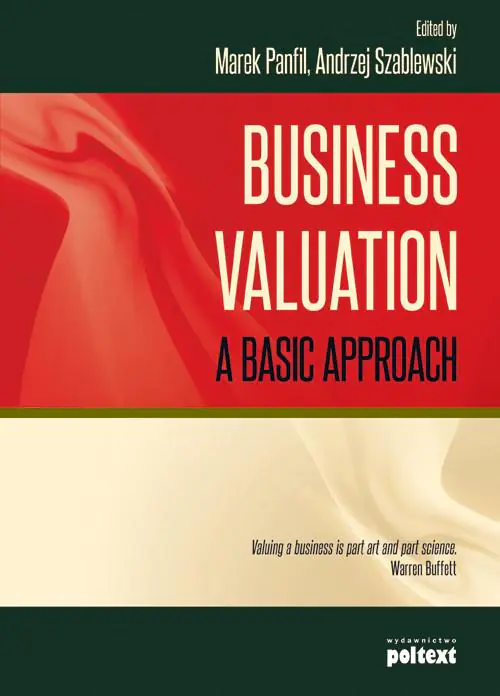
Business Valuation. A basic approach
Masz tę lub inne książki?
Sprzedaj je u nas

This book is a collection of insightful papers that showcase the authors' exceptional expertise and their talent for engaging readers, whether the papers are read collectively or individually. The work bridges the gap between science and popular understanding, reaching both scholars and practitioners involved in business valuation. It explores comprehensive topics essential for navigating the increasingly intricate dynamics of the global economy. Stock market investors will find valuable insights for personal reflection on corporate value development, alongside an abundance of knowledge to inform their investment decisions critically.Ludwik Sobolewski PhD, CEO of the Warsaw Stock Exchange, praises the book's utility. With 12 chapters, it serves as a rich resource, encouraging managers to seek value within their organizations. The book combines theoretical analyses with practical examples, offering a necessary compendium for students, academics, and industry professionals. Herbert Wirth, PhD, CEO of KGHM Polska Miedź SA, values it for enhancing understanding of investor expectations and the impact of customer value on company worth.Michał Wrzesiński, PhD, Professor of Warsaw School of Economics, highlights this practical guide's relevance, particularly within the context of the Polish economy. It effectively merges theoretical knowledge with real-world examples and case studies, making it essential reading for financiers and capital market stakeholders. Jacek Socha, vice-president and partner of PwC in Poland, endorses the book as a comprehensive manual for asset evaluation, noting its range of topics and various valuation approaches. The book's discussion on football club valuation and enterprises in commodity industries, like KGHM and Exxon Mobil, stands out as particularly engaging.
Wybierz stan zużycia:
WIĘCEJ O SKALI
This book is a collection of insightful papers that showcase the authors' exceptional expertise and their talent for engaging readers, whether the papers are read collectively or individually. The work bridges the gap between science and popular understanding, reaching both scholars and practitioners involved in business valuation. It explores comprehensive topics essential for navigating the increasingly intricate dynamics of the global economy. Stock market investors will find valuable insights for personal reflection on corporate value development, alongside an abundance of knowledge to inform their investment decisions critically.Ludwik Sobolewski PhD, CEO of the Warsaw Stock Exchange, praises the book's utility. With 12 chapters, it serves as a rich resource, encouraging managers to seek value within their organizations. The book combines theoretical analyses with practical examples, offering a necessary compendium for students, academics, and industry professionals. Herbert Wirth, PhD, CEO of KGHM Polska Miedź SA, values it for enhancing understanding of investor expectations and the impact of customer value on company worth.Michał Wrzesiński, PhD, Professor of Warsaw School of Economics, highlights this practical guide's relevance, particularly within the context of the Polish economy. It effectively merges theoretical knowledge with real-world examples and case studies, making it essential reading for financiers and capital market stakeholders. Jacek Socha, vice-president and partner of PwC in Poland, endorses the book as a comprehensive manual for asset evaluation, noting its range of topics and various valuation approaches. The book's discussion on football club valuation and enterprises in commodity industries, like KGHM and Exxon Mobil, stands out as particularly engaging.
Szczegóły
Inne książki tych autorów

Podobne produkty
Może Ci się spodobać
Inne książki z tej samej kategorii

Napisz opinię o książce i wygraj nagrodę!
W każdym miesiącu wybieramy najlepsze opinie i nagradzamy recenzentów.
Dowiedz się więcejWartość nagród w tym miesiącu
880 zł
Dodaj swoją opinię
Zaloguj się na swoje konto, aby mieć możliwość dodawania opinii.
Czy chcesz zostawić tylko ocenę?
Dodanie samej oceny o książce nie jest brane pod uwagę podczas losowania nagród. By mieć szansę na otrzymanie nagrody musisz napisać opinię o książce.
Już oceniłeś/zrecenzowałeś te książkę w przeszłości.
Możliwe jest dodanie tylko jednej recenzji do każdej z książek.
Sposoby dostawy
Płatne z góry

InPost Paczkomaty 24/7
13.99 zł
Darmowa od 190 zł

ORLEN Paczka
12.99 zł
Darmowa od 190 zł

Automaty DHL BOX 24/7 i punkty POP
12.99 zł
Darmowa od 190 zł

DPD Pickup Automaty i Punkty Odbioru
8.99 zł
Darmowa od 190 zł

Automaty Orlen Paczka, sklepy Żabka i inne
12.99 zł
Darmowa od 190 zł

GLS U Ciebie - Kurier
14.99 zł
Darmowa od 190 zł

Kurier DPD
14.99 zł
Darmowa od 190 zł

Kurier InPost
14.99 zł
Darmowa od 190 zł

Pocztex Kurier
13.99 zł
Darmowa od 190 zł

Kurier DHL
14.99 zł
Darmowa od 190 zł

Kurier GLS - kraje UE
69.00 zł

Punkt odbioru (Dębica)
2.99 zł
Darmowa od 190 zł
Płatne przy odbiorze

Kurier GLS pobranie
23.99 zł
Sposoby płatności
Płatność z góry
Przedpłata

Zwykły przelew
