Stan książek
Nasze książki są dokładnie sprawdzone i jasno określamy stan każdej z nich.


Nowa
Książka nowa.
Używany - jak nowa
Niezauważalne lub prawie niezauważalne ślady używania. Książkę ciężko odróżnić od nowej pozycji.
Używany - dobry
Normalne ślady używania wynikające z kartkowania podczas czytania, brak większych uszkodzeń lub zagięć.
Używany - widoczne ślady użytkowania
zagięte rogi, przyniszczona okładka, książka posiada wszystkie strony.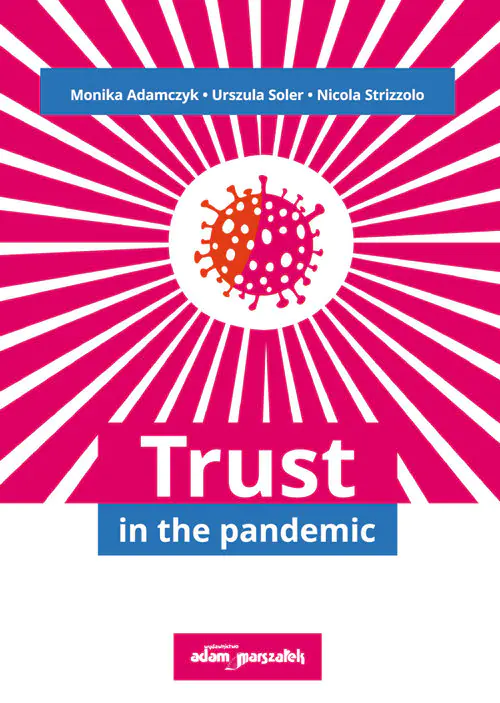
Trust in the pandemic
Masz tę lub inne książki?
Sprzedaj je u nas

This publication holds significant relevance for those studying the intertwined themes of trust and social capital. It intricately weaves together a comprehensive analysis of the theories developed by prominent social scientists such as Putnam and Fukuyama, while also drawing on the work of other influential academics like Banfield, Bourdieu, Simmel, and Sztompka. What sets this book apart is its fresh and original perspective that links these theoretical frameworks to the latest political, social, economic, technological, and even "epidemiological" developments in European history. By doing so, the work breathes new life into these perennial sociological topics. Additionally, the empirical studies conducted by the authors offer surprising and noteworthy findings, challenging preconceived notions about the expected attitudes of different segments within Polish society towards these vital issues.
Wybierz stan zużycia:
WIĘCEJ O SKALI
This publication holds significant relevance for those studying the intertwined themes of trust and social capital. It intricately weaves together a comprehensive analysis of the theories developed by prominent social scientists such as Putnam and Fukuyama, while also drawing on the work of other influential academics like Banfield, Bourdieu, Simmel, and Sztompka. What sets this book apart is its fresh and original perspective that links these theoretical frameworks to the latest political, social, economic, technological, and even "epidemiological" developments in European history. By doing so, the work breathes new life into these perennial sociological topics. Additionally, the empirical studies conducted by the authors offer surprising and noteworthy findings, challenging preconceived notions about the expected attitudes of different segments within Polish society towards these vital issues.
Szczegóły
Inne książki tych autorów

Podobne produkty
Może Ci się spodobać
Inne książki z tej samej kategorii

Napisz opinię o książce i wygraj nagrodę!
W każdym miesiącu wybieramy najlepsze opinie i nagradzamy recenzentów.
Dowiedz się więcejWartość nagród w tym miesiącu
880 zł
Dodaj swoją opinię
Zaloguj się na swoje konto, aby mieć możliwość dodawania opinii.
Czy chcesz zostawić tylko ocenę?
Dodanie samej oceny o książce nie jest brane pod uwagę podczas losowania nagród. By mieć szansę na otrzymanie nagrody musisz napisać opinię o książce.
Już oceniłeś/zrecenzowałeś te książkę w przeszłości.
Możliwe jest dodanie tylko jednej recenzji do każdej z książek.
Sposoby dostawy
Odbiór w punkcie (6)
InPost Paczkomat 24/7

14,99 zł
ORLEN Paczka

15,99 zł




Dostawa na adres (7)
GLS U Ciebie - Kurier

14,99 zł
Kurier DPD

14,99 zł





Sposoby płatności
Płatność z góry
Przedpłata

Zwykły przelew
