Stan książek
Nasze książki są dokładnie sprawdzone i jasno określamy stan każdej z nich.

Nowa
Książka nowa.
Używany - jak nowa
Niezauważalne lub prawie niezauważalne ślady używania. Książkę ciężko odróżnić od nowej pozycji.
Używany - dobry
Normalne ślady używania wynikające z kartkowania podczas czytania, brak większych uszkodzeń lub zagięć.
Używany - widoczne ślady użytkowania
zagięte rogi, przyniszczona okładka, książka posiada wszystkie strony.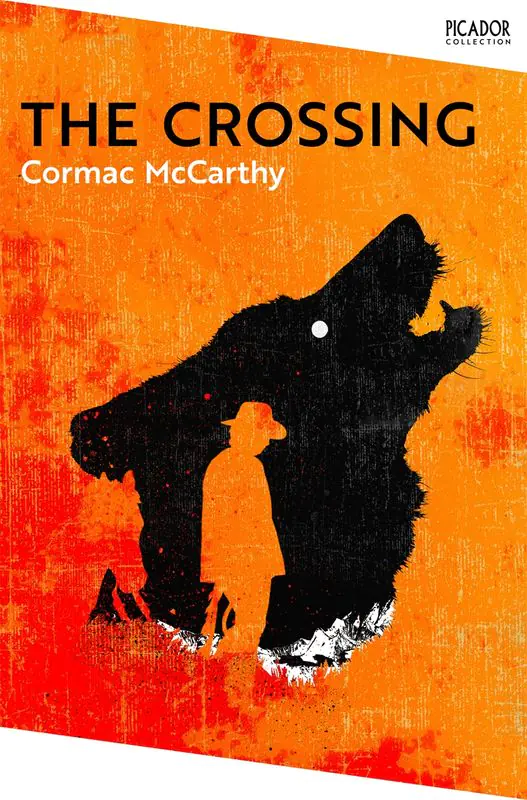
The Crossing wer. angielska
Masz tę lub inne książki?
Sprzedaj je u nas

Set against the backdrop of the US-Mexico border in the 1940s, Cormac McCarthy's renowned Border Trilogy continues with "The Crossing," a compelling coming-of-age narrative that runs in parallel with "All the Pretty Horses." This western tale features sixteen-year-old Billy Parham and his younger brother Boyd, who become intrigued by a mysterious wolf threatening their family's land. Instead of killing it, Billy decides to return the captured animal to its native mountains in Mexico, an impulsive adventure that will alter their lives forever. Upon returning, Billy's worldview—and his innocence—will be changed in profound ways, as the stark beauty of the border calls once more. As described by The Times, "The Crossing" flows like a river in full spate, both mesmerizing and perilous. Notably, Rachel Kushner notes that while nominally Westerns, these works transcend the traditional boundaries of the genre through their philosophical depth. This second installment in the Border Trilogy is joined by "All the Pretty Horses" and succeeded by "Cities of the Plain." Cormac McCarthy's work often touches on a deep and almost religious impulse, with prose described by Stephen King as having a biblical and hallucinatory quality. Annie Proulx emphasizes McCarthy's skill in confronting humanity's darker impulses in his richly crafted narratives. Part of the Picador Collection, "The Crossing" highlights some of the best in modern literature.
Wybierz stan zużycia:
WIĘCEJ O SKALI
Set against the backdrop of the US-Mexico border in the 1940s, Cormac McCarthy's renowned Border Trilogy continues with "The Crossing," a compelling coming-of-age narrative that runs in parallel with "All the Pretty Horses." This western tale features sixteen-year-old Billy Parham and his younger brother Boyd, who become intrigued by a mysterious wolf threatening their family's land. Instead of killing it, Billy decides to return the captured animal to its native mountains in Mexico, an impulsive adventure that will alter their lives forever. Upon returning, Billy's worldview—and his innocence—will be changed in profound ways, as the stark beauty of the border calls once more. As described by The Times, "The Crossing" flows like a river in full spate, both mesmerizing and perilous. Notably, Rachel Kushner notes that while nominally Westerns, these works transcend the traditional boundaries of the genre through their philosophical depth. This second installment in the Border Trilogy is joined by "All the Pretty Horses" and succeeded by "Cities of the Plain." Cormac McCarthy's work often touches on a deep and almost religious impulse, with prose described by Stephen King as having a biblical and hallucinatory quality. Annie Proulx emphasizes McCarthy's skill in confronting humanity's darker impulses in his richly crafted narratives. Part of the Picador Collection, "The Crossing" highlights some of the best in modern literature.
Szczegóły
Inne książki: Cormac McCarthy

Podobne produkty
Może Ci się spodobać
Inne książki z tej samej kategorii

Napisz opinię o książce i wygraj nagrodę!
W każdym miesiącu wybieramy najlepsze opinie i nagradzamy recenzentów.
Dowiedz się więcejWartość nagród w tym miesiącu
880 zł
Dodaj swoją opinię
Zaloguj się na swoje konto, aby mieć możliwość dodawania opinii.
Czy chcesz zostawić tylko ocenę?
Dodanie samej oceny o książce nie jest brane pod uwagę podczas losowania nagród. By mieć szansę na otrzymanie nagrody musisz napisać opinię o książce.
Już oceniłeś/zrecenzowałeś te książkę w przeszłości.
Możliwe jest dodanie tylko jednej recenzji do każdej z książek.
Sposoby dostawy
Odbiór w punkcie (6)
InPost Paczkomat 24/7

13,99 zł
ORLEN Paczka

12,99 zł



Dostawa na adres (7)
GLS U Ciebie - Kurier

14,99 zł
Kurier DPD

14,99 zł





Sposoby płatności
Płatność z góry
Przedpłata

Zwykły przelew
