Stan książek
Nasze książki są dokładnie sprawdzone i jasno określamy stan każdej z nich.


Nowa
Książka nowa.
Używany - jak nowa
Niezauważalne lub prawie niezauważalne ślady używania. Książkę ciężko odróżnić od nowej pozycji.
Używany - dobry
Normalne ślady używania wynikające z kartkowania podczas czytania, brak większych uszkodzeń lub zagięć.
Używany - widoczne ślady użytkowania
zagięte rogi, przyniszczona okładka, książka posiada wszystkie strony.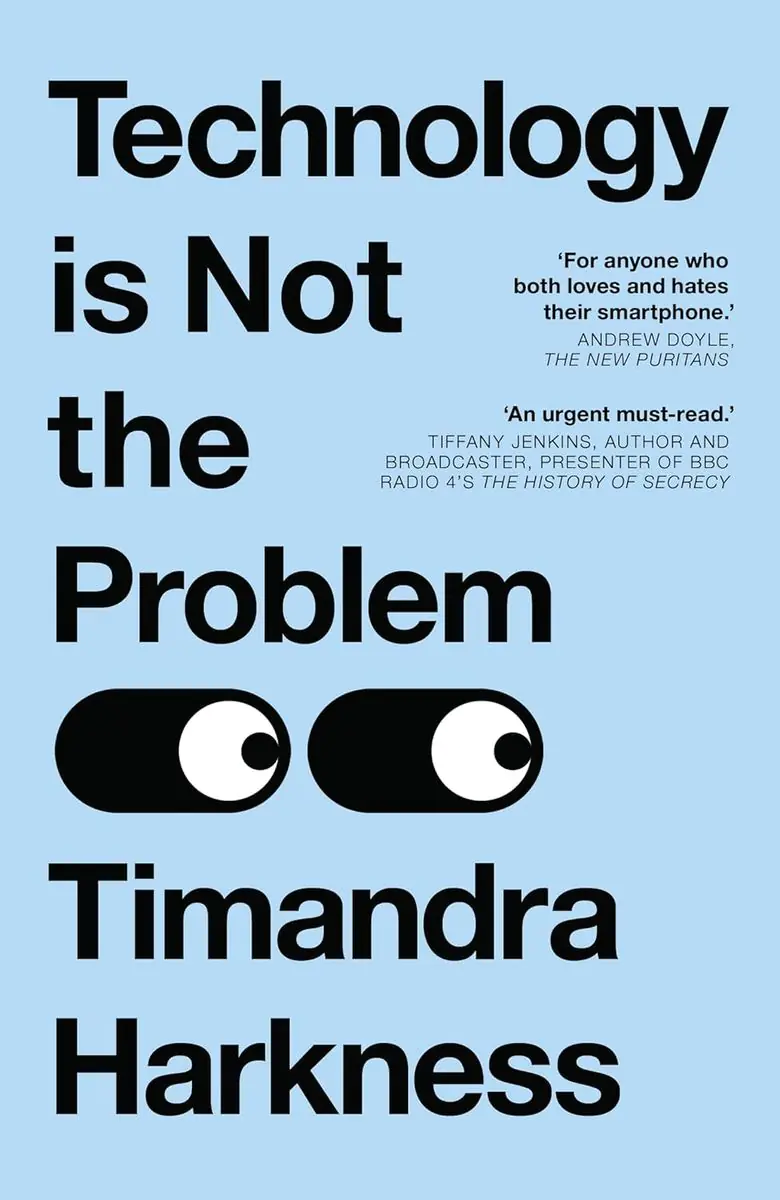
Technology is Not the Problem wer. angielska
Masz tę lub inne książki?
Sprzedaj je u nas

We are aware that our personal data is continuously harvested and utilized to create detailed profiles and target us with precision. The puzzling issue is why we persist in returning for more, despite this awareness. Authors like Matt Ridley, who wrote "How Innovation Works," describe the situation as a 'great book,' while Pete Etchells, in "Unlocked," calls it 'essential reading.' Tiffany Jenkins, known for her work on BBC Radio 4's "A History of Secrecy," regards it as an 'urgent must-read.' Stephen Senn, with his expertise as a statistician, finds it 'enticing and highly addictive,' and Stian Westlake of the Economic and Social Research Council finds it 'a pleasure to read.'In our modern era, technology crafts an environment seemingly tailored to our desires, collecting our personal details to simplify our lives. We exist in what can be termed the Personalised Century, defining ourselves by external recognition rather than our true essence. It raises the question: Is this altering our self-awareness?Harkness explores the historical movements leading us to this point, predicting a world more chaotic and uncertain than the one unfolding before us. By urging readers to scrutinize what’s absent from the digital conveniences they've come to rely on, "Technology is not the Problem" invites a re-evaluation of the technology-of-our-lives dynamic, encouraging a deeper understanding of our interactions with both technology and society.
Wybierz stan zużycia:
WIĘCEJ O SKALI
We are aware that our personal data is continuously harvested and utilized to create detailed profiles and target us with precision. The puzzling issue is why we persist in returning for more, despite this awareness. Authors like Matt Ridley, who wrote "How Innovation Works," describe the situation as a 'great book,' while Pete Etchells, in "Unlocked," calls it 'essential reading.' Tiffany Jenkins, known for her work on BBC Radio 4's "A History of Secrecy," regards it as an 'urgent must-read.' Stephen Senn, with his expertise as a statistician, finds it 'enticing and highly addictive,' and Stian Westlake of the Economic and Social Research Council finds it 'a pleasure to read.'In our modern era, technology crafts an environment seemingly tailored to our desires, collecting our personal details to simplify our lives. We exist in what can be termed the Personalised Century, defining ourselves by external recognition rather than our true essence. It raises the question: Is this altering our self-awareness?Harkness explores the historical movements leading us to this point, predicting a world more chaotic and uncertain than the one unfolding before us. By urging readers to scrutinize what’s absent from the digital conveniences they've come to rely on, "Technology is not the Problem" invites a re-evaluation of the technology-of-our-lives dynamic, encouraging a deeper understanding of our interactions with both technology and society.
Szczegóły
Dane producenta:
Inne książki: Timandra Harkness

Podobne produkty
Może Ci się spodobać
Inne książki z tej samej kategorii

Napisz opinię o książce i wygraj nagrodę!
W każdym miesiącu wybieramy najlepsze opinie i nagradzamy recenzentów.
Dowiedz się więcejWartość nagród w tym miesiącu
880 zł
Dodaj swoją opinię
Zaloguj się na swoje konto, aby mieć możliwość dodawania opinii.
Czy chcesz zostawić tylko ocenę?
Dodanie samej oceny o książce nie jest brane pod uwagę podczas losowania nagród. By mieć szansę na otrzymanie nagrody musisz napisać opinię o książce.
Już oceniłeś/zrecenzowałeś te książkę w przeszłości.
Możliwe jest dodanie tylko jednej recenzji do każdej z książek.
Sposoby dostawy
Odbiór w punkcie (7)
InPost Paczkomat 24/7

14,99 zł
DPD Pickup Automaty i Punkty Odbioru

10,49 zł





Dostawa na adres (7)
GLS U Ciebie - Kurier

14,99 zł
Kurier DPD

14,99 zł





Sposoby płatności
Płatność z góry
Przedpłata

Zwykły przelew
