Stan książek
Nasze książki są dokładnie sprawdzone i jasno określamy stan każdej z nich.

Nowa
Książka nowa.
Używany - jak nowa
Niezauważalne lub prawie niezauważalne ślady używania. Książkę ciężko odróżnić od nowej pozycji.
Używany - dobry
Normalne ślady używania wynikające z kartkowania podczas czytania, brak większych uszkodzeń lub zagięć.
Używany - widoczne ślady użytkowania
zagięte rogi, przyniszczona okładka, książka posiada wszystkie strony.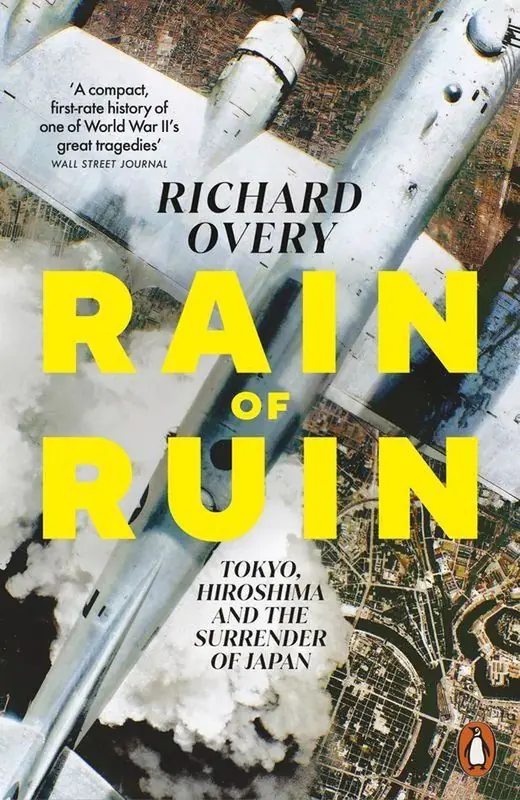
Rain of Ruin
Masz tę lub inne książki?
Sprzedaj je u nas

In the final months leading up to the conclusion of World War II, a significant number of Japanese civilians lost their lives due to intense aerial bombardments. With American aircraft running out of viable targets, the decision was made to deploy two atomic bombs as a devastating effort to bring the conflict to a close. Richard Overy's compelling new book offers a fresh perspective on this concluding phase of the war, particularly examining the impact of the bombing campaigns. The book delves into how the normalization of civilian casualties and urban destruction took root during this brutal conflict. As the war progressed, moral reservations were overshadowed, leading scientists, military personnel, and political leaders to adopt a strategy of widespread destruction that would have been unimaginable to them prior to the war. Additionally, Overy's work engages with contemporary research exploring the complexities of Japan's war-ending process, highlighting how deeply entrenched cultural beliefs about 'surrender' posed significant challenges.
Wybierz stan zużycia:
WIĘCEJ O SKALI
In the final months leading up to the conclusion of World War II, a significant number of Japanese civilians lost their lives due to intense aerial bombardments. With American aircraft running out of viable targets, the decision was made to deploy two atomic bombs as a devastating effort to bring the conflict to a close. Richard Overy's compelling new book offers a fresh perspective on this concluding phase of the war, particularly examining the impact of the bombing campaigns. The book delves into how the normalization of civilian casualties and urban destruction took root during this brutal conflict. As the war progressed, moral reservations were overshadowed, leading scientists, military personnel, and political leaders to adopt a strategy of widespread destruction that would have been unimaginable to them prior to the war. Additionally, Overy's work engages with contemporary research exploring the complexities of Japan's war-ending process, highlighting how deeply entrenched cultural beliefs about 'surrender' posed significant challenges.
Szczegóły
Inne książki: Richard Overy

Podobne produkty
Może Ci się spodobać
Inne książki z tej samej kategorii

Napisz opinię o książce i wygraj nagrodę!
W każdym miesiącu wybieramy najlepsze opinie i nagradzamy recenzentów.
Dowiedz się więcejWartość nagród w tym miesiącu
880 zł
Dodaj swoją opinię
Zaloguj się na swoje konto, aby mieć możliwość dodawania opinii.
Czy chcesz zostawić tylko ocenę?
Dodanie samej oceny o książce nie jest brane pod uwagę podczas losowania nagród. By mieć szansę na otrzymanie nagrody musisz napisać opinię o książce.
Już oceniłeś/zrecenzowałeś te książkę w przeszłości.
Możliwe jest dodanie tylko jednej recenzji do każdej z książek.
Sposoby dostawy
Odbiór w punkcie (6)
InPost Paczkomat 24/7

13,99 zł
ORLEN Paczka

12,99 zł




Dostawa na adres (7)
GLS U Ciebie - Kurier

14,99 zł
Kurier DPD

14,99 zł





Sposoby płatności
Płatność z góry
Przedpłata

Zwykły przelew
