Stan książek
Nasze książki są dokładnie sprawdzone i jasno określamy stan każdej z nich.


Nowa
Książka nowa.
Używany - jak nowa
Niezauważalne lub prawie niezauważalne ślady używania. Książkę ciężko odróżnić od nowej pozycji.
Używany - dobry
Normalne ślady używania wynikające z kartkowania podczas czytania, brak większych uszkodzeń lub zagięć.
Używany - widoczne ślady użytkowania
zagięte rogi, przyniszczona okładka, książka posiada wszystkie strony.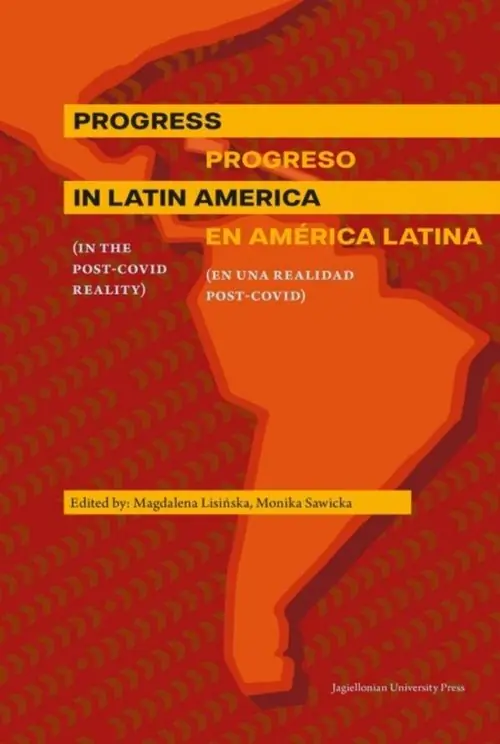
Progress in Latin America (in the post-Covid reality)
Masz tę lub inne książki?
Sprzedaj je u nas

The outbreak of the COVID-19 pandemic brought longstanding issues in Latin America back into focus, highlighting challenges in governance, public health, economic development, and social policy. Additionally, it emphasized the importance of civic engagement in addressing urgent problems. With the advent of new technologies that have become more accessible to the region's underserved populations, millions of Latin Americans were able to observe global strategies in tackling the health crisis and the resulting political, economic, and social challenges. This volume, authored by both renowned and emerging scholars from the Americas and Europe, seeks to explore the insights gained by Latin American countries and communities during the pandemic.
The book's chapters delve into the geopolitical and geoeconomic landscape of Latin America during this period, identifying urgent priorities for government action and reasserting the fundamental human rights that Latin Americans have tirelessly protected, sustaining their aspirations for a more promising future. Magdalena Lisińska, PhD, a political scientist, completed her academic journey with a PhD in political science from the Jagiellonian University in Krakow in 2018. Additionally, she earned Bachelor’s and Master’s degrees in International Relations, as well as a Master’s in Latin American Studies. Her research experience spans numerous prestigious institutions including her roles as a visiting researcher at the University of Buenos Aires, the National University of Quilmes, and the National University of Comahue. Additionally, she furthered her studies at Helsinki University, the University of London, and Freie Universität Berlin.
Through the Erasmus Program, Lisińska spent a semester at the Autonomous University of Madrid. She also served as a visiting professor at the University of Catania and was honored with numerous accolades, such as the START 2021 scholarship, JU Rector's Award, and awards for the best monograph. Monika Sawicka, also holding a PhD in Political Studies, has an academic background in Portuguese Philology and International Relations from the Jagiellonian University. Her studies included time at the University of Porto through Erasmus, and participation in sustainable development programs. Between 2011 and 2022, she engaged in various research projects in Brazil, contributing to prominent institutions like the Archive of Diplomatic Documentation in Brazil. Sawicka has been a visiting lecturer at universities in Santa Catarina and Rio de Janeiro, and is an active member of the Terra Brasilis Foundation.
*This description is provided by the publisher.*
Wybierz stan zużycia:
WIĘCEJ O SKALI
The outbreak of the COVID-19 pandemic brought longstanding issues in Latin America back into focus, highlighting challenges in governance, public health, economic development, and social policy. Additionally, it emphasized the importance of civic engagement in addressing urgent problems. With the advent of new technologies that have become more accessible to the region's underserved populations, millions of Latin Americans were able to observe global strategies in tackling the health crisis and the resulting political, economic, and social challenges. This volume, authored by both renowned and emerging scholars from the Americas and Europe, seeks to explore the insights gained by Latin American countries and communities during the pandemic.
The book's chapters delve into the geopolitical and geoeconomic landscape of Latin America during this period, identifying urgent priorities for government action and reasserting the fundamental human rights that Latin Americans have tirelessly protected, sustaining their aspirations for a more promising future. Magdalena Lisińska, PhD, a political scientist, completed her academic journey with a PhD in political science from the Jagiellonian University in Krakow in 2018. Additionally, she earned Bachelor’s and Master’s degrees in International Relations, as well as a Master’s in Latin American Studies. Her research experience spans numerous prestigious institutions including her roles as a visiting researcher at the University of Buenos Aires, the National University of Quilmes, and the National University of Comahue. Additionally, she furthered her studies at Helsinki University, the University of London, and Freie Universität Berlin.
Through the Erasmus Program, Lisińska spent a semester at the Autonomous University of Madrid. She also served as a visiting professor at the University of Catania and was honored with numerous accolades, such as the START 2021 scholarship, JU Rector's Award, and awards for the best monograph. Monika Sawicka, also holding a PhD in Political Studies, has an academic background in Portuguese Philology and International Relations from the Jagiellonian University. Her studies included time at the University of Porto through Erasmus, and participation in sustainable development programs. Between 2011 and 2022, she engaged in various research projects in Brazil, contributing to prominent institutions like the Archive of Diplomatic Documentation in Brazil. Sawicka has been a visiting lecturer at universities in Santa Catarina and Rio de Janeiro, and is an active member of the Terra Brasilis Foundation.
*This description is provided by the publisher.*
Szczegóły
Dane producenta:
Inne książki tych autorów

Podobne produkty
Może Ci się spodobać
Inne książki z tej samej kategorii

Napisz opinię o książce i wygraj nagrodę!
W każdym miesiącu wybieramy najlepsze opinie i nagradzamy recenzentów.
Dowiedz się więcejWartość nagród w tym miesiącu
880 zł
Dodaj swoją opinię
Zaloguj się na swoje konto, aby mieć możliwość dodawania opinii.
Czy chcesz zostawić tylko ocenę?
Dodanie samej oceny o książce nie jest brane pod uwagę podczas losowania nagród. By mieć szansę na otrzymanie nagrody musisz napisać opinię o książce.
Już oceniłeś/zrecenzowałeś te książkę w przeszłości.
Możliwe jest dodanie tylko jednej recenzji do każdej z książek.
Sposoby dostawy
Płatne z góry

InPost Paczkomaty 24/7
13.99 zł
Darmowa od 190 zł

ORLEN Paczka
12.99 zł
Darmowa od 190 zł

Automaty DHL BOX 24/7 i punkty POP
12.99 zł
Darmowa od 190 zł

DPD Pickup Automaty i Punkty Odbioru
9.99 zł
Darmowa od 190 zł

Automaty Orlen Paczka, sklepy Żabka i inne
12.99 zł
Darmowa od 190 zł

GLS U Ciebie - Kurier
14.99 zł
Darmowa od 190 zł

Kurier DPD
14.99 zł
Darmowa od 190 zł

Kurier InPost
14.99 zł
Darmowa od 190 zł

Pocztex Kurier
13.99 zł
Darmowa od 190 zł

Kurier DHL
14.99 zł
Darmowa od 190 zł

Kurier GLS - kraje UE
69.00 zł

Punkt odbioru (Dębica)
2.99 zł
Darmowa od 190 zł
Płatne przy odbiorze

Kurier GLS pobranie
23.99 zł
Sposoby płatności
Płatność z góry
Przedpłata

Zwykły przelew
