Stan książek
Nasze książki są dokładnie sprawdzone i jasno określamy stan każdej z nich.

Nowa
Książka nowa.
Używany - jak nowa
Niezauważalne lub prawie niezauważalne ślady używania. Książkę ciężko odróżnić od nowej pozycji.
Używany - dobry
Normalne ślady używania wynikające z kartkowania podczas czytania, brak większych uszkodzeń lub zagięć.
Używany - widoczne ślady użytkowania
zagięte rogi, przyniszczona okładka, książka posiada wszystkie strony.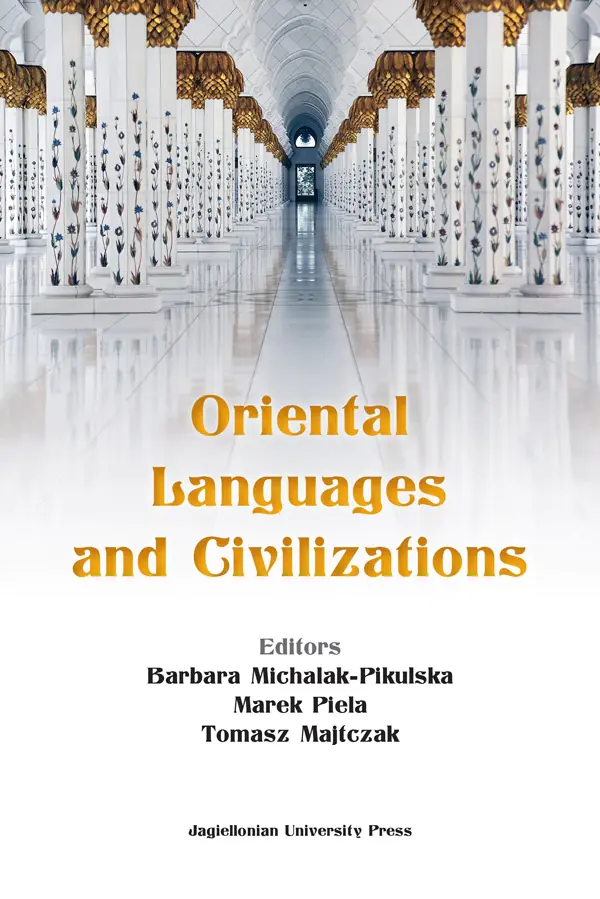
Oriental Languages and Civilizations
Masz tę lub inne książki?
Sprzedaj je u nas

The book is structured into six sections, each dedicated to different facets of literature, language, history, culture, science, religions, and philosophy from the Eastern World. It endeavors to present the current landscape of oriental studies, particularly emphasizing the philological aspects of Asian and African studies, while also embracing related fields within the humanities, including the historical development of oriental research. This multifaceted approach mirrors the inherently interdisciplinary nature of contemporary oriental studies.
The first section delves into literary analyses, providing fresh perspectives on works written in an array of languages, including Arabic, Hindi, Turkish, Urdu, Persian, and Japanese. Following this, the second section focuses on linguistic research, showcasing studies on Sanskrit through stylometric methods, exploring Japanese linguistic constructs, investigating Japanese poetry as a linguistic source, and examining Arabic translations of the Bible, among other topics in Arabic and Turkish linguistics.
In the third section, the volume turns to historical analysis, examining significant historical events and relationships, such as Napoleon's Middle Eastern campaign, the 18th-century interactions between the Middle East and Russia, the chronicles of the Seljuk Empire, and the writings of the Moroccan historian afar Ibn Amad an-Nr as-Salaw.
The fourth section is dedicated to the history of oriental studies, with discussions on the evolution of these studies in Kraków and the complexities involved in producing a critical edition of the Quran. In the fifth section, the focus shifts to cultural and scientific developments, analyzing the cinematic contributions of Egyptian filmmaker Ysuf ahn and exploring the possible influences of Medieval Muslim science on Polish scholars.
The final section addresses religious and philosophical themes, delving into Confucian ethical theories and highlighting Karma Bint Amad Al-Marwaziyya's role in the preservation and dissemination of Islamic religious traditions.
The volume features key contributors from the Jagiellonian University in Kraków, including Barbara Michalak-Pikulska, Head of the Arabic Department, who completed her Ph.D. in Arabic Literature in 1994 and is now a professor specializing in Modern Arabic Literature. Marek Piela and Tomasz Majtczak, both Assistant Professors at the Institute of Oriental Studies, contribute with their expertise in Hebrew and translation studies, alongside Majtczak's research into Old and Classical Japanese, Old Turkic, Yiddish, and various realms of historical linguistics and etymology.
Wybierz stan zużycia:
WIĘCEJ O SKALI
The book is structured into six sections, each dedicated to different facets of literature, language, history, culture, science, religions, and philosophy from the Eastern World. It endeavors to present the current landscape of oriental studies, particularly emphasizing the philological aspects of Asian and African studies, while also embracing related fields within the humanities, including the historical development of oriental research. This multifaceted approach mirrors the inherently interdisciplinary nature of contemporary oriental studies.
The first section delves into literary analyses, providing fresh perspectives on works written in an array of languages, including Arabic, Hindi, Turkish, Urdu, Persian, and Japanese. Following this, the second section focuses on linguistic research, showcasing studies on Sanskrit through stylometric methods, exploring Japanese linguistic constructs, investigating Japanese poetry as a linguistic source, and examining Arabic translations of the Bible, among other topics in Arabic and Turkish linguistics.
In the third section, the volume turns to historical analysis, examining significant historical events and relationships, such as Napoleon's Middle Eastern campaign, the 18th-century interactions between the Middle East and Russia, the chronicles of the Seljuk Empire, and the writings of the Moroccan historian afar Ibn Amad an-Nr as-Salaw.
The fourth section is dedicated to the history of oriental studies, with discussions on the evolution of these studies in Kraków and the complexities involved in producing a critical edition of the Quran. In the fifth section, the focus shifts to cultural and scientific developments, analyzing the cinematic contributions of Egyptian filmmaker Ysuf ahn and exploring the possible influences of Medieval Muslim science on Polish scholars.
The final section addresses religious and philosophical themes, delving into Confucian ethical theories and highlighting Karma Bint Amad Al-Marwaziyya's role in the preservation and dissemination of Islamic religious traditions.
The volume features key contributors from the Jagiellonian University in Kraków, including Barbara Michalak-Pikulska, Head of the Arabic Department, who completed her Ph.D. in Arabic Literature in 1994 and is now a professor specializing in Modern Arabic Literature. Marek Piela and Tomasz Majtczak, both Assistant Professors at the Institute of Oriental Studies, contribute with their expertise in Hebrew and translation studies, alongside Majtczak's research into Old and Classical Japanese, Old Turkic, Yiddish, and various realms of historical linguistics and etymology.
Szczegóły
Dane producenta:
Inne książki tych autorów

Podobne produkty
Może Ci się spodobać
Inne książki z tej samej kategorii

Napisz opinię o książce i wygraj nagrodę!
W każdym miesiącu wybieramy najlepsze opinie i nagradzamy recenzentów.
Dowiedz się więcejWartość nagród w tym miesiącu
880 zł
Dodaj swoją opinię
Zaloguj się na swoje konto, aby mieć możliwość dodawania opinii.
Czy chcesz zostawić tylko ocenę?
Dodanie samej oceny o książce nie jest brane pod uwagę podczas losowania nagród. By mieć szansę na otrzymanie nagrody musisz napisać opinię o książce.
Już oceniłeś/zrecenzowałeś te książkę w przeszłości.
Możliwe jest dodanie tylko jednej recenzji do każdej z książek.
Sposoby dostawy
Płatne z góry

InPost Paczkomaty 24/7
13.99 zł
Darmowa od 190 zł

ORLEN Paczka
12.99 zł
Darmowa od 190 zł

Automaty DHL BOX 24/7 i punkty POP
12.99 zł
Darmowa od 190 zł

DPD Pickup Automaty i Punkty Odbioru
9.99 zł
Darmowa od 190 zł

Automaty Orlen Paczka, sklepy Żabka i inne
12.99 zł
Darmowa od 190 zł

GLS U Ciebie - Kurier
14.99 zł
Darmowa od 190 zł

Kurier DPD
14.99 zł
Darmowa od 190 zł

Kurier InPost
14.99 zł
Darmowa od 190 zł

Pocztex Kurier
13.99 zł
Darmowa od 190 zł

Kurier DHL
14.99 zł
Darmowa od 190 zł

Kurier GLS - kraje UE
69.00 zł

Punkt odbioru (Dębica)
2.99 zł
Darmowa od 190 zł
Płatne przy odbiorze

Kurier GLS pobranie
23.99 zł
Sposoby płatności
Płatność z góry
Przedpłata

Zwykły przelew
