Stan książek
Nasze książki są dokładnie sprawdzone i jasno określamy stan każdej z nich.


Nowa
Książka nowa.
Używany - jak nowa
Niezauważalne lub prawie niezauważalne ślady używania. Książkę ciężko odróżnić od nowej pozycji.
Używany - dobry
Normalne ślady używania wynikające z kartkowania podczas czytania, brak większych uszkodzeń lub zagięć.
Używany - widoczne ślady użytkowania
zagięte rogi, przyniszczona okładka, książka posiada wszystkie strony.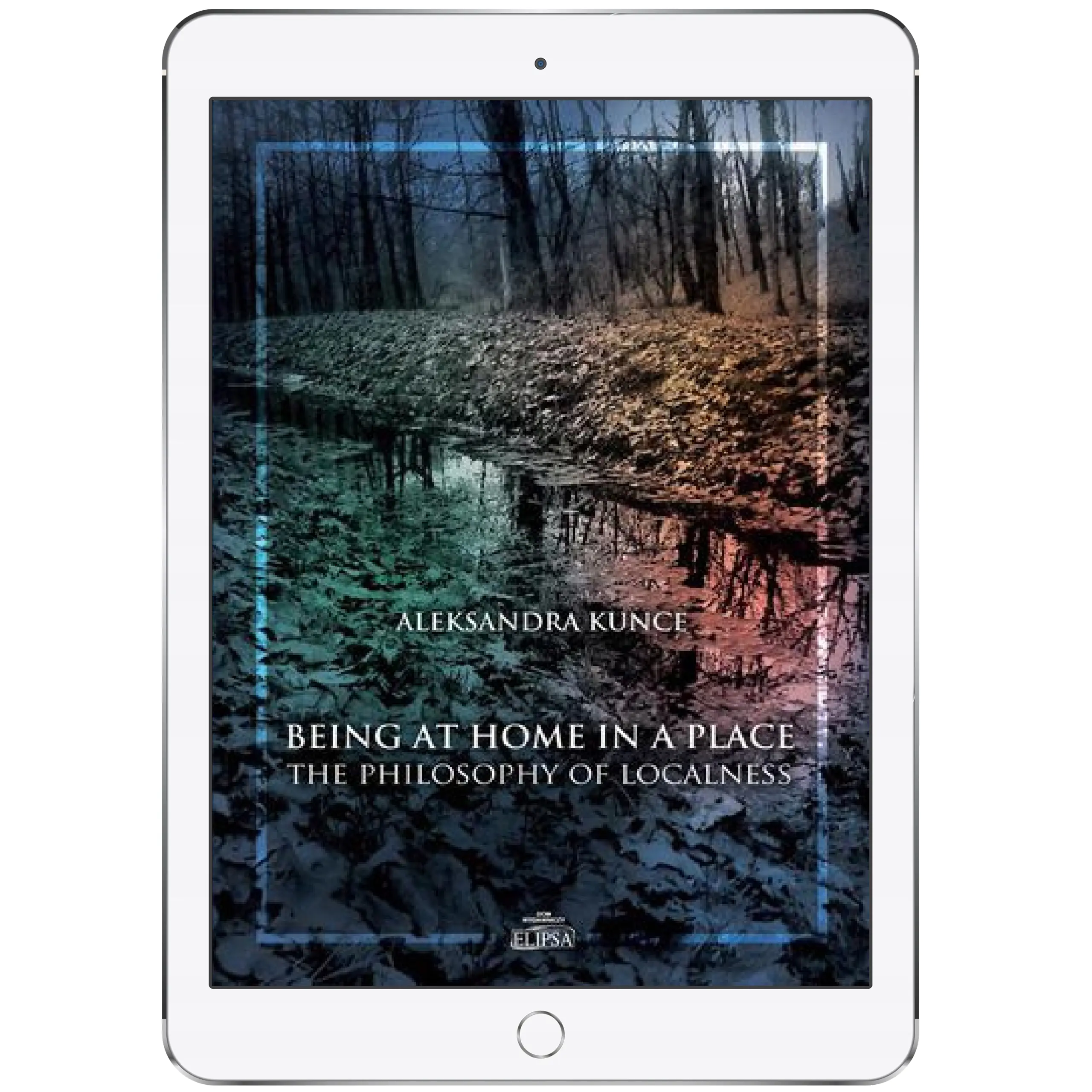
Being at Home in a Place
Masz tę lub inne książki?
Sprzedaj je u nas

The monograph is a comprehensive exploration of the concept of localness, divided into seven distinct sections. The initial section, "Towards the Philosophy of Localness," delves into the theoretical framework of localness, presenting it as a multifaceted and positive notion that encapsulates the human journey influenced by one’s surroundings. This exploration underscores the dynamic potential found within elements that might initially appear static or isolated. The idea of a "local man" emerges as an individual capable of forging meaningful connections and narratives tied to specific places.Following this, the section titled "Being at Home on the Border: The Silesian History of Place and Things" broadens the understanding of local spaces by considering them as microcosms of the larger world. It proposes that one's identity, both as an individual and community member, is rooted in these distinct locations. The experiences in Silesian Görlitz, alongside tales of displacement, invite contemplation on the nature of belonging amidst proximity to familiar territories and the theme of migration."The Transgression of History and the Desire for Nature: The Value of a Derelict Park" shifts focus to the lived experiences shaped at the periphery of global contexts. This section scrutinizes the deteriorated landscape of the historical Fazaniec park in Silesia, offering insight into how a "local man" derives meaning from such marginal settings. In "The Narrative of the Cultural Border and the Silesian Philosophy of Home," the complexities of boundaries and the dialectic between oppression and protection are examined. The discussion prompts a search for fresh modes of recounting border experiences—not merely as novel concepts but as transformative influences on interpersonal relationships. This investigation spirals into considerations of a Silesian home narrative."An Insight into a Post-Industrial Place" provides an analysis of spaces once characterized by industrial activity, emphasizing that these locales transcend mere architectural design. Such places challenge us to re-examine our ties to the land, symbolizing a deeper journey that may lead us into unexplored aspects of our existence and habitation.The penultimate section, "The Philosophy of Localness and the Arts," connects the conceptualization of a city with metaphysical community ideals, touching on notions of home and local identity. This is further applied to cultural practices observed in Barcelona, encouraging reflection on the broader implications for metropolitan areas.Finally, "University and the Idea of Place" scrutinizes the university's role at the confluence of global and local influences. This segment addresses the challenges of autonomy and regional ties, while highlighting the institution's potential to serve as a sovereign space for intellectual exploration within our shared environment.
Wybierz stan zużycia:
WIĘCEJ O SKALI
The monograph is a comprehensive exploration of the concept of localness, divided into seven distinct sections. The initial section, "Towards the Philosophy of Localness," delves into the theoretical framework of localness, presenting it as a multifaceted and positive notion that encapsulates the human journey influenced by one’s surroundings. This exploration underscores the dynamic potential found within elements that might initially appear static or isolated. The idea of a "local man" emerges as an individual capable of forging meaningful connections and narratives tied to specific places.Following this, the section titled "Being at Home on the Border: The Silesian History of Place and Things" broadens the understanding of local spaces by considering them as microcosms of the larger world. It proposes that one's identity, both as an individual and community member, is rooted in these distinct locations. The experiences in Silesian Görlitz, alongside tales of displacement, invite contemplation on the nature of belonging amidst proximity to familiar territories and the theme of migration."The Transgression of History and the Desire for Nature: The Value of a Derelict Park" shifts focus to the lived experiences shaped at the periphery of global contexts. This section scrutinizes the deteriorated landscape of the historical Fazaniec park in Silesia, offering insight into how a "local man" derives meaning from such marginal settings. In "The Narrative of the Cultural Border and the Silesian Philosophy of Home," the complexities of boundaries and the dialectic between oppression and protection are examined. The discussion prompts a search for fresh modes of recounting border experiences—not merely as novel concepts but as transformative influences on interpersonal relationships. This investigation spirals into considerations of a Silesian home narrative."An Insight into a Post-Industrial Place" provides an analysis of spaces once characterized by industrial activity, emphasizing that these locales transcend mere architectural design. Such places challenge us to re-examine our ties to the land, symbolizing a deeper journey that may lead us into unexplored aspects of our existence and habitation.The penultimate section, "The Philosophy of Localness and the Arts," connects the conceptualization of a city with metaphysical community ideals, touching on notions of home and local identity. This is further applied to cultural practices observed in Barcelona, encouraging reflection on the broader implications for metropolitan areas.Finally, "University and the Idea of Place" scrutinizes the university's role at the confluence of global and local influences. This segment addresses the challenges of autonomy and regional ties, while highlighting the institution's potential to serve as a sovereign space for intellectual exploration within our shared environment.
Szczegóły
Inne książki tych autorów

Podobne produkty
Może Ci się spodobać
Inne książki z tej samej kategorii

Napisz opinię o książce i wygraj nagrodę!
W każdym miesiącu wybieramy najlepsze opinie i nagradzamy recenzentów.
Dowiedz się więcejWartość nagród w tym miesiącu
880 zł
Dodaj swoją opinię
Zaloguj się na swoje konto, aby mieć możliwość dodawania opinii.
Czy chcesz zostawić tylko ocenę?
Dodanie samej oceny o książce nie jest brane pod uwagę podczas losowania nagród. By mieć szansę na otrzymanie nagrody musisz napisać opinię o książce.
Już oceniłeś/zrecenzowałeś te książkę w przeszłości.
Możliwe jest dodanie tylko jednej recenzji do każdej z książek.
Sposoby dostawy
Odbiór w punkcie (6)
InPost Paczkomat 24/7

13,99 zł
ORLEN Paczka

12,99 zł




Dostawa na adres (7)
GLS U Ciebie - Kurier

14,99 zł
Kurier DPD

14,99 zł





Sposoby płatności
Płatność z góry
Przedpłata

Zwykły przelew
