Stan książek
Nasze książki są dokładnie sprawdzone i jasno określamy stan każdej z nich.


Nowa
Książka nowa.
Używany - jak nowa
Niezauważalne lub prawie niezauważalne ślady używania. Książkę ciężko odróżnić od nowej pozycji.
Używany - dobry
Normalne ślady używania wynikające z kartkowania podczas czytania, brak większych uszkodzeń lub zagięć.
Używany - widoczne ślady użytkowania
zagięte rogi, przyniszczona okładka, książka posiada wszystkie strony.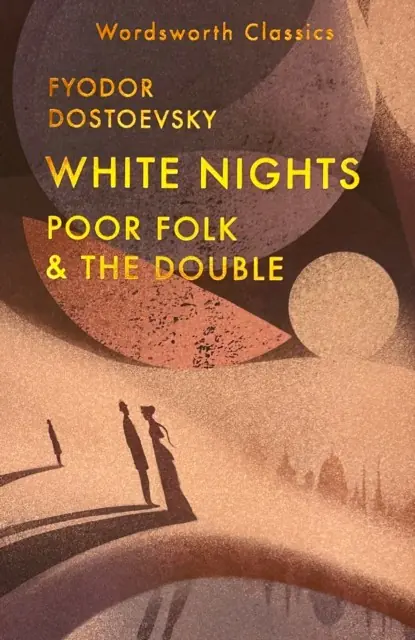
White Nights. Poor Folk & The Double
Masz tę lub inne książki?
Sprzedaj je u nas

"White Nights," an early yet enduringly beloved short story by Dostoevsky, unfolds over four nights in the life of its solitary narrator, who encounters and falls for the enigmatic and lovely Nastenka. On the other hand, "Poor Folk" was Dostoevsky's debut novel, penned in hopes of easing his financial hardships, and it became a commercial triumph. This novel unfolds through the letters exchanged between Makar Devushkin, a clerk, and Varvara Dobroselova, a seamstress. Their love is evident, but their financial constraints hinder marriage. Often hailed as Russia’s first "social novel" due to its focus on humanitarian themes, it contrasts sharply with Dostoevsky’s second novel, "The Double." First released in 1846 and revised for a 1866 reissue, Dostoevsky himself felt it was unsuccessful. In contrast, Vladimir Nabokov praised it as "the best thing he ever wrote" and labeled it "a perfect work of art."
Wybierz stan zużycia:
WIĘCEJ O SKALI
"White Nights," an early yet enduringly beloved short story by Dostoevsky, unfolds over four nights in the life of its solitary narrator, who encounters and falls for the enigmatic and lovely Nastenka. On the other hand, "Poor Folk" was Dostoevsky's debut novel, penned in hopes of easing his financial hardships, and it became a commercial triumph. This novel unfolds through the letters exchanged between Makar Devushkin, a clerk, and Varvara Dobroselova, a seamstress. Their love is evident, but their financial constraints hinder marriage. Often hailed as Russia’s first "social novel" due to its focus on humanitarian themes, it contrasts sharply with Dostoevsky’s second novel, "The Double." First released in 1846 and revised for a 1866 reissue, Dostoevsky himself felt it was unsuccessful. In contrast, Vladimir Nabokov praised it as "the best thing he ever wrote" and labeled it "a perfect work of art."
Szczegóły
Inne książki: Fiodor Dostojewski

Podobne produkty
Może Ci się spodobać
Inne książki z tej samej kategorii

Napisz opinię o książce i wygraj nagrodę!
W każdym miesiącu wybieramy najlepsze opinie i nagradzamy recenzentów.
Dowiedz się więcejWartość nagród w tym miesiącu
880 zł
Dodaj swoją opinię
Zaloguj się na swoje konto, aby mieć możliwość dodawania opinii.
Czy chcesz zostawić tylko ocenę?
Dodanie samej oceny o książce nie jest brane pod uwagę podczas losowania nagród. By mieć szansę na otrzymanie nagrody musisz napisać opinię o książce.
Już oceniłeś/zrecenzowałeś te książkę w przeszłości.
Możliwe jest dodanie tylko jednej recenzji do każdej z książek.
Sposoby dostawy
Odbiór w punkcie (6)
InPost Paczkomat 24/7

13,99 zł
ORLEN Paczka

12,99 zł




Dostawa na adres (7)
GLS U Ciebie - Kurier

14,99 zł
Kurier DPD

14,99 zł





Sposoby płatności
Płatność z góry
Przedpłata

Zwykły przelew
