Stan książek
Nasze książki są dokładnie sprawdzone i jasno określamy stan każdej z nich.

Nowa
Książka nowa.
Używany - jak nowa
Niezauważalne lub prawie niezauważalne ślady używania. Książkę ciężko odróżnić od nowej pozycji.
Używany - dobry
Normalne ślady używania wynikające z kartkowania podczas czytania, brak większych uszkodzeń lub zagięć.
Używany - widoczne ślady użytkowania
zagięte rogi, przyniszczona okładka, książka posiada wszystkie strony.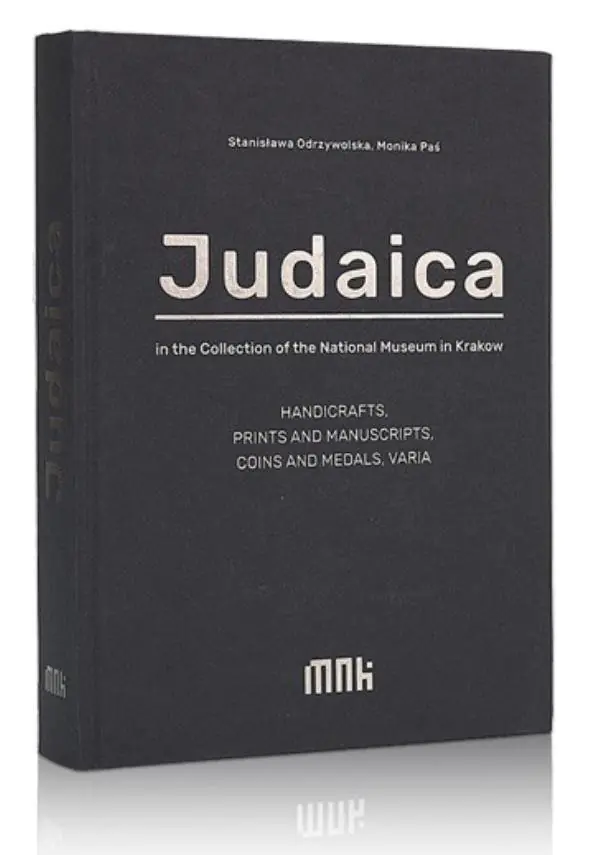
Judaica in the Collection of the National...
Masz tę lub inne książki?
Sprzedaj je u nas

The National Museum in Krakow's Judaica collection has never been published in its entirety before. The 2018 study provides an overview of the collection's formation at the museum, showcasing artisanal pieces categorized into thematic groups that mirror traditional Jewish cultural practices. The opening chapter focuses on synagogue worship items and furniture, the subsequent chapter explores objects linked to family celebrations, and another discusses those used in various ceremonial events. Further sections offer a limited selection of prints and manuscripts, plus a range of coins, banknotes, and medals. The final chapter gathers items that do not fit neatly into the previous categories or are challenging to define strictly as Judaica. Overall, the study documents 388 objects with detailed annotations accompanying basic descriptions. Notably, many items are presented to the public for the first time. Besides prints and manuscripts—an eclectic collection—and the highly varied 'varia', the remaining groups include introductions that highlight distinct topics and describe the context in which these objects were created and their cultural significance within Judaism. The publication features an impressive 600 photographs spotlighting selected object details, including signatures of goldsmiths and other craftspeople.
The text is supplemented with a catalog of Hebrew inscriptions on these crafted items along with their translations, a register of the origins of the exhibits with demographic and statistical data on the Jewish communities they once belonged to, an annex detailing craft acquisitions from 1935 to 1939—a pivotal era in building this collection—and an index of bibliographic abbreviations and personal names. This comprehensive work fulfills the standards of scholarly literature with its thorough critical apparatus, serving as a vital resource for researchers interested in this artistic field.
The Krakow collection's variety offers a deeper understanding of the specific rituals and celebrations within Jewish synagogues. Its publication is poised to open fresh research pathways concerning Jewish heritage within Polish cultural history. The principal aim is to introduce hundreds of largely unfamiliar objects of Jewish cultural significance to modern scholarly discourse.
Wybierz stan zużycia:
WIĘCEJ O SKALI
The National Museum in Krakow's Judaica collection has never been published in its entirety before. The 2018 study provides an overview of the collection's formation at the museum, showcasing artisanal pieces categorized into thematic groups that mirror traditional Jewish cultural practices. The opening chapter focuses on synagogue worship items and furniture, the subsequent chapter explores objects linked to family celebrations, and another discusses those used in various ceremonial events. Further sections offer a limited selection of prints and manuscripts, plus a range of coins, banknotes, and medals. The final chapter gathers items that do not fit neatly into the previous categories or are challenging to define strictly as Judaica. Overall, the study documents 388 objects with detailed annotations accompanying basic descriptions. Notably, many items are presented to the public for the first time. Besides prints and manuscripts—an eclectic collection—and the highly varied 'varia', the remaining groups include introductions that highlight distinct topics and describe the context in which these objects were created and their cultural significance within Judaism. The publication features an impressive 600 photographs spotlighting selected object details, including signatures of goldsmiths and other craftspeople.
The text is supplemented with a catalog of Hebrew inscriptions on these crafted items along with their translations, a register of the origins of the exhibits with demographic and statistical data on the Jewish communities they once belonged to, an annex detailing craft acquisitions from 1935 to 1939—a pivotal era in building this collection—and an index of bibliographic abbreviations and personal names. This comprehensive work fulfills the standards of scholarly literature with its thorough critical apparatus, serving as a vital resource for researchers interested in this artistic field.
The Krakow collection's variety offers a deeper understanding of the specific rituals and celebrations within Jewish synagogues. Its publication is poised to open fresh research pathways concerning Jewish heritage within Polish cultural history. The principal aim is to introduce hundreds of largely unfamiliar objects of Jewish cultural significance to modern scholarly discourse.
Szczegóły
Inne książki tych autorów

Podobne produkty
Może Ci się spodobać
Inne książki z tej samej kategorii

Napisz opinię o książce i wygraj nagrodę!
W każdym miesiącu wybieramy najlepsze opinie i nagradzamy recenzentów.
Dowiedz się więcejWartość nagród w tym miesiącu
880 zł
Dodaj swoją opinię
Zaloguj się na swoje konto, aby mieć możliwość dodawania opinii.
Czy chcesz zostawić tylko ocenę?
Dodanie samej oceny o książce nie jest brane pod uwagę podczas losowania nagród. By mieć szansę na otrzymanie nagrody musisz napisać opinię o książce.
Już oceniłeś/zrecenzowałeś te książkę w przeszłości.
Możliwe jest dodanie tylko jednej recenzji do każdej z książek.
Sposoby dostawy
Płatne z góry

InPost Paczkomaty 24/7
13.99 zł
Darmowa od 190 zł

ORLEN Paczka
12.99 zł
Darmowa od 190 zł

Automaty DHL BOX 24/7 i punkty POP
12.99 zł
Darmowa od 190 zł

DPD Pickup Automaty i Punkty Odbioru
9.99 zł
Darmowa od 190 zł

Automaty Orlen Paczka, sklepy Żabka i inne
12.99 zł
Darmowa od 190 zł

GLS U Ciebie - Kurier
14.99 zł
Darmowa od 190 zł

Kurier DPD
14.99 zł
Darmowa od 190 zł

Kurier InPost
14.99 zł
Darmowa od 190 zł

Pocztex Kurier
13.99 zł
Darmowa od 190 zł

Kurier DHL
14.99 zł
Darmowa od 190 zł

Kurier GLS - kraje UE
69.00 zł

Punkt odbioru (Dębica)
2.99 zł
Darmowa od 190 zł
Płatne przy odbiorze

Kurier GLS pobranie
23.99 zł
Sposoby płatności
Płatność z góry
Przedpłata

Zwykły przelew
