Stan książek
Nasze książki są dokładnie sprawdzone i jasno określamy stan każdej z nich.

Nowa
Książka nowa.
Używany - jak nowa
Niezauważalne lub prawie niezauważalne ślady używania. Książkę ciężko odróżnić od nowej pozycji.
Używany - dobry
Normalne ślady używania wynikające z kartkowania podczas czytania, brak większych uszkodzeń lub zagięć.
Używany - widoczne ślady użytkowania
zagięte rogi, przyniszczona okładka, książka posiada wszystkie strony.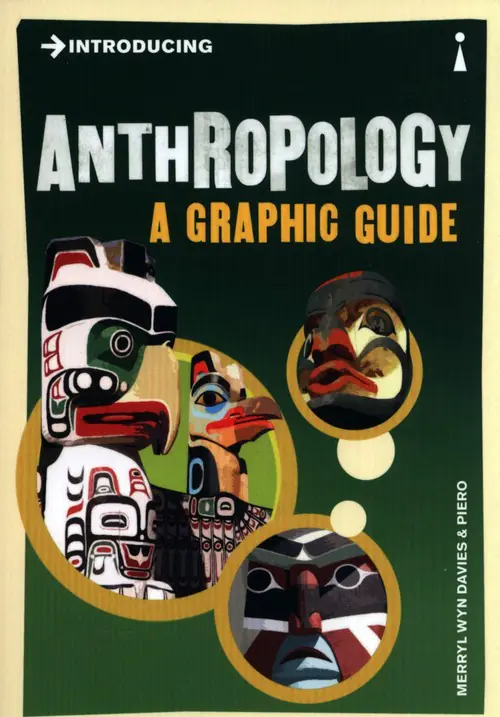
Introducing Anthropology
Masz tę lub inne książki?
Sprzedaj je u nas

Anthropology began as an examination of so-called 'primitive' societies, a term that reveals underlying assumptions about the superiority of 'civilized' Western cultures and their perceived authority to describe 'less developed' societies. This discipline's validity was questioned, particularly after the decline of colonial empires, as critics debated whether anthropology played a role in supporting colonialism or was simply a tool laced with racial prejudice. A crucial inquiry persists: does anthropology facilitate intercultural dialogue, or does it highlight divisions among us? "Introducing Anthropology" offers an engaging exploration of this complex field, aiming to rise above its controversial origins. It takes us through anthropology's journey from its beginnings in Ancient Greece to its diverse modern iterations. The book elucidates fundamental concepts and methodologies, introducing us to pioneering figures such as Franz Boas, Bronislaw Malinowski, E.E. Evans-Pritchard, Margaret Mead, and Claude Levi-Strauss. It also critically assesses new self-reflective and postmodern approaches within anthropology, all the while focusing on the discipline's impact on non-Western societies. The narrative in "Introducing Anthropology" is clear and compelling, enhanced by clever illustrations that add a layer of humor. This work serves as a welcoming introduction to anthropology, providing insights that are both informative and accessible.
Wybierz stan zużycia:
WIĘCEJ O SKALI
Anthropology began as an examination of so-called 'primitive' societies, a term that reveals underlying assumptions about the superiority of 'civilized' Western cultures and their perceived authority to describe 'less developed' societies. This discipline's validity was questioned, particularly after the decline of colonial empires, as critics debated whether anthropology played a role in supporting colonialism or was simply a tool laced with racial prejudice. A crucial inquiry persists: does anthropology facilitate intercultural dialogue, or does it highlight divisions among us? "Introducing Anthropology" offers an engaging exploration of this complex field, aiming to rise above its controversial origins. It takes us through anthropology's journey from its beginnings in Ancient Greece to its diverse modern iterations. The book elucidates fundamental concepts and methodologies, introducing us to pioneering figures such as Franz Boas, Bronislaw Malinowski, E.E. Evans-Pritchard, Margaret Mead, and Claude Levi-Strauss. It also critically assesses new self-reflective and postmodern approaches within anthropology, all the while focusing on the discipline's impact on non-Western societies. The narrative in "Introducing Anthropology" is clear and compelling, enhanced by clever illustrations that add a layer of humor. This work serves as a welcoming introduction to anthropology, providing insights that are both informative and accessible.
Szczegóły
Inne książki tych autorów

Podobne produkty
Może Ci się spodobać
Inne książki z tej samej kategorii

Napisz opinię o książce i wygraj nagrodę!
W każdym miesiącu wybieramy najlepsze opinie i nagradzamy recenzentów.
Dowiedz się więcejWartość nagród w tym miesiącu
880 zł
Dodaj swoją opinię
Zaloguj się na swoje konto, aby mieć możliwość dodawania opinii.
Czy chcesz zostawić tylko ocenę?
Dodanie samej oceny o książce nie jest brane pod uwagę podczas losowania nagród. By mieć szansę na otrzymanie nagrody musisz napisać opinię o książce.
Już oceniłeś/zrecenzowałeś te książkę w przeszłości.
Możliwe jest dodanie tylko jednej recenzji do każdej z książek.
Sposoby dostawy
Odbiór w punkcie (7)
InPost Paczkomat 24/7

14,99 zł
DPD Pickup Automaty i Punkty Odbioru

10,49 zł





Dostawa na adres (7)
GLS U Ciebie - Kurier

14,99 zł
Kurier DPD

14,99 zł





Sposoby płatności
Płatność z góry
Przedpłata

Zwykły przelew
