Stan książek
Nasze książki są dokładnie sprawdzone i jasno określamy stan każdej z nich.


Nowa
Książka nowa.
Używany - jak nowa
Niezauważalne lub prawie niezauważalne ślady używania. Książkę ciężko odróżnić od nowej pozycji.
Używany - dobry
Normalne ślady używania wynikające z kartkowania podczas czytania, brak większych uszkodzeń lub zagięć.
Używany - widoczne ślady użytkowania
zagięte rogi, przyniszczona okładka, książka posiada wszystkie strony.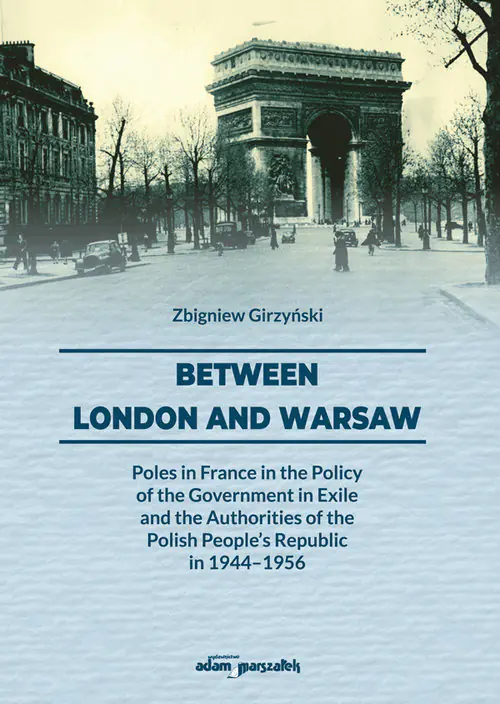
Between London and Warsaw
Masz tę lub inne książki?
Sprzedaj je u nas

The timeline of this work extends beyond its initial setting, which begins in 1944. Following the Allied invasion of Normandy on June 6, 1944, France began to be liberated from occupation. This pivotal moment offered a fresh opportunity for both the Polish government-in-exile and the communists, who were gearing up to assume control in Poland, to redefine their strategies regarding the Polish diaspora residing along the Seine and Loire rivers.Symbolically, the narrative stretches until 1956, a critical year for Polish emigrants. The October 1956 breakthrough was not just a significant turning point in the political landscape of Poland but also marked a shift in policies concerning emigration. This period saw the authorities of the Polish People's Republic altering their approach towards the Polish community in France, even though the core strategy remained largely unaltered until 1989, the year marking the end of the state's existence.Additionally, this era saw the start of the so-called second repatriation in 1955, which aligns closely with the shift in emigration boundaries. The crisis in 1954, triggered by President August Zaleski's refusal and the effective questioning by key figures of the emigration of the Polish State in Exile's foundational myth of legalism, disrupted the potential for a coherent, organized policy by the emigration authorities concerning the Polish community in France.
Wybierz stan zużycia:
WIĘCEJ O SKALI
The timeline of this work extends beyond its initial setting, which begins in 1944. Following the Allied invasion of Normandy on June 6, 1944, France began to be liberated from occupation. This pivotal moment offered a fresh opportunity for both the Polish government-in-exile and the communists, who were gearing up to assume control in Poland, to redefine their strategies regarding the Polish diaspora residing along the Seine and Loire rivers.Symbolically, the narrative stretches until 1956, a critical year for Polish emigrants. The October 1956 breakthrough was not just a significant turning point in the political landscape of Poland but also marked a shift in policies concerning emigration. This period saw the authorities of the Polish People's Republic altering their approach towards the Polish community in France, even though the core strategy remained largely unaltered until 1989, the year marking the end of the state's existence.Additionally, this era saw the start of the so-called second repatriation in 1955, which aligns closely with the shift in emigration boundaries. The crisis in 1954, triggered by President August Zaleski's refusal and the effective questioning by key figures of the emigration of the Polish State in Exile's foundational myth of legalism, disrupted the potential for a coherent, organized policy by the emigration authorities concerning the Polish community in France.
Szczegóły
Inne książki: Zbigniew Girzyński

Podobne produkty
Może Ci się spodobać
Inne książki z tej samej kategorii

Napisz opinię o książce i wygraj nagrodę!
W każdym miesiącu wybieramy najlepsze opinie i nagradzamy recenzentów.
Dowiedz się więcejWartość nagród w tym miesiącu
880 zł
Dodaj swoją opinię
Zaloguj się na swoje konto, aby mieć możliwość dodawania opinii.
Czy chcesz zostawić tylko ocenę?
Dodanie samej oceny o książce nie jest brane pod uwagę podczas losowania nagród. By mieć szansę na otrzymanie nagrody musisz napisać opinię o książce.
Już oceniłeś/zrecenzowałeś te książkę w przeszłości.
Możliwe jest dodanie tylko jednej recenzji do każdej z książek.
Sposoby dostawy
Odbiór w punkcie (7)
InPost Paczkomat 24/7

14,99 zł
DPD Pickup Automaty i Punkty Odbioru

10,49 zł





Dostawa na adres (7)
GLS U Ciebie - Kurier

14,99 zł
Kurier DPD

14,99 zł





Sposoby płatności
Płatność z góry
Przedpłata

Zwykły przelew
