Stan książek
Nasze książki są dokładnie sprawdzone i jasno określamy stan każdej z nich.


Nowa
Książka nowa.
Używany - jak nowa
Niezauważalne lub prawie niezauważalne ślady używania. Książkę ciężko odróżnić od nowej pozycji.
Używany - dobry
Normalne ślady używania wynikające z kartkowania podczas czytania, brak większych uszkodzeń lub zagięć.
Używany - widoczne ślady użytkowania
zagięte rogi, przyniszczona okładka, książka posiada wszystkie strony.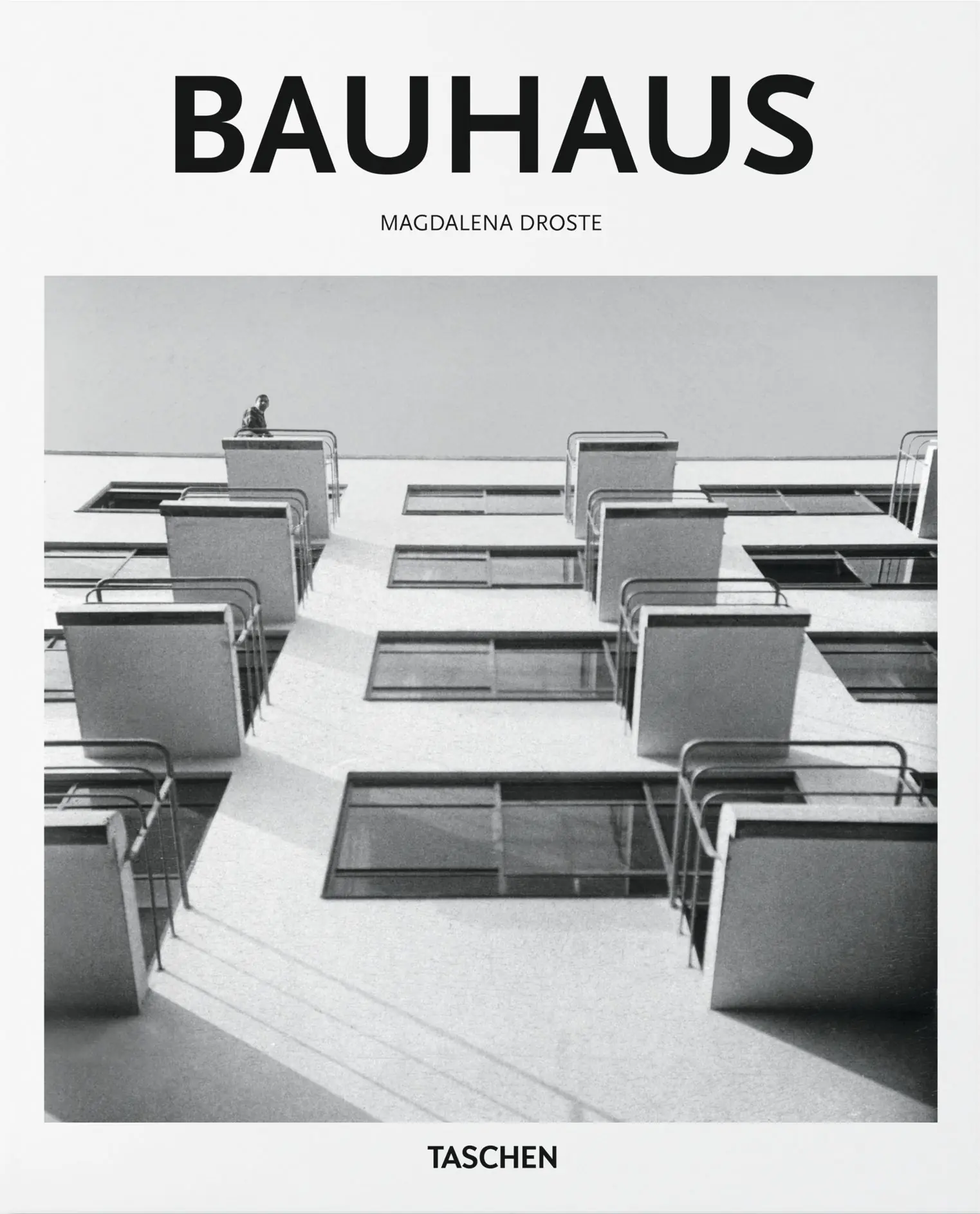
Bauhaus
Masz tę lub inne książki?
Sprzedaj je u nas

In a brief, yet transformative fourteen-year span situated between the chaos of two world wars, the Bauhaus school in Germany revolutionized modern art and design. With visionary dreams for the future, this groundbreaking institution merged fine art with craftsmanship and emerging technology, influencing a multitude of disciplines including painting, sculpture, design, architecture, film, photography, textiles, ceramics, theatre, and installation. Founded by Walter Gropius (1883–1969), the Bauhaus was more than just an educational institution; it was a vibrant community of creative visionaries. Renowned figures such as Josef and Anni Albers, Wassily Kandinsky, Paul Klee, Oskar Schlemmer, Gunta Stölzl, Marianne Brandt, and Ludwig Mies van der Rohe were part of this influential circle. The school, which moved through Weimar, Dessau, and Berlin, became a hub for dynamic and creative exchanges among its diverse group of students and instructors, who, despite their varied artistic expressions, shared a common idealistic vision and a dedication to creating a "total" work of art using various forms and media. This book pays homage to the daring spirit of the Bauhaus movement, celebrating its role as a pioneering force in the evolution of modernism and as a model of art education that encouraged unrestricted creative exploration, leading to creations that were both functional and aesthetically pleasing.
Wybierz stan zużycia:
WIĘCEJ O SKALI
In a brief, yet transformative fourteen-year span situated between the chaos of two world wars, the Bauhaus school in Germany revolutionized modern art and design. With visionary dreams for the future, this groundbreaking institution merged fine art with craftsmanship and emerging technology, influencing a multitude of disciplines including painting, sculpture, design, architecture, film, photography, textiles, ceramics, theatre, and installation. Founded by Walter Gropius (1883–1969), the Bauhaus was more than just an educational institution; it was a vibrant community of creative visionaries. Renowned figures such as Josef and Anni Albers, Wassily Kandinsky, Paul Klee, Oskar Schlemmer, Gunta Stölzl, Marianne Brandt, and Ludwig Mies van der Rohe were part of this influential circle. The school, which moved through Weimar, Dessau, and Berlin, became a hub for dynamic and creative exchanges among its diverse group of students and instructors, who, despite their varied artistic expressions, shared a common idealistic vision and a dedication to creating a "total" work of art using various forms and media. This book pays homage to the daring spirit of the Bauhaus movement, celebrating its role as a pioneering force in the evolution of modernism and as a model of art education that encouraged unrestricted creative exploration, leading to creations that were both functional and aesthetically pleasing.
Szczegóły
Dane producenta:
Inne książki tych autorów

Podobne produkty
Może Ci się spodobać
Inne książki z tej samej kategorii

Napisz opinię o książce i wygraj nagrodę!
W każdym miesiącu wybieramy najlepsze opinie i nagradzamy recenzentów.
Dowiedz się więcejWartość nagród w tym miesiącu
880 zł
Dodaj swoją opinię
Zaloguj się na swoje konto, aby mieć możliwość dodawania opinii.
Czy chcesz zostawić tylko ocenę?
Dodanie samej oceny o książce nie jest brane pod uwagę podczas losowania nagród. By mieć szansę na otrzymanie nagrody musisz napisać opinię o książce.
Już oceniłeś/zrecenzowałeś te książkę w przeszłości.
Możliwe jest dodanie tylko jednej recenzji do każdej z książek.
Sposoby dostawy
Odbiór w punkcie (7)
InPost Paczkomat 24/7

14,99 zł
DPD Pickup Automaty i Punkty Odbioru

10,49 zł





Dostawa na adres (7)
GLS U Ciebie - Kurier

14,99 zł
Kurier DPD

14,99 zł





Sposoby płatności
Płatność z góry
Przedpłata

Zwykły przelew
