Stan książek
Nasze książki są dokładnie sprawdzone i jasno określamy stan każdej z nich.


Nowa
Książka nowa.
Używany - jak nowa
Niezauważalne lub prawie niezauważalne ślady używania. Książkę ciężko odróżnić od nowej pozycji.
Używany - dobry
Normalne ślady używania wynikające z kartkowania podczas czytania, brak większych uszkodzeń lub zagięć.
Używany - widoczne ślady użytkowania
zagięte rogi, przyniszczona okładka, książka posiada wszystkie strony.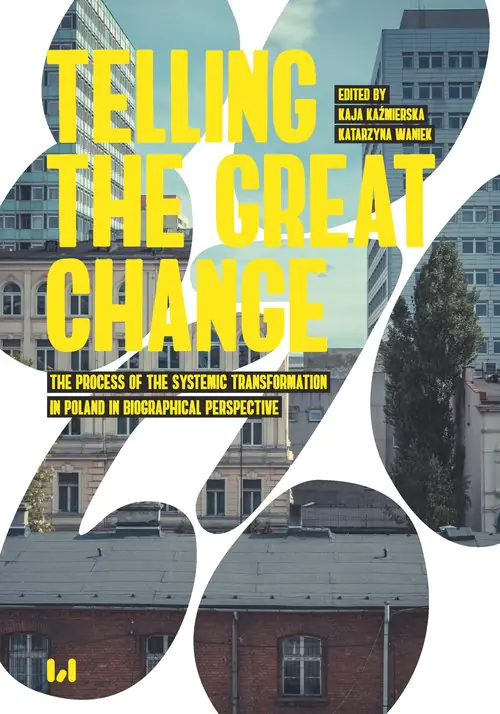
Telling the Great Change
Masz tę lub inne książki?
Sprzedaj je u nas

This groundbreaking book explores the mechanisms of adaptation to the systemic transformation in Poland post-1989, marking a first in Poland and Central Europe. It analyzes narratives from individuals born in the 1960s, 1970s, and 1980s, each representing various social backgrounds and possessing unique professional and life experiences. Readers will encounter a comprehensive application of the biographical research methodology pioneered by Fritz Schütze through a series of case studies. This makes the publication the most thorough work employing this method to study transformation. The chapter authors highlight the subjects' individual agency, carefully steering clear of neoliberal discourse that places sole responsibility for life outcomes on individuals. Beyond examining autonomous paths of agency, the book also delves into instances where individuals lose control over their lives, exploring biographical trajectories and resources, predominantly familial, that help navigate the aftermath of systemic change more effectively.
Wybierz stan zużycia:
WIĘCEJ O SKALI
This groundbreaking book explores the mechanisms of adaptation to the systemic transformation in Poland post-1989, marking a first in Poland and Central Europe. It analyzes narratives from individuals born in the 1960s, 1970s, and 1980s, each representing various social backgrounds and possessing unique professional and life experiences. Readers will encounter a comprehensive application of the biographical research methodology pioneered by Fritz Schütze through a series of case studies. This makes the publication the most thorough work employing this method to study transformation. The chapter authors highlight the subjects' individual agency, carefully steering clear of neoliberal discourse that places sole responsibility for life outcomes on individuals. Beyond examining autonomous paths of agency, the book also delves into instances where individuals lose control over their lives, exploring biographical trajectories and resources, predominantly familial, that help navigate the aftermath of systemic change more effectively.
Szczegóły
Inne książki tych autorów

Podobne produkty
Może Ci się spodobać
Inne książki z tej samej kategorii

Napisz opinię o książce i wygraj nagrodę!
W każdym miesiącu wybieramy najlepsze opinie i nagradzamy recenzentów.
Dowiedz się więcejWartość nagród w tym miesiącu
880 zł
Dodaj swoją opinię
Zaloguj się na swoje konto, aby mieć możliwość dodawania opinii.
Czy chcesz zostawić tylko ocenę?
Dodanie samej oceny o książce nie jest brane pod uwagę podczas losowania nagród. By mieć szansę na otrzymanie nagrody musisz napisać opinię o książce.
Już oceniłeś/zrecenzowałeś te książkę w przeszłości.
Możliwe jest dodanie tylko jednej recenzji do każdej z książek.
Sposoby dostawy
Odbiór w punkcie (7)
InPost Paczkomat 24/7

14,99 zł
DPD Pickup Automaty i Punkty Odbioru

10,49 zł





Dostawa na adres (7)
GLS U Ciebie - Kurier

14,99 zł
Kurier DPD

14,99 zł





Sposoby płatności
Płatność z góry
Przedpłata

Zwykły przelew
