Stan książek
Nasze książki są dokładnie sprawdzone i jasno określamy stan każdej z nich.

Nowa
Książka nowa.
Używany - jak nowa
Niezauważalne lub prawie niezauważalne ślady używania. Książkę ciężko odróżnić od nowej pozycji.
Używany - dobry
Normalne ślady używania wynikające z kartkowania podczas czytania, brak większych uszkodzeń lub zagięć.
Używany - widoczne ślady użytkowania
zagięte rogi, przyniszczona okładka, książka posiada wszystkie strony.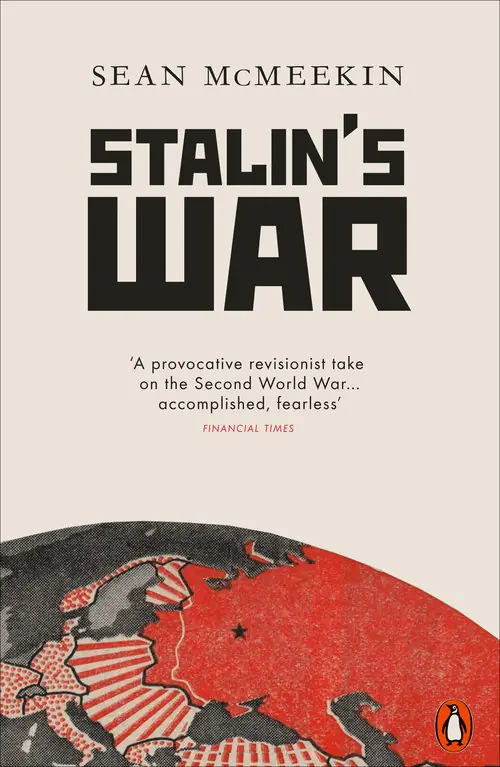
Stalin's War
Masz tę lub inne książki?
Sprzedaj je u nas

In his compelling and insightful book, Sean McMeekin challenges the traditional perspective on Joseph Stalin's role as an ally during the Second World War. McMeekin posits that Stalin, unlike Hitler, was a ruthlessly effective dictator whose success lay in his ability to expand his dominion. With Hitler's demise and the collapse of the Third Reich, Stalin seized the opportunity to forge a vast Communist empire. This empire included countries such as Czechoslovakia and Poland—nations that initially spurred Western opposition to the Nazis—as well as China and North Korea, the influence of which continues to impact global politics today.Before the transformative operation Barbarossa, which repositioned him as a staunch ally of the Western powers, Stalin had already committed numerous atrocities. He had systematically violated international protocols, invaded countries at a scale comparable to Hitler's and annexed extensive territories for the Soviet Union. The broader international conflict was not only a result of German and Japanese belligerence but also a consequence of Stalin's strategic manipulations designed to incite protracted conflicts among capitalist states across Europe and Asia."Stalin's War" delves into disconcerting revelations about the extent of American cooperation with Stalin's regime, often at the expense of its own interests and those of its allies. Alarmingly, the U.S. government acquiesced to nearly every Soviet demand, even to the point of allowing Soviet agents access to sensitive information about the atomic bomb. This book sheds light on how these actions inadvertently empowered Stalin's military ambitions, complicating the global post-war landscape.
Wybierz stan zużycia:
WIĘCEJ O SKALI
In his compelling and insightful book, Sean McMeekin challenges the traditional perspective on Joseph Stalin's role as an ally during the Second World War. McMeekin posits that Stalin, unlike Hitler, was a ruthlessly effective dictator whose success lay in his ability to expand his dominion. With Hitler's demise and the collapse of the Third Reich, Stalin seized the opportunity to forge a vast Communist empire. This empire included countries such as Czechoslovakia and Poland—nations that initially spurred Western opposition to the Nazis—as well as China and North Korea, the influence of which continues to impact global politics today.Before the transformative operation Barbarossa, which repositioned him as a staunch ally of the Western powers, Stalin had already committed numerous atrocities. He had systematically violated international protocols, invaded countries at a scale comparable to Hitler's and annexed extensive territories for the Soviet Union. The broader international conflict was not only a result of German and Japanese belligerence but also a consequence of Stalin's strategic manipulations designed to incite protracted conflicts among capitalist states across Europe and Asia."Stalin's War" delves into disconcerting revelations about the extent of American cooperation with Stalin's regime, often at the expense of its own interests and those of its allies. Alarmingly, the U.S. government acquiesced to nearly every Soviet demand, even to the point of allowing Soviet agents access to sensitive information about the atomic bomb. This book sheds light on how these actions inadvertently empowered Stalin's military ambitions, complicating the global post-war landscape.
Szczegóły
Inne książki: Sean McMeekin

Podobne produkty
Może Ci się spodobać
Inne książki z tej samej kategorii

Napisz opinię o książce i wygraj nagrodę!
W każdym miesiącu wybieramy najlepsze opinie i nagradzamy recenzentów.
Dowiedz się więcejWartość nagród w tym miesiącu
880 zł
Dodaj swoją opinię
Zaloguj się na swoje konto, aby mieć możliwość dodawania opinii.
Czy chcesz zostawić tylko ocenę?
Dodanie samej oceny o książce nie jest brane pod uwagę podczas losowania nagród. By mieć szansę na otrzymanie nagrody musisz napisać opinię o książce.
Już oceniłeś/zrecenzowałeś te książkę w przeszłości.
Możliwe jest dodanie tylko jednej recenzji do każdej z książek.
Sposoby dostawy
Odbiór w punkcie (7)
InPost Paczkomat 24/7

14,99 zł
DPD Pickup Automaty i Punkty Odbioru

10,49 zł





Dostawa na adres (7)
GLS U Ciebie - Kurier

14,99 zł
Kurier DPD

14,99 zł





Sposoby płatności
Płatność z góry
Przedpłata

Zwykły przelew
