Stan książek
Nasze książki są dokładnie sprawdzone i jasno określamy stan każdej z nich.


Nowa
Książka nowa.
Używany - jak nowa
Niezauważalne lub prawie niezauważalne ślady używania. Książkę ciężko odróżnić od nowej pozycji.
Używany - dobry
Normalne ślady używania wynikające z kartkowania podczas czytania, brak większych uszkodzeń lub zagięć.
Używany - widoczne ślady użytkowania
zagięte rogi, przyniszczona okładka, książka posiada wszystkie strony.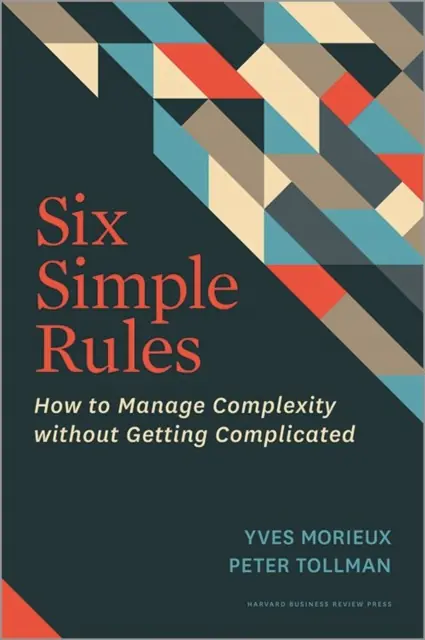
Six Simple Rules
Masz tę lub inne książki?
Sprzedaj je u nas

New tools for managing complexity don’t have to add to the chaos. Many organizations mistakenly address complexity by piling on more layers of intricacy. The Boston Consulting Group’s intriguing Complexity Index reveals that business complexity has grown six times over in the last sixty years, while organizational complicatedness—encompassing structures, processes, and decision-making systems—has surged by a factor of thirty-five. In trying to meet the ever-increasing demands, leaders have inadvertently created an overwhelming maze that hinders productivity and stifles innovation. Clearly, it’s urgent for leaders to abandon outdated methods and harness the collective intelligence of their teams instead. This book provides guidance on this approach, detailing its implications for organizational design and leadership.The authors propose that tackling complexity doesn’t require rigid solutions from the past or the softer methods that often follow. Drawing from social sciences, including economics, game theory, and organizational sociology, alongside insights from working with over five hundred companies across more than forty countries, Yves Morieux and Peter Tollman advocate for six straightforward rules to manage complexity without making things more convoluted. They equip managers with valuable strategies to revitalize their teams amid pervasive complexity. Real-world examples from companies that have significantly boosted their performance by following these principles are included. It's time to enhance how complexity is managed. Implement these six simple rules to encourage autonomy and cooperation, enabling efficient handling of business challenges. This approach promises increased productivity, renewed innovation, a re-engaged workforce, and the ability to harness opportunities for competitive advantage.
Wybierz stan zużycia:
WIĘCEJ O SKALI
New tools for managing complexity don’t have to add to the chaos. Many organizations mistakenly address complexity by piling on more layers of intricacy. The Boston Consulting Group’s intriguing Complexity Index reveals that business complexity has grown six times over in the last sixty years, while organizational complicatedness—encompassing structures, processes, and decision-making systems—has surged by a factor of thirty-five. In trying to meet the ever-increasing demands, leaders have inadvertently created an overwhelming maze that hinders productivity and stifles innovation. Clearly, it’s urgent for leaders to abandon outdated methods and harness the collective intelligence of their teams instead. This book provides guidance on this approach, detailing its implications for organizational design and leadership.The authors propose that tackling complexity doesn’t require rigid solutions from the past or the softer methods that often follow. Drawing from social sciences, including economics, game theory, and organizational sociology, alongside insights from working with over five hundred companies across more than forty countries, Yves Morieux and Peter Tollman advocate for six straightforward rules to manage complexity without making things more convoluted. They equip managers with valuable strategies to revitalize their teams amid pervasive complexity. Real-world examples from companies that have significantly boosted their performance by following these principles are included. It's time to enhance how complexity is managed. Implement these six simple rules to encourage autonomy and cooperation, enabling efficient handling of business challenges. This approach promises increased productivity, renewed innovation, a re-engaged workforce, and the ability to harness opportunities for competitive advantage.
Szczegóły
Inne książki tych autorów

Podobne produkty
Może Ci się spodobać
Inne książki z tej samej kategorii

Napisz opinię o książce i wygraj nagrodę!
W każdym miesiącu wybieramy najlepsze opinie i nagradzamy recenzentów.
Dowiedz się więcejWartość nagród w tym miesiącu
880 zł
Dodaj swoją opinię
Zaloguj się na swoje konto, aby mieć możliwość dodawania opinii.
Czy chcesz zostawić tylko ocenę?
Dodanie samej oceny o książce nie jest brane pod uwagę podczas losowania nagród. By mieć szansę na otrzymanie nagrody musisz napisać opinię o książce.
Już oceniłeś/zrecenzowałeś te książkę w przeszłości.
Możliwe jest dodanie tylko jednej recenzji do każdej z książek.
Sposoby dostawy
Odbiór w punkcie (7)
InPost Paczkomat 24/7

14,99 zł
DPD Pickup Automaty i Punkty Odbioru

10,49 zł





Dostawa na adres (7)
GLS U Ciebie - Kurier

14,99 zł
Kurier DPD

14,99 zł





Sposoby płatności
Płatność z góry
Przedpłata

Zwykły przelew
